Categories

Category: Uncategorized

Pioneer ACOs: Anatomy Of A ‘Victory’

On May 4, 2015 Department of Health and Human Services (HHS) Secretary Burwell announced that the Pioneer ACO program had saved the federal government $384 million and improved quality in its first two years and would therefore be expanded. HHS also released a 130 page independent program evaluation by L&M Policy Research that served as the basis for the Centers for Medicare and Medicaid Services (CMS) Actuary’s certification of the Pioneer program.

Burwell’s triumphant announceand ment was an intended shot in the arm for the troubled Pioneer ACO program, 40 percent of whose initial 32 members dropped out in the first two years. It also illustrated the yawning reality gap between DC policymakers and the provider-based managed care community. In reality, the Pioneer program badly damaged CMS’s credibility with the provider-based managed care community and sharply reduced the likelihood that the ACO will be broadly adopted.

Continue reading…

HIT Newser: Prison time for HITECH fraud

CVS Health acquires Target’s healthcare biz

CVS Health will pay $1.9 billion to acquire Target’s healthcare businesses, including 1,600 pharmacies and 80 MinuteClinic health clinics.

CVS Health also just opened its Boston-based Digital Innovation Lab, which will focus on developing cutting-edge digital services and personalized capabilities that offer an accessible and integrated personal pharmacy and health experience.

CVS is making big strides to position itself as both a digital innovator and major provider of primary care services. Look for them to continue to build on existing partnerships with regional health systems. What’s next – maybe more integration of its health apps into EMRs, patient portals, and HIEs?

Former hospital CFO sentenced to prison for attestation fraud

Joe White, the former CFO of Shelby Regional Medical Center in Texas, is sentenced to 23 months in federal prison for falsely attesting that the hospital was a meaningful user of EHR. White was also ordered to pay almost $4.5 million in restitution to Medicare’s EHR Incentive program. Continue reading…

Data Druggies

We are data druggies.

We spend our days like desperate junkies crawling the carpet, sifting through the shaggy strands of patient histories with shaky fingers in search of facts. Every word our patients utter we feed to the never-ending demands of the electronic chart.

We find a fact and we enter it. The database grows. Someone somewhere adds another question we are supposed to ask our patients. We get back on our hands and knees. We start sifting once again.

Have you been to the continent of Africa in the last twenty-one days? Click. Do you or a loved one feel threatened at home? Click. How was your experience today? Click.

In the background the blood pressure cuff inflates, the quiet hiss filling the room. The monitor beeps along with the patient’s pulse, each ding another penny tossed into the ever-growing bank of patient data.Continue reading…

Averting the Ax at AHRQ


Congress is infected with the budget-cutting bug, and building an effective immune system requires political savvy. Sometimes, it’s simple (“We bomb terrorists” or “We process Social Security checks”), but sometimes an agency struggles. Case in point: AHRQ.

A House subcommittee recently voted to eliminate the Agency for Healthcare Research and Quality (AHRQ) as of Oct. 1, 2015, the start of fiscal 2016. If you hadn’t heard the news or aren’t sure why you should care, that’s exactly the point.

The GOP-led House Subcommittee on Health, Employment, Labor and Pensions (HELP) first voted to ax AHRQ back in 2012, along with other big government cuts; the agency escaped thanks to political gridlock that led to continuing budget resolutions instead of individual appropriations bills. Now, with the GOP in control of both houses of Congress, AHRQ has again been “terminated,” to quote the legislative language. But before railing against the Republicans, look at it from their viewpoint.

What HELP did was take about a half-billion dollars from Obamacare bureaucrats and use it as part of the budget boost given to scientists seeking to cure cancer, Alzheimer’s disease and similar ills at the National Institutes of Health, and to those at the Centers for Disease Control and Prevention working to protect Americans from dangerous epidemics such as Ebola.

You got a problem with that?

Continue reading…

Brookings vs Yelp and E-Patients: They’re All Wrong, but Mostly Brookings

Screen Shot 2015-06-20 at 10.14.04 AM

Can I fool you with the picture above? Apparently, some people think so.

I’m a Twitter newbie, but I’ve already discovered that sometimes you can tweet what you think is a helpful piece of data, then find yourself suddenly caught up in an explosive controversy.  When it’s the Brookings Institute and US News and World Report on one side and passionate e-patients on the other, a research tweep is liable to feel like a nerdy accountant who wandered into the OK Corral at high noon with neither Kevlar nor a gun.

This happened to me when Niam Yaraghi of Brookings posted on the US News blog and the Brookings blog that people shouldn’t trust Yelp reviews in health care—the URL for the post actually ends “online-doctor-ratings-are-garbage”—because patients hadn’t been to medical school.

Continue reading…

Sorry, Patients ARE Qualified to Yelp Doctors!

Last night my friend and mentor Marie Ennis-O’Connor (@JBBC) highlighted her recent post on Medium entitled: “Patients As A Prop.”

Marie’s post pointed me to an opinion piece written by Niam Yaraghi  (@niamyaraghi) for US News and World Report. (Niam is a fellow at Brookings Institute’s Center for Technology Innovation with a special focus on healthcare economics and health information) Niam’s post titled, “Don’t Yelp Your Doctor” discusses whether or not patients are capable or qualified to evaluate their physicians.

Niam writes:

“Patients are neither qualified nor capable of evaluating the quality of the medical services that they receive.”

Continue reading…

Anatomy of a Healthcare Quality Metric

Screen Shot 2015-06-19 at 8.24.15 AM

In the future, doctors who provide better healthcare will be paid more. When a doctor gives good care, she will get credit. For factors out of that doctor’s control, she won’t be penalized. The patient, too, will be rewarded for taking care of his own health. In short, payments will align with good care, and good care will become more common.

This is the promise of value-based care, which is coming, according to almost everyone. Medicare is pushing it. Private payers are preparing for it.Top providers are tooling up.

And yet, the question lingers — how exactly do we measure quality? Today quality measurement is rigid, periodic, and manual. Here’s a peek behind the curtain of what we measure today — and what’s possible tomorrow.

Continue reading…

Do You Need a Medical Degree to Crowdsource Medicine?

There’s been a lot of talk about crowdsourcing lately. Everything from criminal investigations, to the tax code, to ski resorts have been crowdsourced or considered for crowdsourcing. And now medicine has thrown its hat in this trendy ring. KQED’s “Future of You” recently reported on a company called CrowdMed that wants to be the “Wikipedia of medicine.” (Due to space constraints, this blog post will not engage the important question of whether Wikipedia itself, is, in fact, the Wikipedia of medicine.)

CrowdMed touts itself as harnessing the wisdom of the crowd to improve and expedite diagnosis and treatment for patients whose doctors don’t have the answer. (The company was inspired by the difficulty its founder’s sister had in getting a rare condition diagnosed.) “Patients” pay CrowdMed a subscription fee ranging from $99-$249 per month in order to submit an account of their symptoms and medical history to CrowdMed’s “Medical Detectives.”

The Medical Detectives – who might be physicians or other healthcare professionals, but also might be any average Joe – read patients’ cases, and interact directly with patients to ask questions about their cases.
Continue reading…

A Powerful Tool For ICD9-ICD10 Conversion

Screen Shot 2015-06-19 at 6.19.20 PM

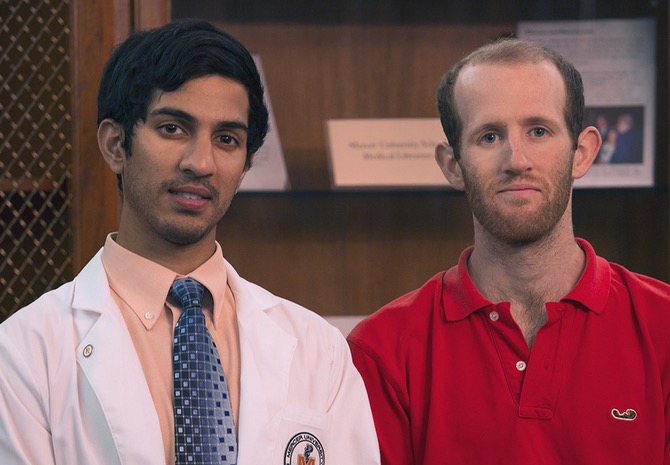
Prior to attending medical school, Parth Desai took a gap year to help his mom manage his dad’s small internal medicine practice.  She was worried about how she was going to handle the looming transition from ICD-9 to ICD-10.  Parth said he would help her out.

He looked at different consultants and programs, but they were all too complicated, too expensive, or both.  He also looked at a number of different ICD-10 training programs, but didn’t really find anything that he thought was that good.  He wanted help with code conversions, but everything he saw was slow, or required additional personnel, or was too costly.

So, he did what lots of entrepreneurs do, he decided to build what he needed himself.  He enlisted his former college roommate, Will Pattiz, a “tech whiz, outdoor enthusiast, and filmmaker” to help him and together they developed software that automates the conversion of ICD-9 to ICD-10 codes. 

Continue reading…

Chelsea Clinton, AMA, Walgreens Headline Health 2.0’s 9th Annual Fall Conference

San Francisco, CA – Health 2.0, the largest global conference and innovation community in digital health announces the agenda for The 9th Annual Fall Conference. The event will host over 3000 attendees and more than 150 LIVE demos in over 35 sessions across 4 days. This year’s exciting line-up features main stage panels on:

  • New technologies for outcomes based care
  • Consumer tools for tracking, rapid diagnostics, and digital therapeutics
  • Big data tools and analytics for smarter health care
  • Data and technology advancing healthy communities
  • The frontier of Health 2.0: robotics, 3-D printing, virtual reality, space medicine and more!

Special Sessions:

  • New technologies for care delivery organizations
  • Launch!  The top 10 brand new companies in health tech
  • Traction — The leading startup business competition in health tech
  • Investment trends and a look inside the biggest deals in digital health

Featured Speakers:

  • Chelsea Clinton, Vice Chair, The Clinton Foundation. Chelsea will speak to women’s health and the work of The Clinton Foundation to strengthen health systems in developing countries, increase opportunities for women and girls around the world, and to help Americans live healthier lives.
  • Dr. Bob Wachter, Professor and Associate Chair of the Dept. of Medicine, University of California San Francisco. Bob will share insights from his latest book “The Digital Doctor: Hope, Hype, and Harm at the Dawn of Medicine’s Digital Age” which examines the promises, controversies and obstacles in the new digital age of healthcare.

With Other Speakers:

  • Dr. James Madara, President, American Medical Association
  • Robin Thurston, Chief Digital Officer, Under Armour
  • Gregory Orr, Director of Consumer Digital Health, Walgreens

Many more speaker, panel, and session announcements coming soon on the agenda here. Start-up & academic rates are available online on the registration website. Full-time clinicians can apply for free registration.

assetto corsa mods