Categories

Category: Uncategorized

Everyone Has a Part to Play in Ending Vaccine Hesitancy

Heidi L. Pottinger DrPH, MPH, MA
Felicia D. Goodrum PhD

By FELICIA D. GOODRUM STERLING, PhD and HEIDI L. POTTINGER, DrPH, MPH, MA

The measles outbreak in Washington state this week has brought new attention to the anti-vaccine movement.  In fact, the World Health Organization recently identified “vaccine hesitancy” as one of top threats to global health. In the US, the number of unvaccinated children has quadrupled since 2001, enabling the resurgence of infectious diseases long-since controlled.  In fact, the WHO claims a staggering 1.5 million deaths could be prevented worldwide by improved vaccination rates.

Amidst the media and public health outcry, a mystery persists:  Why has vaccine hesitancy continued, despite years of vigorous debunking of shoddy science?  The answer may lie in a deeply-rooted distrust of doctors and science.

One of the authors of this article, Dr. Pottinger, surveyed hundreds of Arizona parents, from schools with exemption rates greater than 10%, about their perceptions on vaccines. Pottinger and colleagues found the vast majority of the parents surveyed who delayed or chose not to vaccinate their children did so because of true personal beliefs and not convenience.  Specifically, they tended to distrust physicians and information about vaccines or held misperceptions about health and disease, including the idea that immunity by natural infection is more effective or that vaccine-preventable diseases are not severe.

These beliefs, stoked by a fraudulent 2010 study, have proven almost impossible to shake—despite the fact that the debunked study, based on 12 children, was retracted due to serious ethical violations and scientific misrepresentation; authors cherry-picked and fabricated data, and the first author had undisclosed business interests in the vaccine industry.

The failure of many interventions to dispel misinformation demonstrates the power of a complex interaction of confirmation bias, cognitive dissonance, distrust in data sources, and personal experiences and narratives.  Taking them on requires that the healthcare community effectively spread the following messages.

Continue reading…

HIPAA RFI Comments: Patient Privacy Rights

Deborah C. Peel
Adrian Gropper

By ADRIAN GROPPER and DEBORAH C. PEEL

Among other rich nations, US healthcare stands out as both exceptionally privatized and exceptionally expensive. And taken overall, we have the worst health outcomes among the Western Democracies.

On one hand, regulators are reluctant to limit private corporate action lest we reduce innovation and patient choice and promote moral hazards. On the other hand, a privatized marketplace for services requires transparency of costs and quality and a minimum of economic externalities that privatize profit and socialize costs.

For over two decades, the HIPAA law and regulations have dominated the way personal health data is used and abused to manipulate physician practice and increase costs. During these decades, digital technology has brought marvels of innovation and competition to markets as diverse as travel and publishing while healthcare technology is burning out physicians and driving patients to bankruptcy.

Continue reading…

Health in 2 Point 00, Episode 69 | Pre-HIMSSanity!

Today on Health in 2 Point 00, Jess and I are pregaming HIMSS at WSJ Tech Health. In this episode, Jess asks me about my biggest takeaways from WSJ Tech Health—and what we’re looking forward to at HIMSS. We’ll be at booth #5594 with SMACK.health, along with WTF Health, our new podcast Hardcore Health and ten exciting tech companies including: Tag.bio, BlueStream Health, Happego, Ouchie, SurveyorHealth, Dot.Health, SAFE App, InPharmD, CaptureProof and Visolyr. Get a rundown of them here. We also have a guest question from Katie McGraw from W2O about predictions for big topics at HIMSS. –Matthew Holt


HIMSSanity Preview

By MATTHEW HOLT

It’s time for my favorite busman’s holiday of the year, the HIMSS global conference, held this year in the cultural wasteland of Orlando, Florida (which given its cultural competition is Las Vegas is saying something!). But there are only 2 places in the US with enough hotel rooms to deal with 45,000 hungry and thirsty Health IT people and they’re it!

I think this is my 22nd HIMSS. First was in 1994, but I missed one when I was sick in the 90s, and 2-3 when I was taking a long post-dotcom bust sabbatical in the early 00s. Suffice to say I know my way around and have a decent party invite list. But this year is different. I’m both a HIMSS quasi-staff member, since Health 2.0 is now a HIMSS brand doing VentureConnect this year, AND I’m a vendor client with a booth for my SMACK.health advisory service program, which will be featuring several of our clients and a couple of special guests (or clients in waiting?).

So who will you see in booth #5594 at HIMSS?

First up the incomparable Jessica DaMassa will be interviewing all and sundry for her WTF Health specials. I’ll be stealing her camera for some THCB spotlights and we’ll also be recording segments for our forthcoming podcast HardCore Health. Then there’ll be a whole gang of super exciting tech companies and in no particular order with my (and not their quick summaries) here’s who they are:

  • SurveyorHealth — Super clever AI that optimizes medication management by fixing complex drug regimens, saving $$ and lives
  • BlueStream Health — Revolutionary, always-on telehealth network
  • CaptureProof — A visual medical record changing the game in ortho, derm, + + +
  • SAFE App — an STD lab test system hidden behind the coolest consumer app that will really help bring transparency to “dating” by sharing your STD status
  • Happego — Have you heard of psychological priming to create behavior change? This app does it at scale with no effort on the users part. Mindfulness made easy!
  • Ouchie – An app and community to help patients track, manage & beat chronic pain
  • Dot.Health — The home of the “.health” domain extension (come get yours!)
  • Tag.bio — Putting the power of data science into the hands of clinicians and researchers
  • InPharmD – “Siri for pharmacists,” bringing the most important lit searches to the end user
  • Visolyr — Interoperability-as-a-service for health care organizations

4 of these companies will be demoing at any one given time. Plus we will have the most fun furniture in the exhibit hall, and the only booth featuring a Unicorn Straddling during interviews. Come see us at booth 5594!

If you want to know more, the ringmaster is Zoya Khan.

Matthew is the Founder of The Health Care Blog and is the President of SMACK.health

Health in 2 Point 00, Episode 68 | Livongo, Clover Health, Aetion, Hims, and Healthy.io

Today on Health in 2 Point 00, there appears to be money falling from the sky… There’s been a lot of funding going on this week. In this episode, Jess asks me about Livongo acquiring myStrength, which provides digital behavioral health solutions; Medicare Advantage startup Clover Health’s $500 million raise; real-world data analytics platform Aetion’s $27 million raise; men’s wellness company Hims’ $100 million raise; and urine analysis company Healthy.io’s $18 million raise. Be sure to stay tuned for next week’s big preview episode of HIMSS.—Matthew Holt.

Innovation Amidst the Crisis: Health IT and the Opioid Abuse Epidemic | Part 4 – Resource Allocation and Access

Dave Levin MD
Colin Konschak, FACHE

By COLIN KONSCHAK, FACHE and DAVE LEVIN, MD 

The opioid crisis in the United States is having a devastating impact on individuals, their families, and the health care industry. This multi-part series will focus on the role technology can play in addressing this crisis. Part one of the series proposed a strategic framework for evaluating and pursuing technical solutions.

A Framework for Innovation

In part one of our series, we declared the opioid crisis an “All Hands-On Deck” moment and made the case that health IT (HIT) has a lot to offer. Given the many different possibilities, having a method for organizing and prioritizing potential IT innovations is an important starting point. We have proposed a framework that groups opportunities based on an abstract view of five types of functionality. In this article, with an assist from Dr. Marv Seppala, Chief Medical Officer at the Hazelden-Betty Ford Foundation and Dr. Krista Dobbie, Palliative Care physician at the Cleveland Clinic, we will explore allocation of resources and access to care and the role that technology can play.

Resource Allocation and Access for Opioid Management

Continue reading…

Innovation Amidst the Crisis: Health IT and the Opioid Abuse Epidemic | Part 3 – Clinical Decision Support

Dave Levin MD
Colin Konschak, FACHE

By COLIN KONSCHAK, FACHE and DAVE LEVIN, MD

The opioid crisis in the United States is having a devastating impact on individuals, their families, and the health care industry. This multi-part series will focus on the role technology can play in addressing this crisis. Part one of the series proposed a strategic framework for evaluating and pursuing technical solutions.

A Framework for Innovation

As noted in part one of our series, we believe the opioid crisis is an “All Hands-On Deck” moment and health IT (HIT) has a lot to offer. Given the many different possibilities, having a method for organizing and prioritizing potential IT innovations is an important starting point. We have proposed a framework that groups opportunities based on an abstract view of five types of functionality. In this article we will explore the role of technologies that provide clinical decision support.

Continue reading…

The Power & Perils of Unconventional Healthcare Partnerships

By LYGEIA RICCIARDI 

Last week’s announcement by Aetna and Apple of their Attain “experience” designed to enable Aetna members to achieve better health using the Apple watch was the latest in a series of partnerships vying to shake up healthcare from an unconventional angle. Others include Amazon-Berkshire Hathaway-JP Morgan’s collaboration to reshape health insurance, and Uber and Lyft’s numerous partnerships with Sutter, CareMore Health, and other healthcare systems to address transportation challenges for patients.

The Heat is On

Big changes in healthcare—including the shift to value-based care, the growing influence of consumerism, and a recognition that health outcomes depend on a wide array of everyday life factors ranging from foods to moods—are forcing the old guard in healthcare to recalibrate. Healthcare provider organizations alone engaged in a record-breaking 115 mergers and acquisitions in 2017, and continued apace until now, with deals already announced in 2019 between Dignity Health and Catholic Health Initiatives (CHI), among others.   

The most interesting partnerships, from my perspective, pair traditional healthcare players with non-traditional ones: it’s a recognition that something fundamental has to change, a point which hasn’t been lost on the 84% of the Fortune 50 companies that are already in healthcare, up from 76% in 2013. Everyone from tech giants to car manufacturers seems to gambling to some extent on healthcare. And why not, when the potential jackpot just keeps growing?

Continue reading…

Innovation Amidst Crisis: Health IT and the Opioid Abuse Epidemic | Part 2 – Fostering Situational Awareness

Dave Levin MD
Colin Konschak, FACHE

By COLIN KONSCHAK, FACHE and DAVE LEVIN, MD

The opioid crisis in the United States is having a devastating impact on individuals, their families, and the health care industry. This multi-part series will focus on the role technology can play in addressing this crisis. Part one of the series proposed a strategic framework for evaluating and pursuing technical solutions. 

A Framework for Innovation

Deaths from drug overdoses in the United States jumped nearly 10 percent last year, according to recent estimates by the Centers for Disease Control. One major reason for the increase: more Americans are misusing opioids.

Health IT (HIT) can play a pivotal role in addressing the opioid-abuse epidemic. To maximize impact, however, we believe it’s essential to organize and prioritize IT innovations and approaches. In part one of this series, we proposed a conceptual framework that sorts opportunities based on five types of functionality. In this article, we will explore one of these categories: technologies that enhance situational awareness.

Continue reading…

Innovation Amidst the Crisis: Health IT and the Opioid Abuse Epidemic | Part 1 – A Strategic Framework

Dave Levin MD
Colin Konschak, FACHE

By COLIN KONSCHAK, FACHE and DAVE LEVIN, MD

The opioid crisis in the United States is having a devastating impact on individuals, their families, and the health care industry. This multi-part series will focus on the role technology can play in addressing this crisis. In this article, we propose a strategic framework for evaluating and pursuing technical solutions. Future articles will explore specific areas and solutions within this framework.

A Full-Blown Crisis

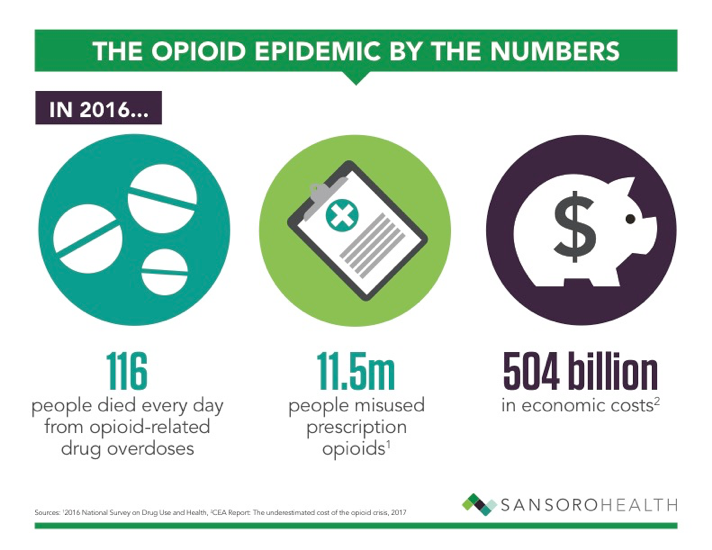
One of the authors recently had the opportunity to participate in a multi-stakeholder workshop in Cleveland, OH dedicated to finding new, collaborative approaches to addressing the nation’s opioid abuse epidemic. While Ohio might be considered ground zero for this epidemic, the evidence is clear that this is a national crisis and it is getting worse. The numbers are frightening, especially the 2016 estimate that 2.1 million people misused opioids for the first time.

Given the statistics, it is likely that many of you have been personally touched by the epidemic.

In our experience, successful improvement efforts in health care almost always address the role of people, process and technology. Strategic innovations aimed at the opioid abuse crisis should account for all three of these in a holistic manner. Innovation should be pursued as a series of practical experiments that address current gaps, result in near-term improvement, provide insights for future tests of change, and lead to a set of sustainable and scalable solutions that will be essential to ensuring long-term success in addressing this enormous problem.

Continue reading…

assetto corsa mods