Categories

Category: Medical Practice

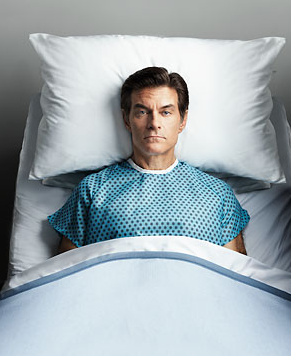
What Dr. Oz Learned From His Cancer Scare

By DAVIS LIU, MD

Dr. Mehmet Oz recently had a piece in Time titled “What I Learned from My Cancer Scare” in which he became the more humbled Mr. Mehmet Oz.  As noted previously here, Dr. Oz last summer had a colonoscopy at age 50 and much to everyone’s surprise had a precancerous colon polyp.  He was advised to follow-up again for a repeat test in 3 months.

As the Time magazine piece noted, he didn’t return for 9 months despite repeated reminders from his doctor.

From this experience, he essentially stumbled upon what has been challenging American medicine and primary care.  How do we enable patients to do the right thing and get the screening tests done and treatments necessary to avoid premature death and maintain a high quality of life?  As a highly trained professional, Dr. Oz knows the risks and benefits of not doing a preventive screening test.  As a doctor, he knows all of the secret protocols and codespeak we use when calling patients or asking them to see us in the office for important matters.  As a doctor, he also understood the importance of a repeat colonoscopy to ensure no more colon growths.

Yet he didn’t return for 9 months.  Why?

None of us want to deal with our mortality.  Having a screening test means there is a possibility that the test may be abnormal and now we must confront it face to face. Skipping the test means to be blissfully ignorant, even if it is the wrong thing to do.

Also, as Dr. Oz noted, many individuals, particularly those who are otherwise healthy with no family history, feel that many of these tests or interventions don’t apply to them.  Trust me, I know.  As a practicing primary care doctor, do you know how hard it is to convince someone to get screened for colon cancer?  Get vaccinated for pertussis, influenza, or pneumonia?

Continue reading…

Creating Value-Based Incentives For Primary Care

By BRIAN KLEPPER & DAVID KIBBE, MD

In a remarkable recent interview, Donald Berwick MD, Administrator of the Centers for Medicare and Medicaid Services (CMS), eloquently described his vision of value-based health care.

Paying for value is an incentive…The underlying idea of improvement is that American health care, historically built in fragments, often cannot achieve for patients what it really wants to achieve…Health delivery system reform refers to really reconfiguring care into much more seamless coordinated-care operations so that people, especially those with chronic illnesses, experience continuity of care over time and space.

So when patients come home from the hospital, there is a smooth handoff, and all the necessary information follows them. When they are seeing a specialist, that specialist is coordinating care with their primary care doctor.

This description probably resonates with most health care professionals as a better approach than the current paradigm’s fragmentation and lack of continuity of care. But as with many things in health care, it won’t be easy getting to a value-based health care approach in Medicare and Medicaid. Despite wide acknowledgement that fee-for-service perpetuates our health system’s most undesirable characteristics, the mainstream of American health care seems stuck. One wonders whether CMS can rise above the special interest lobbying, get beyond the interminable pilots and decisively act on payment reform with the conviction required to help save health care from itself.

Still, the idea of value-based reimbursement begs questions. What payment methodology will incentivize the best quality and most efficient care? What path can take us there?Continue reading…

Costs are Up…Because They’re Higher Than They Were

By EVAN FALCHUK

In perhaps no other country is there a greater abundance of data about health care than there is in the United States.  And in perhaps no other country is there more confusion as to what’s really going on.

Take the recent report by powerhouse actuarial firm Milliman (disclosure:  Best Doctors uses Milliman for actuarial work).  It’s a fascinating report with some of the best information on American health care there is.

The major take-away:  U.S. health care costs continue going up.

But when people start interpreting the data, well, that’s where the trouble starts.

For example, NPR reports on why costs are going up:

For three straight years, outpatient care has led all other categories of care in cost increases. Ninety percent of the increase is in more types of care being delivered in outpatient settings.

Factually, of course, this is correct.  More and more care is being delivered in outpatient settings.Continue reading…

The Role of Conflicted Science in the Cell Phone-Cancer Link

By MERRILL GOOZNER

Dr. Len over at the American Cancer Society is raising legitimate questions about the early release of findings by the World Health Organization’s International Agency for Research on Cancer (IARC) that cell phone use may increase the risk of brain cancer (hat tip to Gary Schwitzer’s HealthNewsReview).  The actual study — drawn from an analysis of “hundreds of scientific articles ” — won’t be published in Lancet Oncology “for a few days,” according to IARC. Says Dr. Len:

Unfortunately, drawing broad and sweeping conclusions based on a press release and a news conference leaves many of us wondering just what the evidence shows that led to the conclusion announced today that “radiofrequency electromagnetic fields” may be possibly cause cancer in people.

The evidence, when it appears, will be murky. A few years ago, I spent several months reviewing some of the evidence in this troubling field, largely from a conflict-of-interest perspective. The global telecommunications industry funds much of the science. Even when government agencies fund research, the results are difficult to interpret. The studies invariably involve looking for a very small number of negative health outcomes (brain cancers) in very large populations. Two researchers, looking at the very same set of epidemiological facts, will often come to different conclusions. And, as often as not, those conclusions correlate with whether the the researchers are independent or whether they are on industry’s payroll.Continue reading…

Getting Transparency Right

By PAUL LEVY

This is about transparency, when it is useful and when it is not. The term is now an established part of the health care lexicon, but there is little substantive discussion about how it is being used.

As I said in an article in Business Week over three years ago:

There are often misconceptions as people talk about “transparency” in the health-care field. They say the main societal value is to provide information so patients can make decisions about which hospital to visit for a given diagnosis or treatment. As for hospitals, people believe the main strategic value of transparency is to create a competitive advantage vis-à-vis other hospitals in the same city or region. Both these impressions are misguided.

Transparency’s major societal and strategic imperative is to provide creative tension within hospitals so that they hold themselves accountable. This accountability is what will drive doctors, nurses, and administrators to seek constant improvements in the quality and safety of patient care.

Now, there rises an additional misconception. The perversion of the transparency concept that has evolved rides on the desire of CMS and private insurance companies to use publicly published outcome data to financially reward or penalize hospitals. As expected, this is raising hackles. The complaints often heard from hospitals are ones we have discussed before: “The data are wrong.” “Our patients are sicker.”Continue reading…

How to Lower Cancer Care’s Costs

By MERRILL GOOZNER

A year-and-a-half ago, Howard Brody of the University of Texas Medical Branch in Galveston wrote an opinion article in the New England Journal of Medicine calling on every medical specialty to develop ways of cutting the cost of care. Citing financial sacrifices that had been made by insurers, hospitals, drug and device companies in the then pending health care reform bill, Brody said physicians could do their part “if they were willing to practice more in accordance with evidence-based guidelines and to study more seriously the data on regional practice variations.”

Toward that end, he called on each specialty to come up with a list that “would consist of five diagnostic tests or treatments that are very commonly ordered by members of that specialty, that are among the most expensive services provided, and that have been shown by the currently available evidence not to provide any meaningful benefit to at least some major categories of patients for whom they are commonly ordered.”

In the NEJM last week, two oncology specialists — Thomas Smith and Bruce Hilner of Virginia Commonwealth University — took up the challenge. They created a “top five” list of common oncology practices, which, if limited to situations where they were truly clinically useful, would sharply lower the cost of cancer care. Their lead paragraph noted the need for taking these steps:

Annual direct costs for cancer care are projected to rise — from $104 billion in 2006 to over $173 billion in 2020 and beyond. This increase has been driven by a dramatic rise in both the cost of therapy and the extent of care. In the United States, the sales of anticancer drugs are now second only to those of drugs for heart disease, and 70% of these sales come from products introduced in the past 10 years. Most new molecules are priced at $5,000 per month or more, and in many cases the cost-effectiveness ratios far exceed commonly accepted thresholds. This trend is not sustainable.Continue reading…

The Doctor is…Overbooked

By EVAN FALCHUK

At the New York Times’ City Room Blog, Joel Cohen writes:

my wife and I are convinced that all medical students should have to pass Overbooking 101 before they can become doctors.Again and again, we arrive at a doctor’s aptly named waiting room on or before the scheduled time, only to learn that three or four others sitting there have been given the same appointment.

He says doctors need to understand the impact of this on their patients.  I agree, but not just because it’s annoying.

A typical doctor sees thirty patients a day.  Some see even more.

Reflect on that math.  If your doctor sees 30 patients a day, that’s 150 a week, 600 a month, maybe 7,000 a year.

It means that if it’s been even two months since you last saw your doctor, he has probably seen more than a thousand people since your last visit.  It’s why there’s often that moment of disconnect when you see your doctor.  You’re living every day with the fears and anxieties of your medical condition, but your doctor can’t quite place which one of the worried patients you are.  So you have to remind him why he ordered that extra test a few months ago, why you switched medications the last time you were there, how he already ruled out that possibility the last time he saw you.Continue reading…

An Alternative to Malpractice

By JOHN GOODMAN

About three decades ago, University of Chicago law professor Richard Epstein proposed a radical alternative [gated, but with abstract] to our system of malpractice liability. He called it “liability by contract.” The idea: let patients and doctors voluntarily agree in advance how to resolve things if something goes wrong.

In nonmedical fields, Epstein’s idea is actually quite commonplace. Contracts for performance often have provisions detailing what the parties will do if something goes awry. If the parties disagree, contracts often spell out dispute resolution procedures (such as binding arbitration).

One version of this idea in medicine has already been tried. For years, hospitals asked admitting patients to sign a form agreeing not to sue the hospital or the doctors, no matter how negligent they were. When these forms showed up at the courthouse, however, judges routinely dismissed them on the grounds that the patients were too sick, too scared and too uninformed for there to have been a true meeting of the minds.

My colleagues and I at the National Center for Policy Analysis believe we have found here and here. Let the state legislature decide on the minimum elements (including the amount of monetary compensation) that must be in such contracts in order to make sure patients are fairly protected. Then widely publicize these elements so that people generally understand (before they get sick) what will happen if they opt out of the malpractice system. Courts would be required to accept these contracts as binding.

Continue reading…

Numbers Instead of Letters

By KARI GORDER

780.4: Dizziness and Giddiness.

Deep breath: I still felt out of place. I turned the engine off. Quietly, I promised myself: once you get commissioned, maybe after you go through ODS, they’ll give you a Geneva Conventions ID card and you can stop showing your driver’s license at the gate. You’ll have a uniform and you won’t be the only one on base wearing jeans. You won’t have to be on a guest list.

I got out of my car and walked inside. The National Naval Medical Center was a labyrinth, but this was my third and final physical—putting a bow on the package, as my recruiter had told me—and I knew my way to the health center. As I sat between two men waiting for their pre-deployment physicals, I couldn’t have felt less proud. An academic in a hornet’s nest. But, I promised myself: one day you’ll deploy too—as a doctor—and serve your country. One day you’ll use the Arabic you spent four years in college studying. You’ll be able to tell your children that you fought in war. You’ll justify your departure from the intelligence community: to be one who does, not one who says. I thought of a picture hanging in my bedroom. Deep breath.

The path to a military scholarship for medical school is lengthy: background investigations, essays, fingerprinting. Letters of recommendations from current or retired officers; my grandfather wrote mine. A personal interview with a current military physician: I got taken out to lunch by a Navy doctor who also happened to be a reality star, and then got mentioned in a gossip blog. And of course, a slough of physicals. Today I was to go over the results of my blood work from the previous appointment, and sign the appropriate forms. My insurance company had faxed over the entirety of my medical records, including my broken arm at the age of 7. I was tying the bow. I wiped my palms on my jeans.Continue reading…

Patient Care in the Cloud

By VIJAY GOVINDARAJAN AND JUSTIN CHAKMA

When we envision an emerging market, we think of a rapidly growing country with small purchasing power, little infrastructure, and diminishing natural resources. These three aspects of emerging markets require innovations that can subsequently be taken global — a phenomenon known as “reverse innovation.” However, a fourth and powerful driver of reverse innovation is the comparative absence of intermediaries: an institutional gap.

As Tarun Khanna has described, institutions such as venture capital firms, legal support, universities, regulators, and third-party auditors help to make markets and value chains more efficient. Institutional voids can persist for decades, and cannot be resolved by throwing more capital at the problem. They also differ from physical infrastructure and limited natural resources, as they often manifest themselves in non-physical forms.

A concrete example of an institutional void is universities for training physicians. It takes more than a decade to train medical specialists. Building new medical schools or expanding existing ones will only have an impact on the needs of the local healthcare system in the distant future.

Medtronic is exploring ways to address that void in the area of chronic disease management.

Sixty-nine percent of deaths in the developing world are due to chronic disease, yet only 2.3% of international aid is allocated to chronic disease. In the United States, hospitalization of chronic disease patients accounts for the majority of health care costs. But innovation in managing chronic disease is happening faster in emerging markets such as India as a result of the scarcity of physicians.

India, which has more than one billion citizens, has only 100 qualified cardiac electrophysiologists. To tackle this institutional void, Medtronic developed a low-cost, pill-sized pacemaker that can be inserted into a stent, then embedded in the heart. This device eliminates the need for invasive inter-cardiac leads that deliver electricity to synchronize the heart. A much larger group of cardiologists and cardiac surgeons will be able to perform this procedure.Continue reading…