
Susan Blumenthal, M.D. has updated her exhaustive (and exhausting) list of the Presidential candidates’ health care proposals You’ll find the Side-by-Side Comparisons on the The Huffington Post
POLITICS: The Crystal Ball – Healthcare reform in California
I’m up over at Spot-on discussing why the opinion of 32 corn farmers in Iowa may not matter quite as much for health insurance as what’s going on in my fair state. The piece is called: A Californian Crystal Ball.
As ever come back here to comment.
Pretty much anyone interested in U.S. politics is focused today on what 32 corn farmers in the middle of the country have to say about the 20-some people currently hoping to run the world by becoming President of the United States.
And while health care concerns have figured in many of the conversations the U.S. political press has had – or overheard – with Iowa Caucus voters, it’s been a wild holiday season for California’s health care system. The impact on what type of health care reform legislation will eventually come to national attention is probably just as great.
On Christmas Eve a California appeals court unanimously decided that the way insurers have been practicing in the state for many years is illegal. The case involving retroactive cancellation of policies was one that the nice well-behaved non-profit California Blue Shield had fought in the courts while its aggressive for-profit competitor, Wellpoint’s Blue Cross unit, had settled.
Blue Shield maintained it had the right to retroactively cancel those insurance policies for which it says that policy-holders had lied on their applications. At first the series of stories, which started coming out last year and ended up making an appearance in Michael Moore’s Sicko, seemed cut and dried. People who’d received expensive care were having their insurance canceled for pre-existing conditions that they’d either clearly disclosed on their applications, or couldn’t possibly have been expected to remember. Meanwhile the behavior of the health plans was shown to be particularly cynical, with one, HealthNet, actually paying out bonuses to staff doing "recissions" based on how many expensive policy holders they kicked off their rolls.Continue reading this post o ver at Spot On.com
The Politics of Publicly-Funded Health Care – Brian Klepper
Over at Health Care Policy and Marketplace Review, the always insightful Bob Laszewski walks us through the mechanics of the just-passed federal budget and its health care financing implications for SCHIP, physicians, hospitals, Medicare Advantage plans. This clear, common sense analysis is a must-read for anyone interested in how the budget process actually works.
The final bill had 12,000 earmarks, testimony to continuing special interest domination over the public interest. Everyone facing a cut got a reprieve, but all the same issues (and cuts) will be on the table in the near future. Here’s one of Bob’s summary paragraphs.
Late in 2008, the docs will be facing a 15% Medicare fee cut on January 1, 2009, SCHIP will be out of money a few months later on March 1, 2008, the extra payments to Medicare Advantage plans will present the same plump target, and we will know who won the November elections.
So the cuts were held off. Nothing really changed. And once again, our Congressional representatives on both sides of the aisle made decisions that accrued much more to the interests of their contributors than those they claim to represent.
THCB Reader Mail
In response to Matthew’s take on California Governor Arnold Schwarzenegger’s Massachusett’s-style plan to require that all state residents purchase insurance ("California Not Really Uber Alles" 12/26 ) contributor and friend of THCB Jeff Goldsmith writes:
"Isn’t it interesting that the projected California budget deficit and the cost of the health reform program are both about $14 billion. So to fix both of them would thus requires the state to find a mere $28 billion? That’s the real reason it isn’t going to happen, not provider lobbying or employer intransigence. No state can really do something like this by itself without wrecking its economy. It is what we have a national government for.
It isn’t really that hard conceptually to construct an affordable benefit. Remember the large majority of the uninsured are young people. A stripped down package which covered primary care MD services, dental care, chronic care type drugs like insulin, and catastrophic hospitalization coverage (w/ some type of negotiated deep discount for the patient’s part of the hospital bill) would do the trick.
The problem is stopping one’s ears for all the sob stories from the chiropractors, podiatrists, aromatherapists, etc. who want to force you to insure for their services. Your suggestion that the real problem is retaining employer based coverage still dodges the question that somehow, somewhere, a legislative body still has to define what coverage is mandated.
Why do you think employers are so resistant (a 7.5% payroll tax might be part of the explanation)? It is because thirty years of legislative history suggests our elected representatives, like that easy woman in the musical Oklahoma, "cain’t say no". Mandated in vitro fertilization, breast reconstruction after cancer surgery, etc. – all worthy goals in a resource unlimited world, but death to an affordable universal benefit.
Oregon’s John Kitzhaber, an emergency physician by training, seems, so far, to have been the only political leader of either party to have figured out that making these types of hard choices is the real problem in health reform- not "play or pay", tax deductions or hard subsidies, employer or individual mandate, or all the other comparatively trivial choices. Listen to all the pervarication from the Presidential candidate poseurs on what actually gets covered. It’s enough to turn you into a New Zealander."
EDITOR’S NOTE: Jeff Goldsmith is the president of Health Futures Inc. From 1982 to 1994, Jeff served as National Advisor for Healthcare at Ernst & Young. From 1980 to 1990 he was a lecturer at the Graduate School of Business at the University of Chicago. He currently serves on the editorial board of Health Affairs. His past pieces for THCB have included "The Perpetual Healthcare Crisis" and "Employers’ Health Cost Growth Continues to Moderate: Ain’t It Awful?"
Matthew’s end of year letter
My personal end of year letter which details the causes and charities I support is up over on my almost defunct personal blog. Please take a look if you’re feeling in the mood!
Look at How Safe [Fill in the Blank] Is by Bob Wachter

By ROBERT WACHTER
But is it as simple as that really? Perhaps not. In the commentary that follows, Bob Wachter has a very different take on the airline analogy. Analogies are useful things, true, he argues. But perhaps not as useful as the cure-healthcare-by-adopting-model-posed-by- [ insert industry / EU member state here ] might have us believe. Who should you believe? That’s up to you. You’ll find more of Bob’s excellent commentary on quality and patient safety in the THCB archives and on his blog, Wachter’s World.
The rate of fatal domestic airline crashes has fallen by 65% in the past decade – from an amazingly low rate of one fatal accident in about 2 million departures in 1997, to a breathtakingly low rate of one in 4.5 million departures this year. Flying just keeps getting safer and safer.
Beginning with the 1999 Institute of Medicine report on medical errors, aviation has become the poster child for patient safety. In fact, it was an aviation analogy – the translation of the 44,000-98,000 deaths per year from medical errors into “the equivalent of a jumbo jet a day crashing” – that jumpstarted the patient safety field in the first place.
On the whole, I like the aviation analogy, because it energizes us and helps illustrate the need for certain safety-oriented practices, such as standardization, simplification, simulation, teamwork training, and effective reporting systems and regulations. It is also uniquely accessible: who would ever fly electively if a big plane went down every day in the U.S.? Yet hundreds of thousands of people check into hospitals and clinics electively daily.
But lately, I’ve sensed gathering pushback against the aviation analogy – as well as against analogies from other industries. “This has nothing to do with us,” I hear from colleagues sometimes. “Healthcare is so different.” And they’re partly right. For example, we have learned that dampening down authority gradients on a med-surg ward is orders of magnitude harder than doing so in a cockpit. Here’s why: to prevent another Tenerife disaster (the horrific 1977 runway incursion/collision of two 747s, ostensibly caused when the flight engineer – who suspected there was a large airplane blocking the way – felt uncomfortable speaking up to his boss, the pilot), aviation had to transform its culture.
California not really uber alles
Late last week Brian Klepper stirred things up around here calling California’s health care bill Business As Usual. Over at Spot-on earlier this week I was a little more simplistic. I call the California approach The Last of the Old Solutions, largely because it keeps intact the employer-based health insurance system and doesnt include an effective individual mandate because that needs a real tax increase. (My original title of "California not really uber alles”was somehow vetoed over there—but here I’m in charge!)
As I say over there
If the goal is universal coverage, the pay-or-play system in which employers have to offer coverage sounds good – as well as familiar – but it doesn’t really get us there. Hawaii passed something similar in the 1970s and several other states have tried some variant and still no one’s really got close to universal coverage.
Please go there and read the rest and come back here to comment if you’re feeling bored at the end of the year!
Tiny Tim Health Care
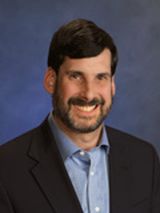
By MICHAEL MILLENSON
Every year at this time, millions of Americans turn their attention to a much-beloved story about health care reform. I refer, of course, to Charles Dickens’ A Christmas Carol.
While this is not the traditional plot summary, it aptly describes a story rooted in the plight of a crippled young boy whose father cannot afford the care his son desperately needs. The prospect of Tiny Tim’s eminently preventable death finally breaks through Ebenezer Scrooge’s bitterness, causing the old miser to abandon his hard-hearted ways. Alas, we Americans still seem inclined to treat the demand for universal health coverage like the Scrooge of old. His dismissive cry, “Are there no poorhouses?” is echoed by our smug assertions that those in dire medical need can “just go to an emergency room.”
Would-be reformers have responded with statistics about 18,000 preventable deaths each year and stories about the real-life Tiny Tims in our midst — to no avail. A new report from the American Cancer Society concluding that those without health insurance are 1.6 times more likely to die of their disease than those with private insurance came just a few days before Christmas and a few days after President Bush’s latest veto of the State Children’s Health Insurance Program, which would help millions of children living in near-poverty.
So this holiday season, rather than tugging on heartstrings, I’d like to take the opposite approach. Forget about the waifs: let’s talk about your wallet. The Cratchit families of this country are costing you and me money.
Say it Ain’t So, Joe

By PAUL LEVY
I heard a great presentation this morning by Joe Newhouse, from the Department of Health Policy and Management at Harvard Medical School. There was one point that he made that really caught my attention. It was a cite to a 2004 article in the Journal of the American Medical Association (Dimick, et al, JAMA 2004; 292: 849) that presented the issue of how many cases you would need to collect of a certain clinical procedure to be able to make a determination that a given hospital’s mortality for that procedure was twice the national average. It turns out that only for CABGs (coronary artery bypass grafts) are there enough cases performed to have statistical confidence that a hospital has that poor a record compared to the national average. For other procedures (hip replacements, abdominal aortic aneurysm repairs, pediatric heart surgery, and the like) there are just not enough cases done to make this assessment. (By the way, if you just want to know if a hospital is say, 20%, worse on relative mortality, you need even a bigger sample size.)
POLICY: Overtreated gets huge plaudit
OK. It’s official. David Leonhardt is a convert, even one who can’t quite leave his past behind. In is NY Times selection for Economics book of the year he picks Shannon Brownlee’s Overtreated. (If you want to hear me and Shannon having a good gossip about the American health care system, see here).
Leonhardt can’t quite shake his Stephen Colbert-like past (the market has spoken so it must be true). He still says this:
As I’ve written before, there is nothing wrong with devoting a large chunk of our economy to medical care. Since the 1950s, doctors have made incredible progress against diseases that were once inevitably fatal. That progress is probably the finest human achievement of the last half century. If we weren’t wasting so much money on overtreatment, it would be a lot easier to repeat the achievement over the next half century.
Of course, and it’s been pointed out ad nauseam here, those results were achievable at a much lower cost than we’ve paid, and the difference could have been spent on something with a higher economic return (or in invading any middle eastern countries we haven’t got to yet).
But it’s great to have Leonhardt on board, at least for the Wennberg thesis. Now he just has to convince the rest of the NY Times editorial board.



