Categories

Category: Health Policy

Medicare Advantage Quality, Savings, Access and Satisfaction: Can We Have It All?

By AL LEWIS

Imagine a Medicare Advantage (MA) policy which increases the quality of health care for seniors, saves the government money, brings MA to the few remaining places that don’t have it, and puts checks in the hands of senior citizens. What you are about to read should do all that, in theory. However, I’m sure there are practical issues that I am overlooking, and I am hoping to attract comments noting those issues that, as Woody Allen once said, can take this from being a notion to an idea, and eventually a concept.

First, each county would have a “default” plan that would automatically enroll people on their 65th birthday, rather than have the traditional plan serve as the default option. (Those of us already in an HMO with a Medicare option can stay in it, seamlessly, rather than join the default plan.) Anyone could still opt out into the traditional plan or another MA plan, of course, at any time.

The default plan is chosen based partly on its Stars rating, but partly on a bid process, in which plans offer to pay the government for the right to be this default plan. The payment would be substantial for three reasons:

1. In some highly populous counties, MA is profitable enough to support fifteen or twenty plans, far more than would survive in a competitive market with market-based pricing. Much of this “excess profit” would be bid back to the government by the default plan, in exchange for access to many more enrollees;

2. Member acquisition costs for the default (“opt-out”) plan would be a small fraction of the $500- $1000 that a new member costs in today’s opt-in MA environment. Much of this savings would be included in the bid;

3. The bid would be calculated not based on just on one year’s profit, but rather on the expected lifetime value of a member, taking into account projected member retention and any scheduled or anticipated relative reductions in reimbursement.

Continue reading…

Seven Reasons to be Thankful for Health Reform this Holiday Season

By LINDA BERGTHOLD

This holiday season you may be surprised to find some gifts from the Affordable Care Act (aka health reform) in your stocking. I say “surprised” because a recent Kaiser Family Foundation poll found that the American public still doesn’t know what is in the health reform law and what is not.

If you haven’t been sick this year or are not included in the following categories of people who are benefiting from health reform, it makes sense that you won’t have paid much attention. You may not experience concrete benefits until it is fully implemented in 2014. But just in case you know someone in these categories, here’s the list of health reform “gifts” available this year (see my blog on the Health Insurance Resource Center for more details):

1. If you are 65 or older — (and eligible for Medicare) — seniors who are enrolled in Medicare Advantage plans (that’s Part C or the managed care part of Medicare) may have seen their premiums reduced this year. Some may even have access to ZERO premium health plans. Seniors also now receive free preventive treatments and a rebate of $500 if their drug coverage hits the “donut hole” in 2011.

2. If you haven’t turned 26 yet — you may have been able to stay on your parents’ health plan this year, even if you are working or don’t live at home. 1.8 million young people had access to this benefit. And 90,000 children under the age of 19 could not be denied coverage because of a pre-existing condition due to a change that was implemented in 2011.

3. If you needed preventive care (or had the good sense to get it) — you had access to it this year without a co-payment or deductibles.

Continue reading…

Congress Passes Socialized Medicine and Mandates Health Insurance – In 1798

By RICK UNGAR

The ink was barely dry on the PPACA when the first of many lawsuits to block the mandated health insurance provisions of the law was filed in a Florida District Court.

The pleadings, in part, read:

The Constitution nowhere authorizes the United States to mandate, either directly or under threat of penalty, that all citizens and legal residents have qualifying health care coverage.

State of Florida, et al. vs. HHS

It turns out, the Founding Fathers would beg to disagree.

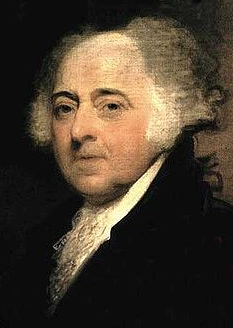
In July of 1798, Congress passed – and President John Adams signed – “An Act for the Relief of Sick and Disabled Seamen.” The law authorized the creation of a government operated marine hospital service and mandated that privately employed sailors be required to purchase health care insurance.

Keep in mind that the 5th Congress did not really need to struggle over the intentions of the drafters of the Constitutions in creating this Act as many of its members were the drafters of the Constitution.

And when the Bill came to the desk of President John Adams for signature, I think it’s safe to assume that the man in that chair had a pretty good grasp on what the framers had in mind.

Here’s how it happened.

Continue reading…

Shopping for Health Coverage Versus Shopping for Health Care

By JOHN GRAHAM

As I read the spirited debate over whether Obamacare will drive health insurers out of business (here and here), I wonder if we need to bring the discussion back to fundamentals: The key problem with U.S health insurance is that there is too much of it – whether provided by private insurers or government.

Avik Roy and Rick Ungar disagree on the likely outcome of Obamacare: Private-insurance monopolies or government monopoly (a.k.a. “single payer”).  I think both are correct.  Private monopolies will arise (within each state or regions within larger states) to exploit the huge subsidies (tax credits) available through the so-called Health Benefits Exchanges.

But this will only persist for a few years.  Today, the politicians supporting an increasingly shaky Obamacare must ensure that the health-insurance industry remains divided – some hoping to profit from Obamacare’s forthcoming monopolies and others fearing exclusion.  This prevents them from coming together in a unified effort to repeal the law.  The Democrats’ success at keeping the health-insurance trade association on-side and on-message is pretty impressive, given the fact that even the U.S. Chamber of Commerce now publicly advocates repeal.

The likelihood of Obamacare surviving both the U.S. Supreme Court and next year’s voters is pretty slim, so its supporters cannot afford to let any more hostages escape.  (The pharmaceutical industry, for example, is also refusing to join the repeal movement.) So, while Democratic leaders cannot stop single-payer extremists like Mr. Ungar from telling the truth, they must continue to pretend that the end-game is simply a “fairer” private system, rather than a government take-over.

Continue reading…

Free the Vets

By JOHN GOODMAN

Don’t you think our military veterans deserve decent health care? I certainly do. That’s why I like Mitt Romney’s idea of setting the veterans free. Give them the opportunity to choose private health care alternatives to the Veterans Health Administration (V.H.A.), a system that too often fails them.

Why can’t we do for veterans what we do for seniors? About one in every four Medicare beneficiaries is not actually in Medicare. They have enrolled instead in private health insurance plans operated by such entities as Aetna, United Health Care, Cigna, etc. Why can’t we give people who risked their lives for the rest of us similar options?

You would think this idea is a no-brainer. But, just like the Grinch at Christmas time, you can always count on Paul Krugman of The New York Times to argue that being trapped is good, free to choose is bad, and government medicine is all anyone should ever have or need.

According to Krugman, “the V.H.A. [is] providing better care than most Americans receive” and it does so at a lower cost. He doesn’t stop there. Here is Krugman’s view of health care, worldwide:

The most efficient health care systems are integrated systems like the V.H.A.; next best are single-payer systems like Medicare; the more privatized the system, the worse it performs.

In other words, in the best of worlds we all would be getting veteran’s care, courtesy of the U.S. government!

Continue reading…

The Rebirth of Social Darwinism

By ROBERT REICH

What kind of society, exactly, do modern Republicans want? I’ve been listening to Republican candidates in an effort to discern an overall philosophy, a broadly-shared vision, an ideal picture of America.

They say they want a smaller government but that can’t be it. Most seek a larger national defense and more muscular homeland security. Almost all want to widen the government’s powers of search and surveillance inside the United States – eradicating possible terrorists, expunging undocumented immigrants, “securing” the nation’s borders. They want stiffer criminal sentences, including broader application of the death penalty. Many also want government to intrude on the most intimate aspects of private life.

They call themselves conservatives but that’s not it, either. They don’t want to conserve what we now have. They’d rather take the country backwards – before the 1960s and 1970s, and the Environmental Protection Act, Medicare, and Medicaid; before the New Deal, and its provision for Social Security, unemployment insurance, the forty-hour workweek, laws against child labor, and official recognition of trade unions; even before the Progressive Era, and the first national income tax, antitrust laws, and Federal Reserve.

Continue reading…

Cameron’s Law

By RICHARD HOEY

British Prime Minister David Cameron is a man who likes to get his PR right.

In the summer, he used all his experience as a former head of corporate communications at Carlton TV to steer a path through the anger and acrimony generated by his reforms to the National Health Service (NHS).

He whisked up a listening exercise and an independent report, spoke some conciliatory words, and persuaded first MPs and then the House of Lords to wave through his Health and Social Care Bill to its current position on the brink of becoming law.

But just as the debate over the NHS appeared to be calming down, it has been abruptly reignited by a leaked policy document critics of the reforms describe as a ‘smoking gun’, demonstrating the Government’s intention to dismantle the state health system.

The document doesn’t sound a great deal. It is called ‘Developing commissioning support: towards service excellence’.

But its contents are explosive enough that the British Medical Association, which until now had been prevaricating over its response to the Government’s bill, has come down on the side all all-out opposition, with a series of attack ads planned soon.

Continue reading…

A Litmus Test For Elected Officials

By BRIAN KLEPPER AND DAVID KIBBE, MD

Six months ago, who could have imagined that a large percentage of rank-and-file Americans would support the Occupy Wall Street (OWS) against special interests’ rigging of the American dream? So why not go to the next step? Why not pointedly ask political candidates, “Will you take money from lobbyists?” and “If elected, what will you do to stop special interest influence?”

Most Americans are deeply disturbed by this issue. In a recent Time Magazine poll of people familiar with the OWS protests, 86 percent thought that “Wall Street and its lobbyists have too much influence in Washington.” Gallup found that 68 percent of Americans think corporations should have less political influence.

These trends didn’t just happen. They resulted from special interests’ vigilant attention to legislative possibility, lubricated by the exchange of money for votes. Influence peddling is now so accepted in American politics that the Center for Responsive Politics (CRP) has established a lobbying data base, Open Secrets. But making lobbying contributions transparent hasn’t slowed the torrent of money that re-shapes law and wealth distribution.

Since 1952, the percentage of gross domestic product (GDP) represented by corporate taxes has plummeted from 6.1 to 1.0 percent, while the percentage represented by employment taxes has skyrocketed from 1.8 to 6.3 percent. Meanwhile, a just released Congressional Budget Office study confirmed that the top 1 percent of earners more than doubled their share of the nation’s after tax income over the last 30 years.Continue reading…

Justice Kagan Should Recuse Herself from Obamacare Case

By CARRIE SEVERINO

This spring the U.S. Supreme Court will decide what may well be the case of the century — the constitutional challenge to Obamacare. But will the case be heard by eight or nine justices?

Before the health care law was even passed, the Department of Justice had been meeting to develop a strategy for defending the law from constitutional attack. Involved in this effort was none other than Elena Kagan, now the newest Obama appointee to the Supreme Court.

Federal law requires Supreme Court justices to recuse from a case if they had earlier “participated as counsel” in the case. Justice Kagan did just that when she was Obama’s solicitor general, but has never explained why she believes she is nevertheless justified in sitting on the case under this standard.

One simply can’t be the coach and referee in the same game. At best, knowing the playbook will color your judgment, and at worst, you’ll be on the lookout for chances to give your former team an advantage.

Here are the facts. It took two lawsuits to get “the most transparent administration in history” to release emails detailing Kagan’s involvement in the Obamacare defense. Those emails show that, in a highly unusual move, she ordered her staff to become involved in the defense before the law was even passed.

Continue reading…

The Promise of Electronic Healthcare Records

By JOHN HALAMKA

Last week, Don Berwick completed his 17 month tenure as administrator of Medicare and Medicaid.   The nation should be grateful that such a visionary was at the helm.  The nation should frustrated that he was never confirmed.

In his parting interview with the press,  he noted that 20 percent to 30 percent of health spending is “waste” that yields no benefit to patients.

Berwick listed five reasons for the enormous waste in health spending:
*Patients are overtreated
*There is not enough coordination of care
*US health care is burdened with an excessively complex administrative system
*The enormous burden of rules
*Fraud

Certainly regulatory reform is needed, but electronic health records can go far to addressing each of these issues.

Continue reading…