Categories

Category: Health Policy

The Boy Who Lived

[youtube width=”475″ height=”300″]http://www.youtube.com/watch?v=tmlTHfVaU9o[/youtube]


YouTube: Hundreds of thousands of Internet users downloaded a shockingly powerful viral YouTube clip made by an Austin teenager shortly before his death. Eighteen year old Ben Breedlove, who suffered from hypertrophic cardiomyopathy, died on Christmas day.

See Also: This Is My Story (Part 2) The second part of Ben’s story.

And: Los Angeles Times story on Breedlove, refutes charges video is a hoax.

San Francisco’s Universal Health Plan Reaches Tens of Thousands, but Rests on Unstable Funding

By BARBARA GRADY

Four years ago, San Francisco launched a grand experiment, becoming the first city in the nation to offer comprehensive health care to its growing ranks of uninsured.

Stitching together two-dozen neighborhood health clinics and an array of hospitals, the city bet that two reforms — emphasis on primary care and a common electronic enrollment system — could improve outcomes and buffer the city against soaring health care costs.Continue reading…

Obesity Means Lower Pay

By DOC GURLEY

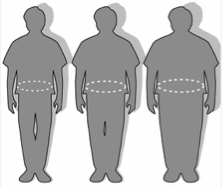
I’ve written before about obesity issues – mostly related to soda and diet soda (the message – even diet soda isn’t good for you – try to drink water instead) and also that even being a little overweight can still result in health problems. But a new study, coming out of the National Longitudinal Study of Youth, shows that obesity can also impact you economically with obese people earning less than the rest of the population on average.

Hopefully this information will help provide greater motivation for people struggling with obesity since sometimes it takes more than a simple understanding of health and self interest to sufficiently motivate people to take action. But it also raises questions about the reasons for average lower pay.Continue reading…

Scenario Planning in a Post-ACO and Post-ACA World

By JAAN SIDOROV


In a prior post, I provocatively suggested that providers, hospital boards and policymakers should hedge their bets and prepare for the possibility of a “post-ACO world.”  If the Group Practice Demo’s disappointing results are any guide, the likelihood of a happy ending for accountable care organizations is on numerical par with Congress’ approval rating. While I like the mutual “win-win” theoretical construct that underlies ACO gain sharing, it also recalls a life-lesson: want you want and what you get are usually two different things.

So, if the Feds have to eventually retreat on the non-success of ACOs, what will be left in its wake?  More on that in future posts.

And while the uncertainty surrounding ACOs isn’t bad enough, I have also been astonished by the battered Euro, the appearance of hospital-employed cardiologists and the absence of a Lady Gaga Christmas album.  Accordingly, I have learned my lesson and assume nothing.

Continue reading…

The Defining Issue: Not Government’s Size, but Who It’s For

By ROBERT REICH

The defining political issue of 2012 won’t be the government’s size. It will be who government is for.

Americans have never much liked government. After all, the nation was conceived in a revolution against government.

But the surge of cynicism now engulfing America isn’t about government’s size. The cynicism comes from a growing perception that government isn’t working for average people. It’s for big business, Wall Street, and the very rich instead.

In a recent Pew Foundation poll, 77 percent of respondents said too much power is in the hands of a few rich people and corporations.

That’s understandable. To take a few examples:

Wall Street got bailed out but homeowners caught in the fierce downdraft caused by the Street’s excesses have got almost nothing.

Big agribusiness continues to rake in hundreds of billions in price supports and ethanol subsidies. Big pharma gets extended patent protection that drives up everyone’s drug prices. Big oil gets its own federal subsidy. But small businesses on the Main Streets of America are barely making it.

Continue reading…

The States: Friends With (Essential) Benefits

LINDA BERGTHOLD

By LINDA BERGTHOLD

Since the passage of health reform (Affordable Care Act), many have wondered what would be covered in the benefits offered through the State Exchanges. We have been reassured that the benefits that are “essential” would be comprehensive yet affordable. But essential to whom? What is an essential benefit and who gets to decide? Tough questions. No easy answers.

Last week HHS released a bulletin punting part of the issue to the States. States will have more “flexibility” to determine what is in the essential benefit package. Of course, not complete flexibility. These benefit plans MUST include, at least, the ten categories of benefits that are defined in the law. Those categories include:

Section 1302(b)(1) provides that EHB include items and services within the following 10 benefit categories: (1) ambulatory patient services, (2) emergency services (3) hospitalization, (4) maternity and newborn care, (5) mental health and substance use disorder services, including behavioral health treatment, (6) prescription drugs, (7) rehabilitative and habilitative services and devices, (8) laboratory services, (9) preventive and wellness services and chronic disease management, and (10) pediatric services, including oral and vision care.*

Here are some questions that you might want to know about what is unfolding:

Continue reading…

12 Common Medicare Scams

By RICHARD REECE

“To scam Medicare is not to give a damn for taxpayers. Money is money whether you earn it or steal it.”

– Anonymous

Christine Seivers of medicalbillingandcoding.org sent me the following list of common Medicare scams. I have edited and shortened her copy to fit my blog.

1. The Poser Scam

One common way to scam Medicare is to pose as a Medicare employee, a practitioner, or insurance representative. These fraudsters call, email, or send letters asking for personal information that includes bank, Social Security, and Medicare numbers.

2. The Healthcare Reform Scam

Healthcare reform is on the lips of everyone these days, and scammers are using it to cash in. Many adults don’t know what the new health care legislation actually entails. That’s just the way criminals want it. It makes many Americans easy targets for scams, like those that claim to sell “healthcare reform insurance” that purportedly protects seniors from any losses to their Medicare or any fines they make incur from not meeting guidelines.Continue reading…

The Wyden-Ryan Plan

By ROBERT LASZEWSKI

House Budget Chair Paul Ryan (R-WI) and Senator Ron Wyden (D-OR) have embraced a Medicare reform plan that in concept borrows heavily from one championed by former New Mexico Senator Pete Domenici and former Clinton budget chief Alice Rivlin.

Specifically, Wyden and Ryan are proposing to alter the earlier Ryan Medicare plan by:

  1. Continuing to offer the traditional Medicare plan—Ryan would have eliminated it—in addition to a range of private Medicare plans offered by health insurers.
  2. Tying federal Medicare premium support to an amount equal to the second lowest cost Medicare plan—public or private—available to seniors in each market. Ryan would have set a flat premium support amount in year-one and increased that only at the rate of inflation.
  3. Instituting a series of consumer protections and medical underwriting rules designed to protect seniors.
  4. Instituting an annual cap on what the federal government could pay for Medicare at an amount equal to the increase in the nation’s GDP + 1%—Ryan would have capped annual increases in the federal premium support amount at the increase in the consumer price index.

On this blog I have been arguing that the risk for health care costs rising too quickly should not be borne entirely by seniors–that the stakeholders who really run the system should be most accountable. And, that is what the Wyden-Ryan plan would do: “Any increase over that cap will be reflected in reduced support for the sectors most responsible for cost growth, including providers, drug companies, and means-tested premiums,” their plan states.
Continue reading…

Florida’s Problem: Cutting Medicaid May Cost More

By DAVID WILLIAMS

Florida is concerned that it spends too much on Medicaid. Unfortunately for policymakers, proposed cuts to Medicaid are likely to be self-defeating according to an Orlando Sentinel article. They may result in more spending as well as boosting the number of people with no coverage – especially children. Components introduced under the guise of personal responsibility –such as charging $10 per month per beneficiary or $100 for non-emergency use of the emergency department– have great intuitive appeal to taxpayers and legislators, yet can backfire in practice.

Experience from Oregon suggests that even modest, sliding scale premiums result in huge drops in coverage. A report from the Health Policy Institute at Georgetown University suggests 82 percent of those who leave coverage would be children, of whom 98 percent would be below the poverty level.

There are clear examples of emergency room overuse, but what’s crystal clear in retrospect is not always evident up front. In any case, hospitals can do their part with effective triage that sends patients to lower acuity settings or back home when patients who shouldn’t be there show up.

Continue reading…

Three big winners of the “Ensuring Safe Transitions” Challenge

By WIL YU

Health 2.0 has been running Developer Challenges for the ONC since April. Challenges involve building applications for particular purposes such as this one about ensuring safe transitions. They’re getting very popular (this one had more than 30 entries) and we’re going to be announcing several more winners soon for other challenges. You can also hear more about this on the Health 2.0 Show happening at 11 PT or 2pm ET today! Matthew Holt

At the CMS QualityNet Conference yesterday, National Coordinator for Health IT Farzad Mostashari announced the three winners of the “Ensuring Safe Transitions from Hospital to Home” innovation challenge: Axial Exchange, iBlueButton, and VoIDSPAN. Congratulations to the winning teams!

The public challenge launched in September of 2011 in conjunction with Partnership for Patients and under the auspices of the ONC’s Investing in Innovation (i2) program. The Challenge asked developers to create solutions that improve patient safety and facilitate care transitions for patients discharged from hospitals to other care settings (including but not limited to homes, nursing homes and hospices). Statistically, nearly one in five patients discharged from a hospital is readmitted within 30 days. Many of the readmissions can be prevented by simple improvements in communication and coordination from the point of care delivery through and past discharge.Continue reading…