Categories

Category: Health Policy

Reduce the Budget Deficit Through Innovation

By JON BARON & RON HASKINS
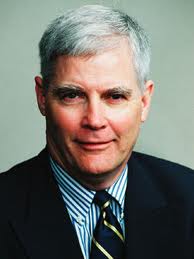
The solution to the nation’s long-term deficit problem is generally portrayed as a choice among sharp budget cuts, major tax increases or a combination of the two. Given the magnitude of the problem, some level of sacrifice is probably unavoidable. But there is a third, overlooked approach to major budget savings — innovation — that the new congressional supercommittee should also include as a key component of its deficit-reduction strategy.

Innovation in this case is the process of trying a range of promising approaches and using rigorous evaluation methods to determine which of them really work. In many areas of the economy — such as information technology, agriculture and manufacturing — innovation has often identified ways to both reduce cost and improve performance. This has led to amazing progress over time, including exponential gains in computing power over the past half-century at a steadily decreasing price. So a logical question is: Can innovation in policy produce more effective government at lower cost?

The answer is yes. There are proven examples, from U.S. welfare policy and other areas, where innovative reforms produced major budget savings while simultaneously improving people’s lives. This suggests that part of the answer to our deficit problem lies in American ingenuity and not just sacrifice.

Continue reading…

Only Handle It Once (OHIO)

By JOHN HALAMKA

In my recent post Work Induced Attention Deficit Disorder, several commenters asked how I stay focused and productive, speculating that I leverage my limited need for sleep.

Although having a 20 hour day helps, the real secret is that I end each day with an empty inbox.    I have no paper in my office.    I do not keep files other than those that are required for compliance purposes.

The end result is that for every document I’m asked to read, every report I’m ask to write, and every situation I’m asked to management, I only handle the materials once.

What does this mean?

In a typical week, I’m asked to review 4 or 5 articles for journals.   Rather than leaving them to be read at some later time or reading them then deferring the review, I read and review them the day they are assigned.    This enables me to read them once and write the review very efficiently since all the facts are fresh in my mind.

Continue reading…

A Win-Win: Job Creation Will Grow the Economy and Improve Health

By RISA LAVIZZO-MOUREY & MARK PINSKY

The current economic recovery effort presents an opportunity to build stronger, healthier communities. That’s a central goal for the Create Jobs for USA Fund that Opportunity Finance Network (OFN) and Starbucks launched late last year to support job creation and retention.

Economic growth and job creation provide more than income and the ability to afford health insurance and medical care.  They also enable us to live in safer homes and neighborhoods, buy healthier food, have more leisure time for physical activity, and experience less health-harming stress.  The research clearly shows that health starts in our homes and communities and not in the doctor’s office.

In that way, economic policy is, in fact, health policy.

Since 1985, OFN’s national network of community development financial institutions (CDFIs) has loaned more than $23 billion to benefit low-income, low-wealth, and other disadvantaged communities.  The Robert Wood Johnson Foundation (RWJF), with an endowment of around $8.5 billion, is the nation’s largest philanthropy focused solely on improving health and health care for all Americans.  Marrying the business acumen of CDFIs and others to health philanthropy’s ability to supply the research, analysis, and expertise to make sure community development activities improve residents’ health is a powerful union.

Continue reading…

Can You Really Fire Your Insurance, Mitt?

By TRUDY LIEBERMAN


Romney’s remark last week about firing your insurance company apparently harmed him little  in the New Hampshire primary. But as the quote has rocketed around, it might be misleading some into thinking that the Massachusetts health care reforms that Romney signed into law made it so people can willy-nilly get rid of an insurer that doesn’t pay their claims on time.

The comment deserves a second look. Can you really fire your insurance company? The answer is that it’s darn difficult even in Massachusetts—the land of Romneycare.Continue reading…

Sizing Up the Obama Administration’s Defense of the Health Reform Law

By HENRY J. AARON

Back in 2009, when the Affordable Care Act was being written, few doubted that Congress can constitutionally impose a tax penalty on people who refuse to carry adequate insurance. Congress’s power to regulate insurance markets under the Constitution’s commerce clause is settled law. While it seemed clear that Congress has the constitutional power to mandate coverage, some doubted the political wisdom of using that power. Simply forcing people to buy insurance seemed too much like a mean parent saying “eat-your-broccoli, or no dessert.” The mandate, it was feared, would arouse needless opposition. The opposition was needless because most people could be encouraged to buy coverage with positive incentives to enroll, such as direct subsidies, and penalties for refusal to enroll, such as extended denial of access to subsidies and exclusion from insurance market protections.

To the surprise of many, opponents of the Affordable Care Act took the broccoli analogy literally. Not buying insurance is simply inactivity, they argued. If government can prohibit this form of inactivity by forcing people to buy insurance, it can force them to buy anything, even broccoli. If Congress can prohibit such ‘inaction,’ they argued, freedom is in jeopardy. More to the point, the constitution doesn’t allow limits on ‘inactivity.’

The appeal to the broad public of the argument that not buying insurance is inactivity may not have been surprising. But the acceptance of the argument by some federal judges is downright astounding, as the distinction rests on a fundamental ignorance of how insurance markets work.

Continue reading…

Competition in Health Insurance: What Should Government Do?

By JOHN GRAHAM

Many Americans complain that there is too little competition between health plans. To some degree, this is true. Few of us are allowed to choose our own health insurance. Instead, we take whatever our employers offer us.

However, we must not succumb to the natural temptation to call for more government intervention to reverse this problem. On the contrary, concentration among health plans has largely occurred subsequent to government action.

Signed in March 2010, ObamaCare has certainly had the opposite effect than that promoted by its advocates. The table below shows premiums in the small-group market in 2008 and 2010, for 37 states with available data.


Continue reading…

Meet the iPAB!

By D. BRAD WRIGHT

Contrary to the title, the IPAB is not a new Apple product. Rather, it is the “Independent Payment Advisory Board” created by the Affordable Care Act to solve the problem of ever-increasing Medicare spending.

In people’s worst nightmares, the IPAB is a death panel that will make decisions about how to ration health care for the elderly and disabled. Images of 15 people sitting in a room handing out death sentences flash through the minds of the anti-government crowd.

Nothing could be further from the truth, as the IPAB has no authority to limit benefits, increase beneficiaries’ out-of-pocket costs, or otherwise alter the Medicare program in any way that would “ration” care.

So what can the IPAB actually do to promote slower spending growth in Medicare?

They can suggest legislation, that’s what. Legislation that, for example, would reduce or alter the way in which payments are made to providers. It’s debatable if the recommendations from IPAB will work to actually control spending. What’s not up for debate is whether action will be taken, and that’s what I’m most pleased about.Continue reading…

A Constitutional Right not to Be Bankrupted

By FRANK PASQUALE

Those challenging the ACA in court profess deep concern about government forcing citizens to buy insurance or pay a fine.  The fundamental harm here is monetary; it’s about being required to purchase insurance, not to use it (or to get any medical care at all).

If the Court agrees with them, why can’t there be a parallel monetary right not to be bankrupted by health care costs?  In the 1973 case San Antonio School District v. Rodriguez, the Supreme Court decided, by a 5-4 vote, that children did not have a constitutional right to education.  But at that time, at least four justices thought the state was obliged to make a decent education available to all.  Why can’t a future Court do the same for health care?

If the current Supreme Court were to declare the ACA unconstitutional, it would need to abandon several landmark precedents.  That’s not a problem for the Roberts Court; it’s already jettisoned once-venerable holdings on campaign finance, equal protection, antitrust, and voting rights.

For many Americans in these tough economic times, rights to education, housing, health care, and food are a lot more meaningful than the right to be free of an insurance mandate.  We the people can locate these ideals in a Constitution and a Declaration of Independence rich with grand and sweeping language.  If the ACA’s opponents can use our nation’s founding texts to undermine the ACA, those who care about meeting basic human needs need to gear up to use them to do quite a bit more.

Continue reading…

Bring Back the Public Option

By SCOTT CARROLL

The way health care is administered in the United States is unsustainable and in need of fundamental reengineering — right? During the 2008 presidential race, the country appeared to be in agreement on this point. But that all changed somewhere, somewhere after the election of a dark-skinned new president with a foreign-sounding name whom even proud Medicare card-carrying Americans were viscerally driven to deride as a socialist.

This was recently reported in The Hill: “The six largest investor-owned health insurance companies saw a 22 percent increase in combined net income in the third quarter, putting them on pace to break profit records for 2010.” The president was castigated by loud little crowds around the country for championing the overwhelmingly popular idea of a publicly funded, public health insurance alternative to challenge the partly publicly funded, private health insurance companies’ assertion that they simply cannot provide their services any cheaper. Rather than groundbreaking legislation, what we got was the president being caricatured on national television, in effigy, as The Joker — and health insurance executives laughed all the way to the bank.

Continue reading…

2012: A Year of Huge Uncertainty in Health Care Policy

By ROBERT LASZWESKI

2013 may be the most significant year in health care policy ever.

But we have to get through 2012 first.

Once the 2012 election results are in there will be the very real opportunity to address a long list of health care issues.

If Republicans win, the top of the list will include “repealing and replacing” the Affordable Care Act. If Obama is reelected, but Republicans capture both houses of Congress, we can still expect a serious effort to change the law. Then there is the granddaddy of all problems, the federal debt. The 2012 elections could well prepare the way for entitlement reform—particularly for Medicare and Medicaid. Even if Obama is reelected, the 2013 agenda will include a serious debate about Republican ideas to change Medicare into a premium support system and block grant Medicaid to the states.

If the election is a draw with neither side able to unilaterally move their agenda—likely in the form of Obama still in the White House but facing a Republican Congress, the pressure to deal with the growing costs of Medicare and Medicaid as well as nagging concerns about the implementation of the Affordable Care Act will create an imperative for action in 2013.

Continue reading…