Categories

Category: Health Policy

A Small Paper Problem: The Health Exchanges Face An Avalanche of Paper Applications

By CHARLES ORNSTEIN

When HealthCare.gov and some state-run insurance marketplaces ran into trouble with their websites in October and November, they urged consumers to submit paper applications for coverage.

Now, it’s time to process all that paper. And with the deadline to enroll in health plans less than two weeks away, there’s growing concern that some of these applications won’t be processed in time.

The Associated Press reported last week that federal officials are now advising navigators—groups paid to assist consumers with enrollment—not to use paper applications anymore, if they can help it.

“We received guidance from the feds recommending that folks apply online as opposed to paper,” said Mike Claffey, spokesman for the Illinois Department of Insurance.

After a conference call earlier this week with federal health officials, Illinois health officials sent a memo Thursday to their roughly 1,600 navigators saying there is no way to complete marketplace enrollment through a paper application. The memo, which Claffey said was based on guidance from federal officials, said paper applications should be used only if other means aren’t available.

Federal health officials also discussed the issue during a conference call Wednesday with navigators and certified counselors in several states.

“They’ve said do not use paper applications because they won’t be able to process them anywhere near in time,” said John Foley, attorney and certified counselor for Legal Aid Society of Palm Beach County, who was on the call.

According to an enrollment report released Wednesday by the U.S. Department of Health and Human Services, about 83 percent of the 1.8 million applications completed between Oct. 1-Nov. 30 were filled out online; the rest were on paper. The online figure was higher, 91 percent, in the 14 states running their own health exchanges, compared to 80 percent for Healthcare.gov, which processes enrollments for the other 36 states.  But even outside the federal exchange, paper is proving to be a problem.
Continue reading…

Resisting the Rush to Judgement On the Affordable Care Act

By DAVID BLUMENTHAL

A full, fair reckoning of the impact of the Affordable Care Act (ACA) will take years. In an earlier blog post, we outlined some of the measures—such as reductions in rates of uninsurance and underinsurance and trends in health care costs and quality—by which the law should be judged and the time frames over which those judgments should be made.

In the mean time, however, the rush to reckoning seems irresistible. These interim conclusions could prove as faulty as the ACA websites, but they should at least be informed by the best information available. As of this writing, this is what we know about the major shortcomings and accomplishments of the ACA.

KEY SHORTCOMINGS:

  1. Poor management of the launch of the federal website, HealthCare.gov. The reasons for this failure are still emerging, but are likely multiple: management failures by the Obama administration, poor performance by its contractors, design flaws in the legislation itself, the decision by so many states not to run their own websites, a toxic political environment, and other factors.
  2. Poor messaging by the President. In retrospect, President Obama should have prepared the public better for the inevitability that some Americans would be left worse off by the law because of higher insurance prices or the need to switch health plans.
  3. Failure to prepare fully in advance for adverse impacts of the implementation of the ACA. There may have been more such preparation than meets the eye but if, for example, the administration had anticipated that private health plans might be cancelled, the policy response could have been waiting on the shelf. Instead, there was a last-minute scramble under the media spotlight.

KEY ACCOMPLISHMENTS:

  1. Provision of health insurance to: 7.8 million young Americans covered under a parent’s health plan who likely would not have been able to do so prior to the law’s passage, including 3 million who were previously uninsured; more than 200,000 Americans covered through state marketplaces as of November 25, 2013; and 26,794 covered through the federal marketplace as of November 2, 2013.
  2. Continue reading…

Probably Illegal and Unquestionably Stupid: Covered California’s Release of Personal Health Information.

By SETH J. CHANDLER

The Los Angeles Times has reported that Covered California, the largest state’s health insurance exchange under the Affordable Care Act, has started releasing to insurance agents throughout the state the names and contact information of tens of thousands of persons who started an application using the state’s online system but failed to complete it.

The Covered California director Peter Lee acknowledges the practice but says that the outreach program still complies with privacy laws and was reviewed by the exchange’s legal counsel. “I can see a lot of people will be comforted and relieved at getting the help they need to navigate a confusing process,” explained Lee.

I am hardly as confident as Covered California’s lawyers apparently were that this practice was legal.

The law requires that disclosures to third parties be necessary and I do not see why Covered California could not have contacted non-completers directly and ask them if they wanted help from an insurance agent rather than disclosing their identity to insurance agents.  But even if the practice could be said to be borderline legal, it is difficult to imagine a practice more likely to sabotage enrollment efforts in California — and, since California’s interpretation could be precedent for other states — elsewhere.

For every person unable to complete their application online in California and who will, with the comforting help provided by insurance agents, now want to complete it, there are likely 10 who will be turned off by the cavalier attitude towards privacy exhibited by this government agency.  Beyond a violation of ACA privacy safeguards, the action is either a sign of desperation about enrollment figures, even in a state that boasts of its success such as Peter Lee’s California, or monumental stupidity.

If California wanted to create an adverse selection death spiral, it would be difficult to be more effective than, without notice or consent,  releasing personally identifiable information to insurance agents.

Continue reading…

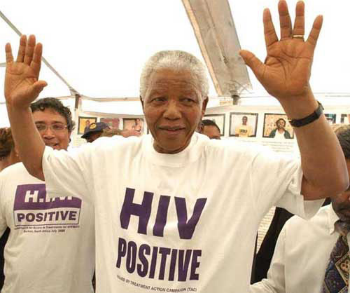
Mandela’s AIDS Legacy of Silence and Courage

By ARTHUR CAPLAN

Even the greatest among us can stumble.

As the world mourns the passing of Nelson Mandela, it is important to look at the one area where the iconic former president of South Africa slipped — AIDS. The most outstanding moral figure of our age did not do what was needed as HIV began to destroy the country he loved. But his actions after he realized his failures are an important part of his legacy.

South Africa is beset with the worst epidemic of HIV in the world. According to the United Nations, out of a South African population of just over 51 million, 6.1 million of its citizens were infected with HIV in 2012, including 410,000 children under the age of 14. An estimated 240,000 South Africans died in 2012 from AIDS. There are 2.5 million children orphaned because of the disease. The grim social, economic and medical toll AIDS has exacted on Mandela’s country is almost beyond description.

In 1990, when Mandela was released from a 27-year prison sentence, the rate of HIV infection among adult South Africans was less than 1 percent. When the anti-apartheid activist was elected president four years later, AIDS was on it way to being an out-of-control plague, with infection rates doubling every year. In 1998, the rate of HIV infection among adults in South Africa was almost 13 percent, with 2.9 million people HIV positive.

Mandela and his party were more or less indifferent to AIDS throughout his five-year tenure. There were other huge challenges in rebuilding the new post-apartheid nation — but the indifference was not just a matter of priorities. Mandela and his party did not want to admit they had a problem.

Why they did not take prompt action to slow the epidemic’s spread is not clear. Perhaps Mandela and his people — like United States President Ronald Reagan and his administration in the 1980s — found the disease and its modes of transmission too repellent to acknowledge. Maybe they did not want to tarnish the new state with a problem that at the time carried so much stigma and shame.

Continue reading…

The Really Bad Math Behind the Social Security Cuts

By STEPHEN SOUMERAI

Among the sacrifices Congressional representatives placed on the altar of deficit negotiations is an “inflation adjustment” that will shave “only” a few hundred dollars from an average, newly retired Social Security beneficiary’s income each year. But the cruel hoax is that the reduction will amount to as much as $1600 when the beneficiary is older, poorer, and sicker.  Many seniors already have a tough time paying for food, rent, and medical care.

Even worse,  reductions in beneficiaries’ incomes may well cost government more for potentially preventable hospital and long-term care.  Senator Elizabeth Warren and other New England lawmakers should be lauded for splitting from Democratic representatives and the Administration regarding this ill-conceived proposal.

Many senior citizens are already vulnerable to economic hardship.  A recent US Census analysis that counts rising medical expenses found that over 1 in 6 elderly people live in poverty, unable to meet basic living expenses, and almost 20% more are living just above the poverty line. Social Security is the only or largest source of income for about 70% of seniors; the average monthly check is only about $1200.

The typical retirement savings of seniors is a paltry $50,000 — barely enough to get through several years’ living expenses, let alone 20-30 years of retirement.  This is not the result of cavalier actions by the older generation; these are the Americans whose home values have plummeted, whose defined-benefit pension plans have been decimated or disappeared, and whose retirement accounts were eviscerated by the Wall Street meltdown of the last decade. Yet the current proposal punishes these Americans as if they were at fault for their poverty.

Fidelity Investments has estimated that the average retired couple will need more than $200,000 to pay their out-of-pocket medical expenses during retirement, and that figure is probably conservative.

The arithmetic of Social Security benefit reductions just doesn’t fit with this reality.

Continue reading…

Is Obamacare Responsible For the Recent Slowdown in Health Care Costs?

By ROBERT LASZEWSKI

That is what we have been told the Obama administration will claim today as they begin the job of reselling Obamacare.

Is Obamacare even partly responsible for the slowdown in health care costs?

That is silly.

First, Obamacare is not a health care reform law; it is a health insurance reform law. No one on either side of the debate has ever argued anything different.

Does the law have some limited cost containment features in it?

Yes. But these are either pilot projects or are years from being fully implemented.

I have heard the argument that the Medicare cuts that were made to help pay for the program are examples of cost containment efforts that are having a short-term impact on controlling costs. The Democrats need to be careful with this one. I recall their countering Republican “Mediscare” claims by saying the Medicare cuts were not significant.

In a letter last year accompanying the Medicare Trustee’s report, the Medicare actuary said, “The [Obamacare Medicare cuts] will affect Medicare price levels more gradually, but a strong likelihood exists that, without very substantial transformational changes in health care practices, payment rates would become inadequate in the long range.”

Translated: The Obama Medicare provider cuts are not having a big impact in the short-run but will be unsustainable over the longer-term.

Continue reading…

Why “Liking” Your Plan Is Not the Point

By DANIEL SKINNER

In recent weeks, President Barack Obama has been appropriately raked over the coals for saying, multiple times, “If you like your health care plan, you’ll be able to keep it.” He shouldn’t have said it. The problem is, he shouldn’t have said it for entirely different reasons than most Americans think.

Let’s begin with a basic question: What does it mean to “like” one’s plan? And what is the value of this statement? All of this came to a head at an October 30 Congressional hearing with the Secretary of the Department of Health and Human Services, Kathleen Sebelius.

At the hearing, in a cantankerous challenge to Sebelius’s credibility, Tennessee Rep. Marsha Blackburn highlighted two constituents, Mark and Lucinda, who “like their plans,” but were being told they could not keep them because of the Patient Protection and Affordable Care Act (ACA), so-called “Obamacare.” A long-entrenched individualist rhetoric provided the framework for Blackburn’s point, namely that we should allow Mark and Lucinda to keep their plans in the name of individual freedom, just because they “like” them.

For purposes of argument, let’s assume that what Mark and Lucinda’s insurers are saying—that the cancellations are a result of the ACA—is true. But, as we do this, let’s also keep in mind that just because insurers claim premium hikes and cancellations are because of the ACA doesn’t mean that it’s true. In fact, it seems to be true only rarely and, even then, often as a half-truth.

But, anyway, let’s assume it is true. The question then becomes: why is it true? The problem is that this individual freedom is made possible by the assurances of a social safety net. This brings us back to the existential foundation of the ACA, namely that the choice to not carry health insurance—or to carry poor health insurance that individuals may find out, at some point, doesn’t cover something important—simply dumps those individuals into social institutions such as emergency rooms and local care centers, and does so in an extremely wasteful way. This returns us to the problem we started with and a question of whether or not ACA opponents are concerned with solving the problem of building a sustainable health care system.

In other words, Blackburn’s logic, as inspirational as it might be to some, bathed as it is in the rhetoric of freedom, is not premised on an analysis or understanding of health insurance, but deference to Mark and Lucinda to make their own choices, consequences be damned.

Continue reading…

True or False? I’m Better Off Waiting

By THCBist

East Coast THCB reader writes:

“Ok. Here’s my situation. I’ve tried signing up for coverage at Healthcare.gov several times without success.  (I got a combination of the weird glitches and other symptoms other readers have reported. ) After the last fail, I decided to hold off on any further attempts on the theory that things are bound to get better.

Based on the news reports I’m seeing, that may or may not be happening. I’m starting to worry that if I wait too long I may get caught up in the mad rush as people scramble to beat the deadline.  Given what’s happened so far, I’m not highly confident that  Healthcare.gov will be working.

So here’s my question: am I better off waiting or should I try to push my application through the system now?”

Healthism: The New Puritanism

By SAURABH JHA

Here is a thought experiment. Assume that every hour you run you extend your life by an hour.

I have chosen a one-to-one ratio between the increase in longevity from running and the time running because higher ratios lead to the immortality paradox. Lazarus aside, the all-cause mortality for Homo sapiens is 100 % and will remain so for the foreseeable future.

This arithmetic means that at one point you will literally be running for your life: your life being extended precisely by the time spent running. But ignore this logical fallacy.

You run an hour every day for 40 years. Your life is extended by 1.67 years. Your costs are a new pair of running shoes every three months, which might even be covered at zero co-payment by insurance if USPSTF gave running a grade A or B recommendation.

A back of the envelope calculation, assuming the shoes cost $ 80, yields cost per life year of roughly $7664. There is, of course, more nuance. I am not including injuries that may result from running. I am not discounting time: I am assuming we value an hour now the same as an hour 40 years from now.

I am also not factoring the costs avoided of treating late stage cardiovascular disease, which must be balanced against the additional social security checks that the individual will draw because of living longer, not to mention the costs of treating diseases of extended longevity such as cognitive impairment, Alzheimer’s disease, recurrent falls.

But please continue to indulge my approximation. The point is not precision of economic calculations but a principle.

$7664 for an additional life year. Compared to the benchmark of $50, 000 per quality-adjusted life year that’s a bargain!

Was it worth it then?

Continue reading…

What Public Insurance Exchanges Will Look Like 5 Years From Now

By RICH GALLUN

When envisioning what public insurance exchanges of the future can and should look like when it comes to technology and structure, one only needs to look at the successful private exchanges that have paved the way over the past several years.

This experience has taught those who administer private exchanges that open enrollment—the phase that the federal government’s Health Insurance Marketplace is struggling through currently—is only the beginning. Public exchanges could benefit from lessons already mastered by private exchanges—starting with open enrollment but extending to even more complex technology-based transactions.
There are 10 scenarios that vendors must be able to handle.

1. Life Events. In today’s individual Health Insurance marketplace, consumers can generally add or drop coverage for themselves or their dependents anytime they want. In other words, it’s a relatively “rule-free world.” In January 2014, that world changes to look more like the current group health marketplace in which many rules are defined by the federal government’s existing tax code (e.g., Section 125) and HIPAA requirements, and consumers must select and “lock in” their coverage once a year for the following 12 months, unless they experience a qualified life event.

As a result, each qualified life event – e.g., marriage, divorce, birth of a child, loss of spouse’s coverage and many more – must be configurable within the Exchange technology to enforce the appropriate rules. For example, if a person gets married, is that person allowed to drop coverage or change plans and carriers? How about with the birth of a child? Or with a loss of spouse’s coverage? For a truly scalable Exchange technology, thousands of scenarios must be configured in advance to enable consumers to make enrollment choices online without administrator involvement.

Continue reading…

