Categories

Author Archives

John Irvine

Disruptive Idiots From Silicon Valley

Screen Shot 2015-10-21 at 4.45.30 PM

Recently, I was dining with elite radiologists. In that uncomfortable silence between dessert and the check, I said “radiology must shift the traditional paradigm by creating value streams using disruptive innovation to leverage population health to build strong ecosystems and a robust ectoplasm.”

I was experimenting if excreted verbiage hastens the check. Instead, it sparked a vigorous conversation about disruptive innovation, compelling me to drink more cognac.

In healthcare, no two words have been as mercilessly cheapened by overuse as “disruptive innovation.” This is a shame. Disruption is serious scholarship by Clayton Christenson who studies the diffusion of technology. Christenson astutely observed that when the technology (disrupter) which renders its predecessor obsolete arrives, it is cheaper and (usually) of lower quality. It is by virtue of its lower quality it can be cheaper, and by virtue of its low cost it appeals to a neglected segment of the market.

Disrupters appeal to our moral sense of social justice. A start-up brings a giant corporation to its knees -how cool is that? It’s like David taking on Goliath (with a little help from venture capitalists).

Continue reading…

The Last Checklist

flying cadeuciiEarlier this year, when my mother was briefly hospitalized, nobody gave her the wrong medication (her wristband was checked before each medicine was dispensed).  Nobody missed a high or low blood pressure (her vital signs were taken every few hours, like clockwork). She was usually assisted to the bathroom so she wouldn’t fall (a sensor on her bed triggered an alarm if she started to get up).

Thank goodness for hospital-based checklists, now ubiquitous in large part thanks to Atul Gawande’s bestseller The Checklist Manifesto, which have succeeded in knocking down the numbers of pressure sores, blood clots, falls, infections, and other errors and complications. As a doctor myself, I’ve heard many stories about close calls where checklists were crucial: just the other day, a colleague told me about a biopsy specimen that was almost logged in as the wrong patient; by following a simple checklist, what could have been a catastrophe was downgraded to a near-miss.

And yet during my mother’s hours in the emergency room, the staff seemed uninterested, overworked, and unavailable. We had no sense that any particular person knew what the others were doing. One doctor told us that she would definitely be admitted, while a nurse told us that discharge was imminent.

Continue reading…

Scoring the Surgeon Scorecard

Screen Shot 2015-10-13 at 10.03.33 AMMark W Friedberg is a researcher at the RAND Institute and a co-author of the recent RAND analysis of the Surgeon Scorecard. He posted this on THCB in response to Ashish Jha’s post “Misunderstanding ProPublica.”  

I don’t disagree at all with the idea that providers should release their own performance data, to the extent that they have it. Free flow of accurate and understandable performance information is inherently good. If the ProPublica Surgeon Scorecard can create pressure for this to happen, fantastic.

But there is no tradeoff between recognizing the serious methodological problems in the Scorecard, improving the Scorecard, and encouraging providers to release their own data. All three can and should be done simultaneously.

Also, for frequenters of this blog, I think it’s important to clarify a few key things about the “RAND critique” (which I authored with individuals from many institutions, all of whom deserve credit for devoting considerable unpaid time to the effort).

1. Nowhere in the critique do we suggest that ProPublica – or anybody else for that matter – abandon efforts to generate and publicize reports that truly reflect provider performance. Far from it. If you look up the authors of our critique, you’ll see that all of us have devoted substantial time and effort to furthering the science and practice of performance measurement and transparency in health care.

Continue reading…

Wellness 2.0:  Better Health, Better Coverage

Screen Shot 2015-10-13 at 4.26.03 PMJust what on earth are businesses thinking?  Companies pay too much for poor quality health care coverage. If this were any other business expense, this wouldn’t be tolerated. Yet, expensive, sub-standard healthcare is something U.S. companies roll over and accept.  There are many reasons why, all unacceptable.

Fortunately, there’s a path that companies can take now to address healthcare costs: fostering healthier employee lifestyles.  This is perhaps the only avenue for immediate action that can lower healthcare costs for both employers and employees while cultivating a healthier, more productive workforce.  Your cynical side laughs?  Consider this:

“Only private business, not the federal government, can solve America’s epidemic of obesity, chronic disease, and runaway healthcare costs by investing in the health and fitness of their employees,” said Cleveland Clinic CEO Toby Cosgrove in an Affordable Care Act debate panel, a sentiment increasingly echoed inside and outside of healthcare.

Employers must move away from the adversarial, zero sum approach of increasing employees’ share of the cost of coverage to a more partnership-centered model of forging employer/workforce partnerships where both companies and employees support each other’s goals, not just in lowering coverage costs, but by improving health.  

Increasing coverage in this day and age? Unheard of! But this is not a pipe dream. If companies are willing to make the investment, on the condition that employees undertake required behavior modifications and achieve positive outcomes, it truly can happen. And though may have heard this before, up to now we’ve not done it right.Continue reading…

Payers Join the Healthcare Team

Screen Shot 2015-10-12 at 10.08.49 AM

Back when I was in medical training a decade ago, patient rounds were usually conducted by a group of physicians. We’d walk down the ward, visiting patients and scribbling notes as we went. If we were feeling particularly inclusive, we might bring nurses along. But that was as diverse as the care team got. Even the concept of a “care team” was only just starting to take hold on wards where highly complex patients were being cared for.

These days, the picture looks quite different. Now, in addition to doctors and nurses, we have pharmacists, social workers, therapists, nutritionists, and case managers joining us on rounds.Continue reading…

Is ProPublica the Paul Revere of Transparency?

flying cadeuciiRecently, I was speaking with a “less is more” advocate. He used his superior knowledge of statistics – he had an MPH – to debunk randomized controlled trials. We discussed overdiagnosis, overtreatment, and the shakiness of medical sciences.

We spoke about measuring the quality of physicians. I remarked that quality metrics have as much evidence as Garcinia Cambogia – we had just laughed about Dr. Oz. I expected a chuckle. Instead, he became distinctly uncomfortable and, in a solemn tone, lectured me about the Institute of Medicine (IOM) report, “To Err is Human.”

The physician, a bulldog of evidence-based medicine (EBM), had a blind spot. He ripped cardiologists for overusing pacemakers. He believed in the usefulness of the physician quality reporting system. He disdained big pharma for pushing statins. He was a fan of maintenance of certification. He was at once a raging skeptic and a true believer.

My understanding of statistics is modest compared to his. But I am skeptical by nature. I’m skeptical of many things including (not necessarily in this order): statins in 65-year olds, kumbaya, hellfire, England’s soccer team, quality metrics, screening (much to the chagrin of my radiology colleagues), high priests, middle priests, hard drives spontaneously combusting, and futurists. I’d like to believe this is because I’m a dark knight searching for the truth. The reality is that I’m just a cynical git who was raised in an island where it rains without remorse. My skepticism manages to offend a unique human every day.

Continue reading…

An Error about Mistakes

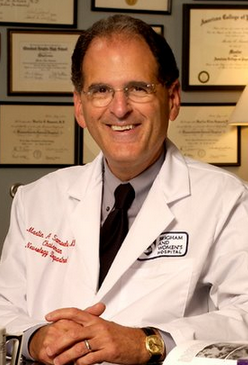
Paul Levy 1There are few neurologists I admire more than Martin Samuels, chief of service at Brigham and Women’s Hospital in Boston.  So it truly pains me to see him engaging in a convoluted approach to the issue of mistakes.  Read the whole thing and then come back and see what you think about the excerpts I’ve chosen:

“The current medical culture is obsessed with perfect replication and avoidance of error. This stemmed from the 1999 alarmist report of the National Academy of Medicine, entitled “To Err is Human,” in which the absurd conclusion was propagated that more patients died from medical errors than from breast cancer, heart disease and stroke combined; now updated by The National Academy of Medicine’s (formerly the IOM) new white paper on the epidemic of diagnostic error.”

No, the obsession, if there is an obsession, is not about perfect replication and avoidance of error.  The focus is on determining the causes of preventable harm and applying the scientific method to design experiments to obviate the causes.  The plan is, to the extent practicable, implement strategies to help avoid such harm.

[T]here is actually no convincing evidence that studying these mistakes and using various contrivances to focus on them, reduces their frequency whatsoever.

Yes, there is convincing evidence (from Peter Pronovost’s work on central line protocols, for example) that the frequency of errors that lead to preventable harm can be dramatically, and sustainably, reduced.

Continue reading…

In Defense of Mistakes

Martin Samuels“How much of the medicine that you now use, did you learn during medical school?”

My answer may be surprising. It is not the response given to me by my professors, when they were asked similar questions. I recall them telling me that virtually nothing that I was learning in medical school would be correct 20 years later.

I have thought about this since and will reveal my answer shortly, but before I do, we should pause for a moment to reflect on the process of medical education. I will refer here to natural selection as an analogue of this process, a concept that I have adapted from some ideas gleaned from David Dawkins and Susan Blackmore.

Darwinian natural selection is based on the concept that replicators (eg genes, viruses, prions) compete for their locus based on the phenotype produced. In the case of genes, these replications are done with high fidelity, but not perfectly, so that there are a few imperfect copies (mutations) produced, such that there are alternative genes meant for the same chromosomal locus (alleles). It is the competition among the alternative alleles, measured by their phenotypic expression that is the basis of natural selection.   This process accounts for all of the dramatic variation seen in nature, including the present state of the information processing hardware (the brain), but it does not account for more rapidly changing behaviors and beliefs (cultures).

Continue reading…

assetto corsa mods