
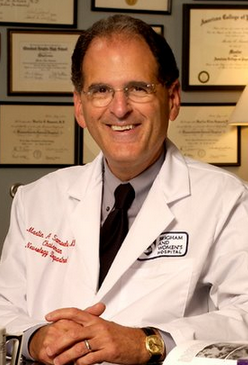
 “How much of the medicine that you now use, did you learn during medical school?”
My answer may be surprising. It is not the response given to me by my professors, when they were asked similar questions. I recall them telling me that virtually nothing that I was learning in medical school would be correct 20 years later.
I have thought about this since and will reveal my answer shortly, but before I do, we should pause for a moment to reflect on the process of medical education. I will refer here to natural selection as an analogue of this process, a concept that I have adapted from some ideas gleaned from David Dawkins and Susan Blackmore.
Darwinian natural selection is based on the concept that replicators (eg genes, viruses, prions) compete for their locus based on the phenotype produced. In the case of genes, these replications are done with high fidelity, but not perfectly, so that there are a few imperfect copies (mutations) produced, such that there are alternative genes meant for the same chromosomal locus (alleles). It is the competition among the alternative alleles, measured by their phenotypic expression that is the basis of natural selection. This process accounts for all of the dramatic variation seen in nature, including the present state of the information processing hardware (the brain), but it does not account for more rapidly changing behaviors and beliefs (cultures).




