Categories

Above the Fold

Why Doctors Still Don’t Text or E-mail their Patients

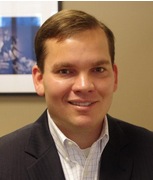
Niam YaraghiAccording to the Nielsen survey earlier this month by the Council of Accountable Physician Practices and the Bipartisan Policy Center, the majority of medical providers in the United States still do not use emails or text messages to communicate with their patients, despite the fact that such communication channels are in very high demand from the patients.

The survey results are appalling. After all, when you receive text message reminders about your upcoming credit card bill or ask your airline a question about your flight reservation via email, why can’t you communicate with your doctor in the same convenient way? Why are we still using the technology of the 20th century to communicate with our doctors in the 21stcentury?

The answer has three sides to it: Economics, technology management and regulations.

Continue reading…

Potential Bias in U.S. News Patient Safety Scores

flying cadeuciiHospitals can get overwhelmed by the array of ratings, rankings and scorecards that gauge the quality of care that they provide. Yet when those reports come out, we still scrutinize them, seeking to understand how to improve. This work is only worthwhile, of course, when these rankings are based on valid measures.

Certainly, few rankings receive as much attention as U.S. News & World Report’s annual Best Hospitals list. This year, as we pored over the data, we made a startling discovery: As a whole, Maryland hospitals performed significantly worse on a patient safety metric that counts toward 10 percent of a hospital’s overall score. Just three percent of the state’s hospitals received the highest U.S. News score in patient safety — 5 out of 5 — compared to 12 percent of the remaining U.S. hospitals. Similarly, nearly 68 percent of Maryland hospitals, including The Johns Hopkins Hospital, received the worst possible mark — 1 out of 5 — while nationally just 21 percent did. This had been a trend for a few years.

Continue reading…

Listen to People you don’t Like!

Agha Khan 2

The Aga Khan delivered the Samuel L. and Elizabeth Jodidi Lecture at Harvard University yesterday.  He has been a strong proponent of pluralism in the world and has devoted billions of dollars in resources from the Aka Khan Development Network to enhancing education, health care , culture, and economic development in the world’s poorest countries in Asia, Africa, and the Middle East. The full text is here, but I offer a pertinent excerpt, with lessons about an increasingly divisive level of political debate in the US and elsewhere:

In looking back to my Harvard days (in the 1950s), I recall how a powerful sense of technological promise was in the air — a faith that human invention would continue its ever-accelerating conquest of time and space. I recall too, how this confidence was accompanied by what was described as a “revolution of rising expectations” and the fall of colonial empires. And of course, this trend seemed to culminate some years later with the end of the Cold War and the “new world order” that it promised.

Continue reading…

Middle Age Can Be Hazardous to Your Health

Screen Shot 2015-11-12 at 10.30.25 AM
Despite the many flaws in our healthcare system, we could always point to data showing that over the last few decades we were living longer and healthier lives—even if not quite as long and healthy as our contemporaries in many European and some Asian countries.

It now appears that’s no longer true for one segment of the U.S. population.

I’m talking, of course, about the surprising findings released last week that the death rate among non-Hispanic white men and women ages 45 to 54 increased from 1999 to 2013 after decreasing steadily for 20 years, as it did for other age cohorts and ethnic groups.

Continue reading…

Physician Disrupt Thyself

MARC-DAVID MUNK, MD(Stepping away from health policy and business this week, a quick post on alternative careers in medicine).

Wrapping up a great week spent with emergency medicine friends attending this year’s American College of Emergency Physicians national meeting in Boston. Over the course of a few receptions and dinners, more than one old friend has stopped to ask me about how I made the decision to step away from caring for patients in the emergency department and into a nonclinical role at a progressive startup healthcare company. A few friends confessed that they love the idea of getting their hands dirty fixing a broken healthcare system– but don’t know where to begin.

I have a very limited perspective and I’m no expert on career pivots. But I often look to an article I came across a few years ago, written by Whitney Johnson in the Harvard Business Review. Her article is called Disrupt Yourself.

In the piece (and later in her book) Johnson argues that people can successfully transition into satisfying roles in new businesses but often need to “disrupt” themselves and their current careers. This disruption is needed because moving to another job or field (even one adjacent to the one you’re in) is hard. I think that this is particularly true in medicine where the time and money needed to become a doctor creates incumbents, inherently resistant to change.  Physicians are, by nature of our training and regulation, IBMs and Microsofts. We are slow to change. We can plateau.

Disrupt Thyself


Continue reading…

Can Community Organizing and The “third place” Improve Public Health?

Screen Shot 2015-11-12 at 10.10.15 AM

The majority of health problems in modern developed countries are self-inflicted, the results of lifestyle choices. These problems don’t respond to a pill–or even to bariatric surgery. Moreover, the medical profession hasn’t found ways to change lifestyle.

For instance, one study found that only one of six overweight adults in the US have sustained a weight loss–and that was an improvement over other studies. Another site claims that 90-95% of all dieters regain their weight within five years. It’s encouraging to note an 80% improvement among people with obesity who get treatment–but the source doesn’t say what “treatment” is. It apparently goes far beyond advice and Weight Watchers–so only 10% of obese Americans get treatment in the first place.

Health problems are killing us, and bankrupting us along the way. It’s well known that a tiny percentage of patients generate the most treatment and the highest health care costs, as Atul Gawande pointed out in a famous New Yorker article.

Of course, lifestyle doesn’t lie behind all hot-spotters (for some we can blame birth defects or other debilitating accidents, and for others we can blame over intervention in dying people), but a lot of them just just exhibit exaggerated versions of the common behavior problems most Americans face: bad eating, drug use, lack of exercise, etc.

Continue reading…

What Doctors should Know when Joining a Startup – Five Key Books

Davis LiuWhat should doctors know before joining a startup? I don’t know if these were questions medical school graduates in the Bay Area asked themselves as they opted to join a startup rather than completing their medical training in residency programs. These new doctors felt they could make a bigger impact on patient care by leaving the system and its current status quo.

Why not? In the Bay Area, small startups and former startups like Facebook, Google, and Apple are literally blocks away from academic medical centers. Everyone knows someone working at a startup. At a healthcare innovation summit, Vinod Khosla, co-founder of Sun Microsystems and venture capitalist reassured technology entrepreneurs that the opportunities to disrupt healthcare were tremendous. After all,

“Health care is like witchcraft and just based on tradition.”

Khosla encouraged attendees to develop technology that would stop doctors from practicing like “voodoo doctors” and be more like scientists. Disruption required having an outsider point of view. Khosla highlighted how CEO Jack Dorsey of Square was able to disrupt and provide services more cheaply than the traditional methods of the electronic payment system accepting Visa and Mastercard because only 2 percent of the employees at Square ever worked in the industry.

health-innovation-summit

Continue reading…

Interoperability: Faster Than We Think – An Interview with Ed Park

Screen Shot 2015-11-10 at 9.34.40 PM

Leonard Kish, Principal at VivaPhi, sat down with Ed Park, COO of athenaHealth, to discuss how interoperability is defined, and how it might be accelerating faster than we think.

LK: Ed, how do you define interoperability?

EP: Interoperability is the ability for different systems to exchange information and then use that information in a way that is helpful to the users. It’s not simply just the movement of data, it’s the useful movement of it to achieve some sort of goal that the end user can use and understand and digest.

LK:  So do you have measures of interoperability you use?

EP: The way we think about interoperability is in three major tiers. The first strata (1) for interoperability can be defined by the standard HL7 definitions that have been around for the better part of three decades at this point. Those are the standard pipes that are being built all the time.  So lab interoperability, prescription interoperability, hospital discharge summary interoperability. Those sort of basic sort of notes that are encapsulated in HL7.  The second tier (2) of interoperability we are thinking about is the semantic interoperability that has been enabled by meaningful use. The most useful thing that meaningful use did from an interop standpoint was to standardize all the data dictionaries. And by that I mean that they standardized the medication data dictionary, the immunizations, allergies and problems.

Continue reading…

The Self-Pay Paradox

Screen Shot 2015-11-10 at 8.31.21 PMOne of the most important trends in healthcare today is the inexorable shift towards high-deductible health plans. Over the past few months, my colleagues and I have analyzed tens of millions of visits to practices using athenahealth’s practice management and EHR services to understand the impact that this shift is having.  We believe there are some reasons for providers and practice leaders to worry–the average patient obligation has increased by 20% over the past 4 years, and the number of patients carrying large balances is increasing as well.  We have also seen that practices’ ability to collect these obligations is highly variable.

Across our network, patient payments provide nearly one-fifth of physician income, with the median athenahealth provider failing to collect 30% of what patients owe.  And the situation is getting worse.  As the graphic below shows, patient deductible obligations are up 22% in the past two years–while commercial payments have grown only 4%.

athena networks

My colleagues and I have studied these trends, and we’ve identified a few things that top-performing practices do to ensure that they are able to collect the dollars that they are owed. In fact, at every step of the collections process–from scheduling to follow-up months after a visit–top-performing practices take a different approach than others.  Please join us on November 11th to learn what these organizations are doing to improve patient collections, and how your practice can get to similar results.

Jessica Sweeney-Platt is a lead with athenaResearch

What Does it Mean When We Say a Treatment “Works?”

flying cadeuciiMaking a decision requires you to compare tests/treatments that have been contrasted in researh studies to see if one over another results in improved chances of good outcomes. In a sense, medical decision making is a competition. To assess the competition, you compare the chances of outcomes, or results from groups of people taking different options. The comparison is a simple subtraction in the amounts of outcomes that occur in each studied group.

Subtracting results in a difference that is either a benefit (if better for you) or a harm (if worse for you). For nearly all decisions, however, the test/treatment that is better for disease outcomes (benefit) is worse for complications (harm). Comparing, then, results in the following possibilities:

The chances of outcomes associated with the condition you have and the tests/treatments available will be the same for all options. In this case, chose the cheapest option.

The chance of outcomes associated with the condition you have will be less with one option. That option provides added benefit

The chance of a complication caused by the test/treatment that adds benefit for the disease outcomes will be greater (harm).

Since the test/treatment that is better for you in terms of the disease you have will be, simultaneously, worse for you in terms of complications caused by that test/treatment, a trade-off of benefit and harm is required.

Hence, the definition of “works” is that:

A test/treatment works when you feel there is more to gain from the greater chance of better disease associated outcomes than there would be to lose from suffering the complications caused by your chosen treatment.

So, medical-decision-making is a competition between options and there is always some good to be balanced against some bad.

The balance of good and bad from your perspective is what makes one treatment work over another.

Robert McNutt, MD is a board certified internist in Clarendon Hills, Illinois. He is a Professor at Rush Medical College of Rush University.

assetto corsa mods