Categories

Above the Fold

This Is Not A Disruptive Blog Post

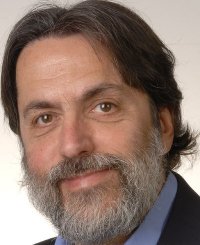
Michel AccadFrank Knight, risk and uncertainty

In this article, I wish to introduce the reader to the theory of entrepreneurship advanced by Frank Knight (1885-1972), and show that the common, everyday work of the physician could be considered a form of entrepreneurial activity in the Knightian sense.

Knight was an influential American economist. He is best known for his book Risk, Uncertainty, and Profit in which he proposed to distinguish risk and uncertainty as follows:

Risk pertains to situations where outcomes occur with a frequency that is quantifiable according to probability distributions.

Risk may be mathematical and a priori knowable, meaning that the probability function that governs the outcome is known with certainty, as in the case of a coin toss (assuming the coin to be well balanced).

Risk may also be statistical, where the outcome can be estimated according to an empirically discoverable probability function. This is the case in situations where we know the set of possible outcomes and can make observations under controlled conditions to determine the probability of occurrence of each outcome.

Continue reading…

A Health IT Developer’s Confession: How Bad Software Is Made and What to Do About It

By MARGALIT GUR-ARIE
It was a dark and stormy night. My computer didn’t catch fire while typing the previous sentence. No alarms were triggered warning me about the quality of such opening. I wasn’t prompted to select subjects and predicates from dropdown lists. I typed the entire sentence, letter by letter, not at all dissimilar to its first rendering back in 1830. Computer software in general, and Microsoft Word in particular, magically removed the hassles of quills, ink, paper, blotters, sharpeners, ribbons, whiteout, carbon paper, dictionaries, and all the cumbersome ancillary paraphernalia needed to support authoring, but made no attempt to minimize the cognitive effort associated with writing well.  Authoring great literature today requires as much talent and mastery as it did in the days of Edward Bulwer-Lytton.
For several decades, software builders have tried to help doctors practice medicine more efficiently and more effectively. As is often the case with good intentions, the results turned out to be a mixed bag of goods, with paternalistic overtones from the helpers and mostly resentment and frustration from those supposedly being helped.Continue reading…

What Killed Scott Weiland?

Scott_Weiland_(Stone_Temple_Pilots)_Open_Air_St._Gallen_(rotated)His voice had the unusual ability to convey both aggressive muscularity and profound vulnerability. Scott Weiland and Stone Temple Pilots were icons of my adolescence. Personally, my memory of Mr. Weiland will always be inextricably linked with “Plush,” that initial hit single which, upon first listen, instantly captivated me and thousands of other kids like me. During my high school days, “Plush” was elevated to the highest sonic status possible, joining Metallica’s “Enter Sandman” and Pearl Jam’s” Black” as an essential component of our football team’s pre-game locker-room pump-up playlist.

So it was with shock and sadness that I read in the New York Times this morning that Weiland had “died in his sleep” on Thursday during a tour stop in Bloomington, MN. He was 48.

Continue reading…

Reduction in Hospital Errors—Progress, But Still Not Enough

Steve Findlay

Fifteen years after the landmark IOM report To Err is Human, we still haven’t figured out how to count medical errors and iatrogenic harm—let alone sharply reduce them. The debate surrounding this persists, as it must. For example, see the dialogue on THCB between Anish Koka and John James on the often-used figure of 400,000 deaths per year from medical errors. See also this Health Affairs blog from 2012 by Michael Millenson.

A simple answer to why it’s so hard to count medical errors, harm and deaths is that—well, it’s just a damn hard thing to do. Think about it: how on earth would we document every mistake, even fatal ones. It seems nearly impossible. It’s not like counting auto accidents or plane crashes. The majority of medical errors occur at a nuanced level, but yet can have profound effects down the road, as the IOM’s report on diagnostic errors recently emphasized.

A more complex analysis of why medical errors are hard to count and prevent would start with the fact that reporting is still largely voluntary. For example, we know next to nothing about medical errors in doctor’s offices and outpatient surgery centers, and we don’t have a complete picture for hospitals.

Then there’s the whole issue of which medical mistakes are truly preventable and should be counted as such—that’s part of the debate between Koka and James. The upshot: preventability remains very much in the eye of the beholder.  Patient safety activists argue that the debate over preventability is a diversion from pursuing a strategy of zero tolerance for errors. As support, they often point—justifiably—to success stories where concerted efforts have led to dramatic reductions in errors and hospital acquired infections. But doctors have long countered that medicine is a human enterprise that can never be perfect, that mistakes are inevitable, and that they have less control over medical outcomes than is often assumed.

Continue reading…

What’s Missing in the Debate Over Employer Wellness Programs

Susan-Dentzer-For-PostBy now, Americans are no doubt getting used to debates that put show over substance and skirt the genuinely profound issues the nation faces. But although we may have come to expect as much in this political season, we deserve better when it comes to contemplating the role of employers in improving employees’ health.

A recent “debate” sponsored by the Population Health Alliance about employer wellness programs – the various health promotion and disease prevention strategies that about half of U.S. employers offer,  such as weight loss, smoking cessation and onsite gym classes – fell into the depressing pattern of highlighting the largely irrelevant at the expense of the important. The debate, which took place last November 2 at the alliance’s 2015 Forum in Washington, DC, pitted two frequent combatants:Al Lewis, founder of Quizzify and co-author of a book critiquing wellness programs, and Ron Goetzel, senior scientist at Johns Hopkins University’s Bloomberg School of Public Health and leader of the “Promoting Healthy Workplaces” program supported by the Robert Wood Johnson Foundation.

The ostensible topic was whether wellness programs benefited employees, companies, and society at large, but the debate never actually addressed this broad question. Most of the time, the session’s verbal jousting focused on a far narrower issue: whether companies saw any financial return on investment (ROI) on the dollars they plow into wellness programs.

Continue reading…

The Ten Worst Wellness Programs and What They Do to Harm Employees

flying cadeuciiIf corporate wellness didn’t already exist, no one would invent it.  In that sense, it’s a little like communism, baseball, or Outlook.

After all, why would any company want to purchase programs that damage morale,reduce productivity, drive costs up…and don’t work 90%-95% of the time?  And that’s according to the proponents.  What the critics say can’t be repeated in a family publication such as ours.

Still, those are the employers’ problems. However, the employers’ problems become the employees’ problems when employees are “voluntarily” forced to submit to programs that are likely to harm them. (As the New York Times recently pointed out, there is nothing voluntary about most of these programs.)Continue reading…

The Meaning of “Value” in Health Care

Paul KeckleyThere are terms in healthcare circles that get thrown around as if there’s a common and widely accepted definition.

Consider “quality:” every hospital touts its quality, every physician confidently affirms their delivery of high quality care, and every trade and professional sector in healthcare has its own definition that aligns with attributes of quality they deem most important. “Quality” is touted on every website and in every boardroom, but rarely is it defined and measured consistently.

“Outcomes” is another. Most ascribe positive outcomes in their performance, but the indicators on which they’re based and the time periods over which they’re captured—days, weeks, months, or years—varies from user to user. Valid and reliable measures are ephemeral: process measures are used more frequently because they’re easier for regulators, policymakers and payers to monitor; i.e. “advising a patient to stop smoking or lose weight” but these may have little to do with the actual outcome.

Continue reading…

On the Preventability of Lethal Errors: A Response to Dr. Koka

In my opinion, the title of Dr. Koka’s post (“Very Bad Numbers“) is far too inflammatory for a subject that needs to be taken seriously. Dr. Koka’s summary of the approach I took in my JPS study is a reasonable summary, minus a few key points. Preventability of lethal errors is the problematic issue. The nine authors of the Classen paper did postulate that virtually all serious adverse events they found are preventable; I did not pull this out of the air. Preventability is a highly subjective area. A few years ago everyone assumed that hospital acquired infections were simply the cost of doing business. Now we know that the majority of infections can be prevented. The major difference Dr. Kota and I have is that he wants to rely exclusively on the Landrigan study, which is an excellent and large study, but it is not representative of the nation. It represented hospitals in North Carolina. That state was chosen because it was much more aggressive in efforts to reduce medical harm than the average state in the nation. The OIG study (2010) was in fact an attempt to be representative of the Medicare population across the country, but it is just Medicare beneficiaries. As I noted in my paper, none of the four studies can stand alone, not even the Landrigan paper.Continue reading…

The Healthcare System Link in the San Bernardino Shootings

Screen Shot 2015-12-02 at 4.08.30 PMAnother day, another mass shooting. At this point the news reports say nearly 30 down, 14 or more dead, multiple perps, at a banquet for the San Bernardino, California, Department of Public Health.

And instantly the argument is all about the guns. I understand that, and I’m not even saying that it’s not about the guns.

And instantly we want to say these folks are crazy and of course that’s true. It doesn’t matter if they frame their reasons around Allah or “no more baby parts” or Obama’s impending takeover of the U.S. using ISIS fascist armies disguised as Syrian refugees pouring over the border from Mexico, doesn’t matter. Anyone who turns a gun on other human beings in a school, a clinic, a public street is we can safely say, nuts, if “nuts” has any real meaning any more.

But there are crazy people in every culture, and we have always had crazy people in ours. The percentage of people who are crazy does not scale across societies and across time with the number of people walking into theaters, malls, and bus stations with guns blazing.

Even the number of guns per capita, or the caliber and size of magazines people can buy, or the rules around buying them do not scale directly with mass violence. There is something else going on here.

Continue reading…

Rethinking our Thinking about Diagnostic tests: There is nothing Positive or Negative about a Test result

Making a diagnosis is easy if the test we use to make the diagnosis defines the disease. These sorts of tests, called “reference-standard” tests, when present at any level of the test’s result, make the diagnosis. A spinal fluid culture growing listeria or opioids in the urine are examples.

Using reference-standard tests in clinical medicine, however, is not the norm. The reason for this is that reference-standard tests often don’t exist and if they do they may be dangerous, difficult to obtain, and costly. Hence, we use most often non-reference standard tests that can only raise or lower the likelihoods of diseases. There is nothing particularly new in these comments. Every reader will know such concepts as, the “sensitivity and specificity” of a test. Every reader will remember hearing about, or be able to construct, 2X2 tables showing the sensitivity of a test; the corresponding false negative percent; the specificity of the test; the corresponding false positive percent.

But, despite the ever-present teaching of how tests ‘work”, it is my experience that physicians and patients have difficulty using the measures of a test’s value in clinical care. This difficulty is manifest in the observation that diagnosis mistakes may be common and the perceived mistake is the inciting event in up to 40% of malpractice cases. If the conceptual ideas for appropriate test characteristics are so clear and well taught, why is there so much difficulty in using tests to make a correct diagnosis? I contend that the way we teach and understand testing has not allowed us to advance an ideal, numerate approach to accurately making a diagnosis. I claim, also, that the concept of a single “sensitivity and specificity” for a test is actually suspect, even incorrect.

Continue reading…

assetto corsa mods