Like many cities, Philadelphia is a city defined by its neighborhoods. I practice in two neighborhoods separated by a few miles but leagues apart in every other way. One of the hospitals is a tertiary care facility in the heart of Center City – a well to do upcoming part of town – and the other is a small community hospital a few miles South. The patients at the two locations are quite different, and the mechanism of health care delivery is also starkly different. Medical care at the Center City campus is provided mostly by employed physicians, and care at the community hospital is provided mostly by private practice physicians.
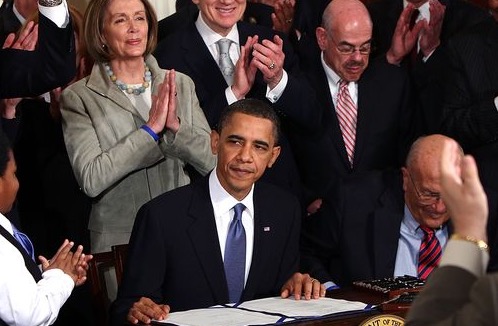
The debate about employed physicians vs. private physicians was one that until very recently was thought to have been settled. To the nascent Obama administration in 2008 charged with ‘fixing’ health care, it was obvious that health care delivery in the United States was of low quality and needed change. Enamored by models like the Mayo Clinic, the Cleveland Clinic, and Geisinger the answer clearly was large clinically integrated networks. And just like that, with little discussion, and no evidence, the Obama administration set into motion legislation in the form of the Affordable Care Act that brought private practice to its knees. Declining reimbursement and increased overhead costs from regulations meant that percentage of private practice physicians went from 57% in 2000 to 37% in 2013.
Continue reading…
 Some wars are supposed to last forever. Lyndon B. Johnson started a war on poverty. Richard Nixon kicked off a war on drugs. Ronald Reagan initiated a war on terror. Poverty, drug use and terror are booming. It’s time to launch another good ol’ war. Let’s make it relevant, cool, hip and infinite. So how about a 21st century war on Cybertheft? This may sound trifle by comparison to those other wars, but wars are rarely about the actual title we bestow upon them. The war on terror evolved into a war on people living under secular dictators, the war on poverty ended up being a war on poor people, and the war on drugs became a war on black people. The war on Cybertheft will be the war on all people everywhere.