
Sean Bell is head of new ventures at Spring Health, a very well-funded mental health company. They’ve built a tech platform that its providers (both contractors and FT employees) are on, and spend a lot of time using machine learning to match patients to therapists, to augment the care and also measure the impact of that care. Sean told me about both how Spring Health works and how much its grown, and what new specialized care is being introduced in 2025. He talks quick and we covered a lot of ground including the business of being a highly-valued private mental health company when there are some lower priced public companies out there. Interesting interview — Matthew Holt
Above the Fold
THCB Gang Episode 146, Tuesday November 26

Joining Matthew Holt (@boltyboy) on #THCBGang on Tuesday November 26 at 1PM PT 4PM ET are THCB regular writer and ponderer of odd juxtapositions Kim Bellard (@kimbbellard); medical historian Mike Magee (@drmikemagee); and a new guest from Marsh McLennan, Employee Benefits Consultant Ryan Koo (@RyanKoo).
You can see the video below & if you’d rather listen than watch, the audio is preserved as a weekly podcast available on our iTunes & Spotify channels.
Stick to the Science

By KIM BELLARD
A year ago I wrote about disturbing news from the Pew Research Center that trust in science, and in scientists, had fallen since the pandemic. I am slightly relieved to report that a new follow-up study by Pew indicates that trust is up slightly – but still way below where they were pre-pandemic.
Overall, 76% of Americans express fair or a great deal of confidence in scientists to act in the public’s best interests (versus 87% in April 2020). The public is about evenly split about how active a role scientists should take in policy debates – 51% think they should, 48% think they should stick to science. A year ago those numbers were flipped.
I think about all this in the context of the proposed members of President-elect Trump’s health team, whose takes on “science” are often considered out of the mainstream.
Trump surprised many a few months ago when he brought Robert F. Kennedy Jr. into his fold. Over the years, RFK Jr., an environmental lawyer by background, has expressed numerous startling views about health and our healthcare system. According to Jennifer Nuzzo, the director of the Pandemic Center at Brown University, RFK Jr. “is just in a category by himself. R.F.K. Jr. just willfully disregards existing evidence, relies on talking points that have been consistently debunked.”
Nonetheless, Trump vowed: “I’m going to let him go wild on health. I’m going to let him go wild on the food. I’m going to let him go wild on the medicines.” He has now named him as his candidate for Secretary of Health and Human Services.
The team behind RFK Jr. have their own unconventional views. A quick rundown:
Continue reading…Remembering Thomas E. Kurtz
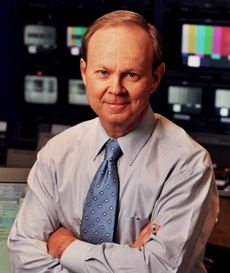
By MIKE MAGEE
This has been a challenging week for me, but not for the reasons you might think. Compartmentalization skills have allowed me to push the 2024 Presidential election into the back reaches of my mind as I worked to complete teaching a course on “AI and Medicine” at the Presidents College at the University of Hartford. The complexity of AI, its risks and potential benefits, are staggering. So it was comforting for me to remember how far we have come with data and information in my own lifetime. That reminder came wrapped in the loss of one of the great pioneers in the field.
The week of my final AI lecture began with the announcement of the death of 94 year old Thomas E. Kurtz. You may not have heard of him, but you likely recall his seminal invention, the first computer programming language for the masses–BASIC (Beginners’ All-purpose Symbolic Instruction Code). As Bill Gates himself reflected this week, “The approachability of BASIC and time-sharing began what the PC and the internet took to a whole new level.”
Bill would know. His high school had a teletype connection to the original time-sharing main frame computer at Dartmouth. But Gates was not alone or first in line. As Kurtz remembered, “I once estimated that even before Bill Gates got into the action at all, five million people in the world knew how to write programs in BASIC. There was something like 80 time-sharing systems in the U.S. that offered BASIC as one of their languages. And it was all over the world. I even got a letter from somebody in Siberia.”
It wasn’t until 1978 that Gates teamed up with Microsoft founder, Paul Allen, and received permission to install BASIC in the first customizable personal microcomputer, the MITS Altair 8800.
Kurtz was the son of German immigrants, and displayed high aptitude in mathematics early in life. He graduated from a local college in Illinois in 1950, and by 1956 had earned a PhD in statistics at Princeton. He was recruited to Dartmouth that same year by the chairman of Mathematics, John Kemeny, who had previously been a research assistant at Princeton himself under none other than Albert Einstein. Kurtz launched a new field at Dartmouth that year – computer science.
He was starting at ground level – or more accurately, below ground level since the solitary computer the university possessed was housed in the basement of College Hall where it filled an entire room. Training students in computer science required hands on engagement. As Kurtz explained some years later, “Lecturing about computing doesn’t make any sense, any more than lecturing on how to drive a car makes sense.”
In later interviews, Kurtz make it clear that his idea didn’t meet with applause at the outset. He admitted, “The target (in computing) was research, whereas here at Dartmouth we had the crazy idea that our undergraduate students who are not going to be technically employed later on should learn how to use the computer. Completely nutty idea.”
Two barriers at the time were computer language and computer time. The main frame on campus ran on complex FORTRAN and COBOL which only a few experts had mastered. And if you wanted access, you had to wait in line.
Continue reading…Tatiana Fofanova demos Koda Health
Tatiana Fofanova is the CEO of Koda Health. She is dealing with one of the most difficult parts of health care. How do you get patients wishes in the case of end of life or other critical illness made in advance and delivered to medical professionals? Koda Health has not only figured out how to get this option to patients but also include the responses into Epic and other EMRs so that clinicians can see advanced directives and much more. She gave me a full demonstration of what is a very important and necessary tool — Matthew Holt
THCB Gang Episode 145, Thursday November 21

Joining Matthew Holt (@boltyboy) on #THCBGang on Thursday November 21 at 1PM PT 4PM ET are regulars delivery & platform expert Vince Kuraitis (@VinceKuraitis) & JL Neptune MD, now at Memora Health, digital health investment banker Steven Wardell (@StevenWardell); and longtime startup and corporate digital health exec Adam Kaufman (@adkaufman) who also writes the Bearing.on Health newsletter.
You can see the video below & if you’d rather listen than watch, the audio is preserved as a weekly podcast available on our iTunes & Spotify channels.
The Healthcare Industry Needs a Course Correction

By STEVEN ZECOLA
The United States healthcare system has failed by any measure.
First, costs are out of control. For example, 17% of the country’s GDP is spent on healthcare. This percentage was less than half that amount in 1980. It is expected to continue growing to 20% by 2032. Seventy-five percent of these costs are attributable to chronic diseases.
Second, notwithstanding the highest percentage of GDP spent on healthcare of the top ten high-income countries, the US has the worst performance outcomes whether measured on life expectancy, preventable mortality through disease management, and even access to care through insurance coverage or other means.
Third, the agency overseeing the healthcare industry is the Department of Health and Human Services. HHS is organized by functions such as Clinical Health Services and Behavioral Health Services rather than organized by disease management. The five strategic imperatives of its 4-year strategic plan do not contain benchmarks for improving the health status of the population, nor concrete steps to achieve the benchmarks. There is no mention of costs.
Fourth, the industry is huge and has many different components from healthcare providers to equipment manufacturers, to researchers, to pharmaceutical companies, to genetic companies, to insurance companies and so on. Over 16 million people are employed in the industry, with 60,000 in HHS alone. At this level of aggregation, leadership and management prowess becomes watered down and there can be no driving force for across-the-board improvements in disease management.
Fifth, the industry spends about $100 billion per year on R&D in pursuit of FDA approvals. The cost of this development translates into more than $2 billion per approved drug. Once approved, the drug effectively gains a barrier against unfettered competition. Independent analysts have estimated the costs of this regulatory scheme vastly exceed the benefits. Yet the FDA holds firm in its approach, given that its primary objective is safety.
Continue reading…Epic’s Consumer Strategy Is Bold. Its Tactics Push The Boundaries.

By SETH JOSEPH
This is part 3 of Seth’s series about Epic that has generated much interest and a little controversy and we are happy to host it on THCB. Part 1 and Part 2 were published on Forbes earlier this year.
According to people in the room, Judy Faulkner’s vision on stage at Epic’s 2022 User Group Meeting was epic, in the grandest sense of the word.
The company, which had grown as a unified clinical and billing EHR system, was now laying out a roadmap in which it would be the digital front door for all things consumer facing. A massive panoply of capabilities including, according to Epic’s own subsequent documentation, customer relationship management, provider finders and online scheduling, online check-in, patient financial experience, and many others.
Core to enabling all of this was shifting how patients interact with MyChart, the patient-facing application that allows individuals to access their health records.
Historically, each MyChart account was ‘tethered’ between an individual and a hospital system and represented a simple portal for the individual to view her records. If an individual had been seen at multiple different hospital systems, then she would have multiple separate MyChart “instances”, or entirely separate accounts and logins.
Now, Epic would ‘stitch together’ the health records and data from different hospitals on behalf of the individual in advancing what colloquially has been called Epic’s ‘national MyChart strategy’, and enable robust new functionality, creating compelling network effects between consumers and hospitals.
There were only a few problems with Epic’s strategy: first, many customers weren’t asking Epic to develop these capabilities; second, there were startups and incumbents already providing many of these capabilities; and third, the company was in a race with a federal agency, which was pushing for open standards and access that threatened Epic’s plans.
But for a company that had slowly and steadily become the dominant health technology player, whose staff meetings for a period ended half-jokingly on a slide with the words “World Domination” on them, these problems were all fixable.
The Promise Of Consumer Empowerment Tools
As modern history has demonstrated time and again, the ability to own or control the consumer entry point for technology can be a strategic advantage. Apple’s sleek product designs, user experience and tight ecosystem enable it to extract 30% of app developer revenues seeking to reach Apple’s users. Google’s dominance in search has positioned it to be the entryway to the internet for billions of consumers regardless of their ultimate destination, resulting in extraordinary revenue growth and profitability.
In healthcare, the ability to meaningfully engage consumers through technology has long held promise of solving intractable problems, while also potentially positioning the firm that figures out how to do so as a new locus of power, similarly as Apple and Google above. Triaging care options for consumers, navigating them to lower cost services, facilitating payments, and providing modern convenience options are just a few of the hundreds of use cases that consumer-facing technology holds.
Key questions facing the firms seeking to find healthcare’s holy grail are how best to do this and where to start, as consumer habits and sentiment toward healthcare has proven challenging for tech companies to figure out.
For instance, tech giants Microsoft and Google had both placed significant bets on ushering a new era of consumer empowerment in the late-2000s, with Microsoft HealthVault and Google Health. Known as patient health records (PHR), the two companies sought to enable consumers to access, aggregate, store and potentially share their health records.
In retrospect, Microsoft and Google’s efforts were perhaps a bit too early, as both initiatives were shut down in the early 2010s, before an ecosystem of health technology adoption, connectivity and capabilities that could have feasibly supported their vision. And before consumers had a compelling reason to change their own use of technology to engage in their healthcare.
By 2022, however, the ecosystem had arrived. After the EHR Incentive program, more than 90% of doctors and hospitals had EHRs. The Covid-19 pandemic drove rapid adoption of telehealth by both physicians and consumers. Approximately $100 billion in venture capital had flowed into health technology innovation. New price transparency policies were shedding sunlight into formerly opaque and labyrinthine contracting practices. The 21st Century Cures Act put teeth into driving interoperability, introducing information blocking as a civil penalty with million dollar fines. One industry group published a report titled “Unbundling Epic: How The EHR Market Is Being Disrupted.” This author proclaimed The EHR Is Dead.
If the EHR was dead or being disrupted, then every EHR company needed a survival plan.
Epic’s Fear And Unfair Advantage
According to one hospital executive, it was this backdrop that concerned Epic’s leadership: with a rapid influx of new players and a shifting balance of power, Epic might be relegated to “just being the pipes” while others capitalized on new opportunities. Given the company’s rigid belief – proven correct time and time again – that it alone would deliver the best results for its customers and consumers, Epic thought such an outcome would be a disaster.
To combat this risk, Epic by mid-2022 had a new strategy with MyChart and network effects at the heart of it.
Continue reading…Take a deep breath: Trump may not mean that much change–for health care, that is

By MATTHEW HOLT
At some point I had to crawl out of my hole and put pen to paper on the election debacle that just took place, and what the ensuing lunacy might be like for the health care system. So this is my attempt to do just that.
It’s really hard to understand why Trump won this election or why Harris and the Democrats lost. There was a lot of weirdness going on. Remember that before the vote Harris was generally praised for running a steady campaign, the Democrats had tracked to the right on immigration (trying to pass what IMHO was a horrendous bill ), and Harris kept talking about having a Glock, being a prosecutor and campaigned with a Cheney. The swing states (which vote at a much higher proportion than everyone else) all (with the narrow exception of Pennsylvania) voted for Democratic senators. For President they only went 3% against where they were in 2020. Even weirder was that hundreds of thousands of Trump voters didn’t appear to vote down the ballot at all. Yet nationwide the swing was big enough for Trump to win the popular vote. (If you really want to dig in, Charles Gaba has put together a great spreadsheet)
The simplest explanation is that the teeny middle in American politics voted against the incumbent. And the “middle” is getting teenier. In 1964 Johnson got 61% of the vote. Nixon (1972) and Reagan (1984) won with nearly 60% of the vote. Obama’s big 2008 victory was with just 53% of the vote and he won by 7%.
Biden won in 2020 with just over 51% and Trump will end up winning while likely getting just less than 50% of the vote. This isn’t an overwhelming mandate. It’s a small minority of voters switching because they are pissed off with the status quo. This year the bug bear was inflation, which really wasn’t Biden’s fault even though he got the blame. It also appears that a decent slug of Arab-Americans and far left Democrats stayed home or voted for Jill Stein because of Gaza.
And let’s not forget the impact of the Electoral College which reduces turnout outside of swing states (not exclusively). Surely if we had a popular vote in which every vote counts, turnout would be higher, including in the big 2 states that are Dem strongholds (NY & CA).
However, even if you think it’s inconceivable that a majority would vote for Trump because of what happened in 2016 to 2021 (especially on January 6, 2021!), apparently that’s not enough of a disqualifier. He’s going to be President.
So what happens next? Particularly in health care.
My expectation (and hope) is that this is a snake eating its own tail. There are so many repugnant egos circling around Trump that it’s more than likely they’ll turn on each other, and little to nothing gets done. That doesn’t mean nothing will happen.
Continue reading…Mental Health Crisis in Miscarriage–an Unrepresented Patient Population

By TAMARA MANNS
I walked into the emergency department already knowing the outcome. In these same rooms I had told women having the same symptoms as me, “I am so sorry, there is nothing we can do for a miscarriage”. I handed them the same box of single ply tissues I was now sobbing into, as I handed them a pen to sign their discharge paperwork.
Two weeks after my emergency room discharge, I continued to live life as if nothing happened, returning to work without any healthcare follow-up to address my emotional burden. Luckily, I had established obstetrician (OB) care with the physician who previously delivered my second child. At only nine weeks gestation I had not seen my OB physician yet, but I was able to follow up in the office to talk about my next steps.
After that two-week hospital follow up, I heard from no one.
Due to the environment of the emergency department, women often complain of unprepared providers with ineffective and impersonal delivery of miscarriage diagnosis and discharge education; this lack of emotional support can result in feelings of abandonment, guilt, and self-blame. Due to the psychological impact of pregnancy loss, a standard of care for screening and referral must be implemented at all facilities treating women experiencing miscarriage.
If I had not reached out to my healthcare provider after my miscarriage, I would have continued suffering through an aching depression without help.
Depression, anxiety, and grief are most severe in the first four months after miscarriage. The symptoms decrease in severity throughout the following year. These symptoms may influence future pregnancies by increasing maternal stress and fear, possibly leading to pregnancy complications.
In the United States (US), one in five women suffer with mood and anxiety disorders while pregnant, and up to one-year after delivery.
Continue reading…






