Categories

Category: Medical Practice

Would ACOs Work if They Were Turned into HMOs?

KIP SULLIVAN

By KIP SULLIVAN

CMS has now conducted three demonstrations of the “accountable care organization,” and all of them have failed. The Physician Group Practice (PGP) Demonstration, which ran from 2005 to 2010, raised Medicare costs by 1.2 percent. [1] The Pioneer ACO program, which ran from 2012 through 2016, cut Medicare spending by three- or four-tenths of a percent on average over its first four years. And the Medicare Shared Savings Program (MSSP), which began in 2012 and may lumber on indefinitely, has raised Medicare costs by two-tenths of a percent on average over its first four years.

It is way past time for CMS and health policy researchers to determine why all three ACO demos failed. In the first two installments in this three-part series I laid out one of the reasons: CMS’s method of assigning patients to ACOs guarantees ACOs must apply their magic to a rapidly changing pool of patients and doctors. In the first essay , I demonstrated that this method, which assigns patients first to doctors based on where they get the plurality of their primary care visits and then to ACOs if their doctors are in ACOs, guarantees high churn rates among doctors and patients, shunts sicker patients away from the ACOs, and assigns few ACO patients to each ACO doctor. In the second essay I reviewed the series of evidence-free decisions that led to CMS’s plurality-of-visits method. I noted that the first of these decisions was one Congress made: They instructed CMS to figure out how to assign patients to ACOs without making patients enroll in ACOs.
Continue reading…

The Solution Never Works If You Haven’t Identified the Problem

By THE DARK GODDESS OF REPLEVIN

I have a bias, I admit it. I am sensitive to studies with a subtext of “those stupid patients, what are we going to do about them?” Read the following rant with that in mind.

A pharmacy benefits manager a/k/a PBM funds a study of patients nonadherent to chronic prescription medication. The premise of the study, Effect of Reminder Devices on Medication Adherence: The REMIND Randomized Clinical Trial (hiding behind a paywall, by the way), is that “forgetfulness is a major contributor to nonadherence to chronic disease medications and could be addressed with medication reminder devices.” Thus, the intervention consisted of sending a population which included folks taking meds for schizophrenia and bipolar disorder either “a pill bottle strip with toggles, digital timer cap or standard pillbox” along with their mail order meds. There was of course a control group who received neither notification or a device. Surprise, surprise! Getting a prize in your Crackerjack box from your PBM does not improve medication adherence. Those stupid patients! Why won’t they do what’s good for them?

Continue reading…

Is the Direct Primary Care Model Dead?

NIRAN AL-AGBA

By NIRAN AL-AGBA

A recent Medical Economics article asked “Is the DPC model at risk of failing?”

The piece focuses on two large DPC-like organizations, Qliance Medical Management of Seattle, Washington and Turntable Health of Las Vegas, NV, working in partnership with Iora Health, which recently closed their doors. Qliance and Turntable were not actually DPC practices by strict definition; they were innovative large business operations providing healthcare services to patients and excluding third party payers. Their idea was commendable, but their closure indicates little cause for concern in regard to the growing Direct Primary Care movement.

Robert Berenson, MD, who admits to not being a fan of the DPC model, said “Qliance has been the poster child for DPC… If that one can’t make it… it suggests the business model (of DPC) is flawed.”  He is correct about one thing; the “business” model of medicine is certainly flawed.

What Dr Berenson fails to realize is that DPC is not a “business” model; it is a “care” model. Whether accepting insurance or DPC in structure, we already know solo and two-physician practices deliver the best care and have been doing so for the past 100 years. These intimate clinics know their customers better than anyone else in the industry, and can devote the time necessary to their clientele; these micro-practices should be known as the small giants of healthcare.

Continue reading…

Doctors Should Also Be Fighting
“Fake News”

By BENJAMIN MAZER

I see them every time I wait in the inescapably long lines at grocery store. They’re offering me so much. Fat-melting foods that “work like gastric bypass.” Sleep masks that prevent breast cancer. One day diets. And, of course, the perennial “medical miracles.” All these revelations can be mine with a simple magazine purchase.

It’s easy to dismiss the medical advice being propagated through the supermarket checkout aisle. Who would take health advice from a magazine sitting next to a box of Snickers and the National Enquirer? This visceral elitism, however, is causing doctors and scientists to miss out on a powerful avenue for improving people’s health.

Mainstream health advice was “fake news” before it had a name.

It has remained rampant and popular because doctors have refused to engage with the popular press, except for their own profit. When we reject bringing our ideas to the most unpretentious of media outlets, then only mercenaries like Drs. Mehmet Oz and Andrew Weil adorn the covers of these rags. We cannot always stop quackery from being disseminated, but we can drown it out with accurate and nuanced information.

Continue reading…

Winning the Doctor Lottery

ANISH KOKA

By ANISH KOKA

A poignant piece recently appeared in the journal Health Affairs and was rapidly devoured on social media by the health policy community. The story is a harrowing first person account of a woman’s multiple interactions with doctors. The doctors in the story are either very good or very bad. One pediatrician turns the author and her sick son away on three consecutive days with colic, only to have a more careful partner sound the alarm and discover pyloric stenosis. The author then recounts the tale of her father’s death at age 42 due to a surgeon who operated for diverticulitis unnecessarily.

My family and I haven’t always won The Doctor Lottery. My father’s surgeon, for instance, had pushed him to have the bowel resection to “cure” him of diverticulitis, a disease in which the colon’s lining becomes inflamed. He stitched up my father’s intestines with a suture known to dissolve in patients who’ve been on steroids and hadn’t read my father’s chart to see that his internist had recently had him on cortisone. Nor did he look at the list of medications my father had carefully written down on his patient intake forms. When the sutures dissolved, my father, who had a bleeding disorder, went into shock. His abdomen was distended and hard.

My mother asked the nurse to page the surgeon. “My husband is in so much pain!” she said. The surgeon, who was playing golf, told the nurse to tell my mother, “Pain after surgery is normal.” By the time my father developed a fever, and peritonitis, it was too late. He died of a heart attack.

Continue reading…

MD vs. DNP: Why 20,000 Hours of Training and Experience Matters

By NIRAN AL-AGBA

As southern states entertain legislation granting nurse practitioners independent practice rights, there are some finer details which deserve careful deliberation. While nurse practitioners are intelligent, capable, and contribute much to our healthcare system, they are not physicians and lack the same training and knowledge base. They should not identify themselves as “doctors” despite having a Doctor of Nursing Practice (DNP) degree. It is misleading to patients, as most do not realize the difference in education necessary for an MD or DO compared to a DNP. Furthermore, until they are required to pass the same rigorous board certification exams as physicians, they should refrain from asserting they are “doctors” in a society which equates that title with being a physician.

After residency, a physician has accrued a minimum of 20,000 or more hours of clinical experience, while a DNP only needs 1,000 patient contact hours to graduate. As healthcare reform focuses on cost containment, the notion of independent nurse practitioners resulting in lower healthcare spending overall should be revisited. While mid-level providers cost less on the front end; the care they deliver may ultimately cost more when all is said and done.

Continue reading…

What’s Behind the Spike in Food Allergies?

By BASIL KAHWASH

We are surrounded by evidence of the enormous impact food allergies are making in our society. The peanut butter and jelly sandwich, once a staple of elementary school lunchboxes, has been banned in numerous school districts across the country. Candy bars are required to alert consumers about any other products processed in the factories where they were made. Gluten-free diets are trumpeted by celebrities and have spawned communities of devoted followers (there’s even a “gluten-free” dating site – I’m not making this up).

However, the spectrum of food allergies is still poorly understood by the general public. The phrase “food allergy” conjures one image: a child who, after eating, say, a kiwi, becomes flushed and has trouble breathing until an Epi-pen can be administered. While certainly dangerous, that scenario represents only one aspect of what may be called modern food allergy (or the broader spectrum of food intolerance). Other, milder-appearing food allergies may exist in a larger percentage of the population than previously thought. These mild intolerances can still cause a great deal of discomfort, and when they go unrecognized, may lead to years of expensive and unnecessary testing.

Continue reading…

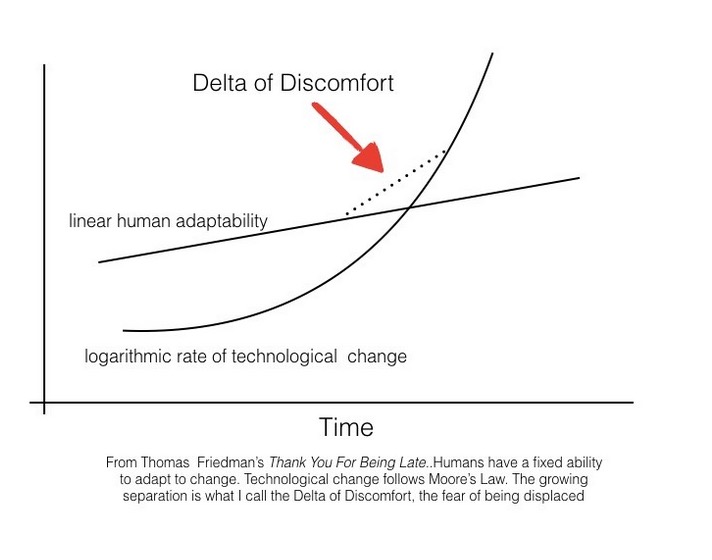
The Delta of Discomfort and
the Agony of Despair

By ALAN PITT

I’m a radiologist. I spend my day looking at CT scans and MRI scans. When it’s a good day, I have interesting scans to review, but much of my work is not too dissimilar from a TSA screener’s. One normal scan after the next, it’s akin to trying to stay alert so that the gun someone’s trying to sneak through in their luggage isn’t missed. In my case, of course, it’s a cancer or other unexpected medical abnormality finding.

Computer-Assisted Diagnosis

Most of my day I work on a computer workstation presenting the exams. In my dream, my workstation does more than simply display the exam. It assists in reading the case. If there’s an abnormality, I can click on the area, and the workstation takes the image and compares it to millions of other cases in the cloud. It tells me, based on that patient’s age and sex and other information, how likely it is the finding is a tumor and maybe even, if so, what kind of tumor. At other times the workstation tells me whether a study is normal or not, freeing me to do other activities. However, this dream is not shared by all of my colleagues.

When I mentioned this work-flow scenario to one of my residents—this idea of computer-assisted diagnosis with constant improvement, or what is known as artificial intelligence, or AI—he said it sounded awesome, but he really didn’t want to have it if it was available to everyone. His comment is something of a mixed message: Yes, I see value but no, I don’t want it.

It’s largely based on fear of being replaced by computers. And it’s a song I’ve heard before.

Continue reading…

Only Alternative Facts Can Support the Protecting Access to Care Act

By CHARLES SILVER & DAVID HYMAN

In late March of this year, JAMAInternal Medicine published a study finding that the “the overall rate of [malpractice] claims paid on behalf of physicians decreased by 55.7% from 1992 to 2014.”  The finding wasn’t new.  In 2013, the Journal of Empirical Legal Studies published a study co-authored by one of us (Hyman) which found that “the per-physician rate of paid med mal claims has been dropping for 20 years and in 2012 was less than half the 1992 level.”  In fact, peer-reviewed journals in law and medicine have published lots of studies with similar results.  It is (or should be) common knowledge that claims of an ongoing liability crisis are phony.

But inconvenient facts have never stopped interest groups or politicians from making false claims about med mal litigation.  Since 1991, when Dan Quayle struck gold by asserting that the U.S. had too many lawyers, Americans have heard non-stop about “jackpot justice” in which patients who weren’t even injured win millions; about the flood of frivolous lawsuits in which doctors are sued even though they didn’t make any mistakes; about jury verdicts skyrocketing out of control; and about doctors working all their lives only to have their savings wiped out by a single malpractice suit.  All of these charges are false—you can find the evidence here, here, here, and here.  But in politics, it’s staying on message that counts; it doesn’t seem to matter whether the message is true.Continue reading…

ACO Turnover is High. Doctors Have Few Patients, and Those Patients are Unusually Healthy

KIP SULLIVAN

By KIP SULLIVAN

ACOs suffer astonishingly high turnover rates among their doctors and patients; their patients are unusually healthy; and those unusually healthy ACO patients constitute about 5 percent of each ACO doctor’s panel of patients. These facts appear in three recent reports: CMS’s final evaluation of the Pioneer ACO program, and two papers published in Health Affairs by John Hsu et al.

Each of these facts – high turnover, healthier patients, and few ACO patients in each physician’s panel – poses problems that cannot be solved without a substantial redefinition of the ACO. How are doctors supposed to influence the health and cost of patients they see only sporadically or not at all? How are ACO doctors supposed to lower costs if their sickest and most costly patients are not in the ACO? How are ACOs supposed to alter physician behavior when their physicians see fewer than 100 ACO patients out of a typical panel of 1,500 to 2,000 patients?

Continue reading…