Categories

Category: Medical Practice

The Death of Cancer: Book Review and Reflections

By CHADI NABHAN

Some books draw you in based on a catchy title, a provocative book jacket, or familiarity with the author. For me, recollections of medical school primers written by the renowned lymphoma pioneer Vincent DeVita Jr. and my own path as an oncologist immediately attracted me to “The Death of Cancer.” I felt a connection to this book before even reading it and prepped myself for an optimistic message about how the cancer field is moving forward. Did I get what I bargained for?

Co-authored with his daughter, Elizabeth DeVita-Raeburn, DeVita brings us back decades ago to when he had just started at the National Cancer Institute (NCI) under the wings of Jay Freireich and Tom Frei. At the time, he was a clinical associate and a “chemotherapist”; the field was ultimately renamed and defined as medical oncology. (Note to self: I am ecstatic the field was renamed; I would prefer to be called a medical oncologist anytime than a chemotherapist, but that’s just me). He recounts how chemotherapy was frowned upon in favor of the two preferable ways to treat cancer at the time: surgery and radiotherapy. DeVita eloquently describes how his mentors were ridiculed when they announced their pursuit to cure childhood leukemia using combination chemotherapy; their approach and determination provided him with inspiration to push his research further. He goes on to describe in a fascinating manner the way he designed the MOPP regimen, which cured many patients with Hodgkin lymphoma. He recounts events when he presented his own MOPP data, and how he was verbally attacked by radiotherapists who claimed his data were insufficient and attempts to drive them “out of business”. Even in 2018, my radiation oncology colleagues protest when medical oncologists challenge the role of radiation therapy in Hodgkin lymphoma. I have actually grown tired of attending debates between any two prominent lymphoma figures discussing whether to use radiation or not in such setting; there are better topics to argue about, like who might win the Super Bowl.


Continue reading…

Is CareMore Health’s Population Health Management Model Disruptive?

By REBECCA FOGG 

Fueled by Americans’ urgent need for better chronic disease care and insurers’ march from fee-for-service to value-based payments, innovation in population health management is accelerating across the health care industry. But it’s hardly new, and CareMore Health, a recent acquisition of publicly-traded insurer Anthem, has been on the vanguard of the trend for over twenty years.

CareMore Health provides coordinated, interdisciplinary care to high-need patients referred by primary care physicians in nine states and Washington, D.C. The care encompasses individualized prevention and chronic disease management services and coaching, provided on an outpatient basis at CareMore’s Care Clinics. It also includes oversight of episodic acute care, via CareMore “extensivists” and case managers who ensure effective coordination across providers and care sites before, during and after patient hospitalizations.

The majority of CareMore patients are covered by Medicare Advantage or Medicaid, and company-reported results, as well as a Commonwealth Fund analysis, indicate that the patient-centered, relationship-based model leads to fewer emergency room visits, specialist visits and hospitalizations for segments of the covered population. They also suggest that it leads to cost efficiencies relative to comparable plans in its markets of operation.

Continue reading…

Statistical Certainty: Less is More

By ANISH KOKA

The day after NBC releases a story on a ‘ground-breaking’ observational study demonstrating caramel macchiatas reduce the risk of death, everyone expects physicians to be experts on the subject. The truth is that most of us hope John Mandrola has written a smart blog on the topic so we know intelligent things to tell patients and family members.

A minority of physicians actually read the original study, and of those who read the study, even fewer have any real idea of the statistical ingredients used to make the study. Imagine not knowing whether the sausage you just ate contained rat droppings. At least there is some hope the tongue may provide some objective measure of the horror within.

Data that emerges from statistical black boxes typically have no neutral arbiter of truth. The process is designed to reveal from complex data sets, that which cannot be readily seen. The crisis created is self-evident: With no objective way of recognizing reality, it is entirely possible and inevitable for illusions to proliferate.

Continue reading…

Evidence-Based Satire

By SAURABH JHA

Sequels generally disappoint. Jason couldn’t match the fear he generated in the original Friday the 13th. The sequel to the Parachute, a satirical piece canvassing PubMed for randomized controlled trials (RCTs) comparing parachutes to placebo, matched its brilliance, and even exceeded it, though the margin can’t be confirmed with statistical significance. The Parachute, published in BMJ’s Christmas edition, will go down in history with Jonathan Swift’s Modest Proposal and Frederic Bastiat’s Candlemakers’ Petition as timeless satire in which pedagogy punched above, indeed depended on, their absurdity.

In the Parachute, researchers concluded, deadpan, that since no RCT has tested the efficacy of parachutes when jumping off a plane, there is insufficient evidence to recommend them. At first glance, the joke was on RCTs and those who have an unmoored zeal for them. But that’d be a satirical conclusion. Sure, some want RCTs for everything, for whom absence of evidence means no evidence. But that’s because of a bigger problem which is that we refuse to acknowledge that causality has degrees, shades of gray, yet causality can sometimes be black and white. Somethings are self-evident.

In medicine, causation, even when it’s not correlation, is often probabilistic. Even the dreaded cerebral malaria doesn’t kill everyone. If you jump from a plane at 10, 000 feet without a parachute death isn’t probabilistic, it is certain. And we know this despite the absence of rigorous empiricism. It’s common sense. We need sound science to tease apart probabilities, and grayer the causality the sounder the empiricism must be to accord the treatment its correct quantitative benefit, the apotheosis of this sound science being an RCT. When empiricism ventures into certainties, it’s no longer sound science. It is parody.

Continue reading…

Last Month in Oncology with Dr. Bishal Gyawali: November 2018

Keynote speech

There was a very sobering piece in NEJM by the FDA last month in which the authors try to explore what went wrong with the Keynote-183, Keynote-185 and checkmate 602 trials testing PD-1 inhibitors combinations with pomalidomide or lenalidomide and dexamethasone in multiple myeloma. Interim analysis of Keynote 183 and 185 revealed detrimental effects on overall survival (OS) with hazard ratios of 1.61 and 2.06, not explained by differences in toxicities alone. The checkmate 602 trial was also halted in light of these findings and also showed higher mortality in the nivolumab combination arm.

In the thoughtful NEJM piece, the authors make at least three important points. First, they question why these PD-1 inhibitors were tested in combination despite their having limited single-agent activity. In fact, a couple of years ago, Vinay Prasad and I asked the same question: why are novel cancer drugs being tested in combination despite having limited activity as a single agent? We found that these drugs, even when ultimately approved, provide relatively low value and recommended that drugs with poor single agent activity not be tested in combinations unless there are specific reasons to expect synergy.

The second important point in the article is that many cancer drug approvals are lately based on durable response rates in single arm trials without a control group, a situation in which it is difficult to evaluate the safety and efficacy of drug combinations. Indeed, without an RCT, the oncology community would never have known these signals of detrimental effect. If the FDA had approved these PD-1 inhibitors in multiple myeloma on the basis of non-randomized trials, which it often does in other oncology contexts, who knows how long it would have taken to recognize the increased mortality in patients—and at what cost. This is another reason why we need RCTs more now than ever. Finally, the authors point out that these PD-1 inhibitors in multiple myeloma were directly advanced to phase 3 trials after phase 1 trials were completed, without phase 2 information. Indeed, in a recent paper, Alfredo Addeo and I showed that a substantial percentage of drugs that fail in phase 3 trials do not have supporting phase 2 data.
Continue reading…

Where to Apply Artificial Intelligence in Health Care

By HANS DUVEFELT

I have seen the light. I now, finally, see a clear role for artificial intelligence in health care. And, no, I don’t want it to replace me. I want it to complement me.

I want AI to take over the mandated, mundane tasks of what I call Metamedicine, so I can concentrate on the healing.

In primary care visits in the U.S., doctors and clinics are buried in government mandates. We have to screen for depression and alcohol use, document weight counseling for every overweight patient (the vast majority of Americans), make sure we probe about gender at birth and current gender identification, offer screening and/or immunizations for a host of diseases, and on and on and on. All this in 15 minutes most of the time.

Never mind reconciling medications (or at least double checking the work of medical assistants without pharmacology training), connecting with the patient, taking a history, doing an examination, arriving at a diagnosis, and formulating and explaining a patient-focused treatment plan.

Continue reading…

Integrating in Health Care: 6 Tools for Working Across Boundaries

By REBECCA FOGG 

Today’s health care providers face the formidable challenge of delivering better, more affordable and more convenient care in the face of spiraling care costs and an epidemic of chronic disease. But the most innovative among them are making encouraging progress by “integrating”—which in this context means working across traditional boundaries between patients and clinicians, health care specialties, care sites and sectors.

The impulse to do so is shrewd, according to our innovation research in sectors from computer manufacturing to education. We’ve found that when a product isn’t yet good enough to address the needs of a particular customer segment, a company must control the entire product design and production process in order to improve it. This is necessary because in a “not-good-enough” product, unpredictable and complex interdependencies exist between components, so each component’s design depends on that of all the others.

Given this, managers responsible for the individual components must collaborate—or integrate—in order to align components’ design and assembly toward optimal performance. IBM employed an integrated strategy to improve performance of its early mainframe computers, and this enabled the firm to dominate the early computer industry when mainframes weren’t yet meeting customers’ needs.

In health care delivery, such integration is analogous to, but something more than, coordinated care. It means assembling and aligning resources and processes to deliver the right care, in the right place, at the right time. This type of integration is a core aspiration of innovative providers leading hot-spotting and aging-in-place programs, capitated primary care practices, initiatives addressing health-related social needs, and other care models that depart from America’s traditional, episodic, acute-care model. How are they tackling it? They’re leveraging very specific tools to facilitate work across boundaries. Here are six of the most common we uncovered in our research:

Continue reading…

It’s Time to Tango: Impatient With Progress on Patient-Physician Partnerships

By JESSIE GRUMAN, PHD

The other day I came across this photo of a couple clasping each other in a dramatic tango on the cover of an old medical journal—a special issue from 1999 that was focused entirely on doctor-patient partnerships.  The tone and subjects of the articles, letters and editorials were identical to those written today on the topic: “it’s time for the paternalism of the relationship between doctors and patients to be transformed into a partnership;” “there are benefits to this change and dangers to maintaining the status quo;” “some doctors and patients resist the change and some embrace it: why?”

Two questions struck me as I impatiently scanned the articles from 12 years ago: First, why are these articles about doctor-patient partnerships still so relevant?  And second, why did the editor choose this cover image?

I’ve been mulling over these questions for a couple days and I think answer to the second question sheds light on the first.   Here are some thoughts about the relationship between patients and doctors (and nurse practitioners and other clinicians) evoked by that image of the two elegant people dancing together:

It takes two to tango.  Ever seen one guy doing the tango?  Nope.  Whatever he’s doing out there on the dance floor, that’s not tango.  Without both dancers, there is no tango. The reason my doctor and I come together is our shared purpose of curing my illness or easing my pain. We bring different skills, perspectives and needs to this interaction.  When in a partnership, I describe my symptoms and recount my history. I talk about my values and priorities. I say what I am able and willing to do for myself and what I am not.  My doctor has knowledge about my disease and experience treating it in people like me; she explains risks and trade-offs of different approaches and tailors her use of drugs, devices and procedures to meet my needs and my preferences. Both of us recognize that without the active commitment of the other we can’t reach our shared goal: to help me live as well as I can for as long as I can.Continue reading…

Why Narratives Do (and Should) Matter in Bioethics

By FRANK PASQUALE

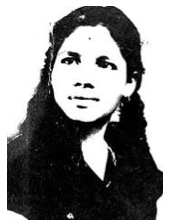
There is a fascinating recent decision from the Indian Supreme Court on the Shanbaug case, regarding a woman who has been in a persistent vegetative state (PVS) for over 37 years. A petitioner who had written a book on Shanbaug (Pinky Viranai) argued for a withdrawal of life support. Shanbaug had no family to intervene, but hospital staff resisted, and the Court ultimately sided with them. While unflinchingly examining the dehumanizing aspects of PVS, the Court offers a remarkable affirmation of the good will of the staff who have taken care of Shanbaug:

[I]t is evident that the KEM Hospital staff right from the Dean, including the present Dean Dr. Sanjay Oak and down to the staff nurses and para-medical staff have been looking after Aruna for 38 years day and night. What they have done is simply marvelous. They feed Aruna, wash her, bathe her, cut her nails, and generally take care of her, and they have been doing this not on a few occasions but day and night, year after year. The whole country must learn the meaning of dedication and sacrifice from the KEM hospital staff. In 38 years Aruna has not developed one bed sore. It is thus obvious that the KEM hospital staff has developed an emotional bonding and attachment to Aruna Shanbaug, and in a sense they are her real family today.

After a scholarly survey of many countries and U.S. states’ laws on withdrawal of life support, the Court concludes:

A decision has to be taken to discontinue life support either by the parents or the spouse or other close relatives, or in the absence of any of them, such a decision can be taken even by a person or a body of persons acting as a next friend. It can also be taken by the doctors attending the patient. However, the decision should be taken bona fide in the best interest of the patient. . . .Continue reading…

Looking for Quality in the Wrong Place

By CHRIS LANGSTON

Last week I attended the first annual meeting of the Long-Term Quality Alliance and listened to Gregg Pawlson (a geriatrician and executive with NCQA) talk about quality measurement.  Right now, quality measurement does too little to drive practice towards quality care because it is based only on things that are “feasible,” or easy to measure—like what gets coded on medical bills. Pawlson observed that while feasibility must be one of the watchwords of quality measurement for now, in the near future electronic medical records should allow us to move beyond billing codes to gather real clinical data for more important quality measurement, including key care processes and outcomes.

I sure hope so. Because those who have looked beyond the dim illumination of current billing-based “quality measures” and searched in the darkness where real processes of clinical care can found have found that the situation is grave.  The ACOVE (Assessing Care of Vulnerable Elders) process, while laborious, looks at clinical care where it really happens – in offices and charts – rather than in bills and therefore has a better chance of driving meaningful quality improvement. Readers of Health AGEnda know that I am a big fan of this work, begun at RAND by outstanding clinician-researchers including Neil Wenger, David Solomon, David Reuben, and many others.  I believe that ACOVE is an example of what we need in elder care: high quality evidence about essential clinical practices that are sensibly related to real health outcomes and show how we could (often easily) do better for older people.  ACOVE is a blessing.

One of the leaders of the ACOVE program is Neil Wenger, MD, a faculty member in General Internal Medicine at UCLA and a researcher at RAND who I have cited in my posts.  However, in his talk to the Maxwell School of Public Policy at Syracuse University (another treasure I found last fall at GSA), he really outdid himself in delivering one of the most accessible (and provocative) descriptions of this research program I have ever read.  He asks, “Do We Want to Measure the Quality of Care for Vulnerable Older People?” Given the lack of attention to the ACOVE work, I understand his frustration.Continue reading…