Categories

Category: Medical Practice

Reference Manuals May Be Facing Obsolescence

We must ensure their relevance to contemporary patient care

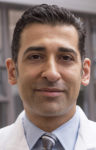
By LONNY REISMAN

It’s 1992 and disruptive technologies of the day are making headlines: AT&T releases the first color videophone; scientists start accessing the World Wide Web; Apple launches the PowerBook Duo.

In healthcare, with less fanfare, a Harvard physician named Dr. Burton “Bud” Rose converts his entire nephrology textbook onto a floppy disk, launching the clinical tool that would ultimately become UpToDate. Instead of flipping through voluminous medical reference texts, such as the Washington Manual, doctors could for the first time input keywords to find the clinical guidance they needed to make better treatment decisions.

The medical community embraced UpToDate’s unique ability to put knowledge at their fingertips. Today more than 1.7 million clinicians around the world use UpToDate to provide evidence-based patient care with confidence. For many, it along with other reference sources has become foundational to providing high quality medical care.

More than just an easy-to-use reference, UpToDate has gone on to improve patient outcomes, according to the Journal of Hospital Medicine.

In the new era of 21st century digital medicine, however, there are opportunities to go further in support of clinicians and patients. Reference tools must be powered by predictive and prescriptive analytics, be personalized to individual patient circumstances, and be integrated into clinician workflow. In some cases, clinicians may be unaware of which questions to ask of a computerized reference manual, or how to incorporate the nuances of an individual patient’s case into the general insights of a reference. Searching for heart failure treatment, for example, may be too broad a query and the resulting recommendations therefore may not provide optimal care for a specific patient’s unique medical circumstances. New digital health solutions that consider patients’ co-illnesses, contraindications, symptomatology, current treatment regimens, and hereditary risks are essential.

Continue reading…
Doctoring at Christmas

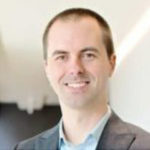
By HANS DUVEFELT

I find myself thinking about how being a doctor has come to impact the Christmas Holiday for me over the years. I have written about working late and driving home in the snow and dark of Christmas Eve in northern Maine; I have shuffled Osler’s written words into something that speaks to physicians of our times; I have written about the angst around the Holidays I see in my addiction recovery patients.

This year, my thoughts go to the way Christmas is a time of reconnection for many people. We reconnect with family and friends we may not see as often as we would like, and many of us reconnect with secular traditions dating back to our childhood. Many people also reconnect more deeply with their Christian traditions, the ancient celebration of Hanukkah or the newer one of Kwanzaa.

As a doctor, I think Christmas is a time when individuals are more open toward others, more willing to extend “good will toward men” (Luke 2:14). It can be an opener for future relationships to form or grow, a time to share our humanity in the context of experiencing something larger than ourselves and our everyday existence. It allows us to get a little more personal by sharing something of what we all have in common – the need for togetherness with those we love.

Continue reading…

The Intrusion of Big Tech into Healthcare Threatens Patients’ Rights

By ANDREW DORSCH

The question of how much time I spend in front of the screen has pestered me professionally and personally. 

A recent topic of conversation among parents at my children’s preschool has been how much screen time my toddlers’ brain can handle. It was spurred on by a study in JAMA Pediatrics that evaluated the association between screen time and brain structure in toddlers. The study reported that those children who spent more time with electronic devices had lower measures of organization in brain pathways involved in language and reading. 

As a neurologist, these findings worry me, for my children and for myself. I wonder if I’m changing the structure of my brain for the worse as a result of prolonged time spent in front of a computer completing medical documentation. I think that, without the move to electronic medical records, I might be in better stead — in more ways than one. Not only is using them potentially affecting my brain, they pose a danger to my patients, too, in that they threaten their privacy. 

As any practicing physician can tell you, electronic medical records represent a Pyrrhic victory of sorts. They present a tangible benefit in that medical documentation is now legible and information from different institutions can be obtained with the click of a button — compared to the method of decades past, in which a doctor hand-wrote notes in a paper chart — but there’s also a downside. 

Continue reading…

A System that Fails Migrant and Seasonal Agricultural Workers

Connie Chan
Brooke Warren
Phuoc Le

By PHUOC LE, CONNIE CHAN, & BROOKE WARREN

I recently took care of Rosaria[1], a cheerful 60-year-old woman who came in for chronic joint pain. She grew up in rural Mexico, but came to the US thirty years ago to work in the strawberry fields of California. After examining her, I recommended a few blood tests and x-rays as next steps. “Lo siento pero no voy a tener seguro hasta el primavera — Sorry but I won’t have insurance again until the Spring.” Rosaria, who is a seasonal farmworker, told me she only gets access to health care during the strawberry season. Her medical care will have to wait, and in the meantime, her joints continue to deteriorate.

Migrant and seasonal agricultural workers (MSAW) are people who work “temporarily or seasonally in farm fields, orchards, canneries, plant nurseries, fish/seafood packing plants, and more.”[2] MSAW are more than temporary laborers, though— they are individuals and families who have time and time again helped the US in its greatest time of need. During WWI, Congress passed the Immigration and Nationality Act of 1917[3] because of the extreme shortage of US workers. This allowed farmers to bring about 73,000 Mexican workers into the US. During WWII, the US once again called upon Mexican laborers to fill the vacancies in the US workforce under the Bracero Program in 1943. Over the 23 years the Bracero Program was in place, the US employed 4.6 million Mexican laborers. Despite the US being indebted to the Mexican laborers, who helped the economy from collapsing in the gravest of times, the US deported 400,000 Mexican immigrants and Mexican-American citizens during the Great Depression.

Continue reading…

Thou Shalt Not Try to Outsmart Me

By HANS DUVEFELT

Medical researchers and their groupies – early adopters, thoughtleaders, those easily influenced or whatever you want to call them – never seem to learn that when you try to outsmart Mother Nature or Our Heavenly Father, whichever appeals more to your world view, you usually get your hand slapped.

When I was a resident (1981-1984), I got penalized if I didn’t offer postmenopausal women estrogen-progesterone replacement therapy because it seemed obvious that if women with endogenous estrogen didn’t get many strokes or heart attacks and women without estrogen did, all we needed to do was make up for God’s or Mother Nature’s oversight in not keeping the estrogen coming after age 50.

Then the Women’s Health Study in 2000, almost 20 years later, showed that women on Prempro had more strokes, blood clots and heart attacks, and more breast cancer on top of that, than women who accepted the natural order of things – menopause with all its symptoms and inconveniences.

The same things has happened with osteoporosis – more subtrochanteric femur fractures after five years of Fosamax than in untreated women.

Continue reading…

Switching to Outpatient Surgery for Everyone’s Benefit

By AMY KRAMBECK

The trend toward less invasive procedures, shifting from inpatient to outpatient, has changed the face of surgery. Industry-changing leaps in technology and surgical techniques have allowed us to achieve our treatment goals with smaller incisions, laparoscopy and other “closed” procedures, less bleeding, less pain, and lower complication rates. As a result, patients who used to require days of recovery in the hospital for many common surgeries can now recuperate in their own homes.

Outpatient procedures grew from about 50% to 67% of hospitals’ total surgeries between 1994 and 2016,1,2 and outpatient volume is expected to grow another 15% by 2028,3 with advantages for patients, surgeons, insurers, and hospitals. In my hospital, where bed space is at a premium, my colleagues and I were able to make a significant impact by switching minimally invasive surgery for enlarged prostate, also called benign prostatic hyperplasia (BPH), from inpatient to outpatient.

New Opportunity with an Advanced Technology

BPH affects about half of men in their 50s, with the prevalence increasing with age to include about 90% of men 80 and older.4 As a result, BPH surgery makes up a significant portion of urological procedures in any hospital.

I have been performing BPH surgery for 11 years. There are several options, including transurethral resection of the prostate (TURP) and suprapubic prostatectomy, both of which require hospital stays and bladder irrigation with a catheter due to bleeding. Another less frequently utilized surgical option for BPH is holmium laser enucleation of the prostate (HoLEP). HoLEP causes fewer complications and requires shorter hospitalization.5 Specifically, its postoperative morbidity is the lowest among BPH surgeries.5,6,7  HoLEP has the least bleeding, shortest catheter time, and low rates of urinary tract infection, plus patients are less likely to require additional treatment for BPH as they age compared to other available therapies.5,6,7  

Continue reading…

The Public Health To-Do List is Choking Doctors and Jeopardizing Patients’ Lives

By HANS DUVEFELT

“By the way, Doc, why am I tired, what’s this lump and how do I get rid of my headaches?”

Every patient encounter is a potential deadly disease, disastrous outcome, or even a malpractice suit. As clinicians, we need to have our wits about us as we continually are asked to sort the wheat from the chaff when patients unload their concerns, big and small, on us during our fifteen minute visits.

But something is keeping us from listening to our patients with our full attention, and that something, in my opinion, is not doctor work but nurse work or even tasks for unlicensed staff: Our Public Health to-do list is choking us.

You don’t need a medical degree to encourage people to get flu and tetanus shots, Pap smears, breast, colon and lung cancer screening, to quit smoking, see their eye doctor or get some more blood pressure readings before your next appointment. But those are the pillars of individual medical providers’ performance ratings these days. We must admit that the only way you can get all that health maintenance done is through a team effort. Medical providers neither hire nor supervise their support staff, so where did the idea ever come from that this was an appropriate individual clinician performance measure?

Continue reading…

“Chasing My Cure”: A Book Review

By CHADI NABHAN, MD, MBA, FACP

Have you thought about your own mortality?

Who hasn’t, given the frequency of seeing death and grief depicted in the media or through real life encounters with friends, relatives, neighbors, or patients? These incidents trigger uncomfortable and sometimes uneasy thoughts of how we might personally deal with potential illness and disease. The same thoughts are soon displaced by the busyness of living. 

Despite dealing with the death of his mother from a brain tumor, we learn David Fajgenbaum was healthy, living life to its fullest, and a future doctor in the making. He may have thought about his own mortality as he grieved the death of his mother, but likely never imagined anything dire would happen to him. Fajgenbaum was pushing forward on several fronts, including leading a non-for-profit organization for grieving college students, symbolically named “Actively Moving Forward” or “AMF” after his mother’s initials, all while first playing college football and then attending medical school. By all accounts, this was a vigorous young man, meticulous about his diet and physicality.  When he became ill, it was a blunt reminder that life is unpredictable.

In his book “Chasing my Cure”, Dr. Fajgenbaum takes us back to the time when he first got ill.  He vividly describes his physical symptoms and various scans which detected his enlarged nodes. Interestingly, we learn how long he was in denial of these symptoms, thereby delaying medical attention in favor of studying. This neglect of self-care highlights part of his personality, but also represents the pressure and expectations placed upon a majority of medical students. 

Continue reading…

Presenting Complaint: Social Injustice

By ANISH KOKA

Bobby

It took some doing, but I had finally made it to Bobby’s home.

It was a rowhome tucked into one of those little side streets in the city that non-city folks wouldn’t dream of driving down. As I step in, I’m met by the usual set up – wooden steps that hug the right side of the wall leading up to the second floor.  Bobby certainly hasn’t made it up to the second floor in some time. At the moment she is sitting in her hospital bed in the living room. The bed is the focal point to a room stuffed to the gills with all manners of stuff. At least three quarters of the stuff seems to be food. Cinnamon buns, Doritos, donut holes, chocolate frosted Donuts, crackers, Twinkies. The junk food aisle at Wawa would be embarrassed by the riches on display here.

Bobby weighs in at four hundred pounds, 5 foot 5 inches. She has a tracheostomy from multiple prior episodes of respiratory failure that have required ventilatory support. I’m here at the request of a devoted primary care physician that still makes home calls. I’ve looked through the last number of hospital stays. The last few discharge summaries are carbon copies of each other. Hypoxemic respiratory failure related to pulmonary edema complicated further by morbid obesity. Time on the vent. Antibiotics. Diuretics. Home. Return to the hospital 2 weeks later. The last echocardiogram done was 3 admissions ago. A poor study. Not much could be seen due to ‘body habitus’.

I sit on the side of the bed trying to acquire my own images of her heart. I talk to her as I struggle. Bobby is 58, the youngest of three sisters, and the only surviving member of the family. Her elder sisters died of respiratory complications as well. They both died with tracheostomies. The conversation is circular. The problem according to Bobby is the tracheostomy. Everything was fine before that. I explain that a prolonged period of time on the ventilator on a prior admission prompted the tracheostomy, and that the multiple recent admissions to the hospital that required a ventilator seemed to validate that decision. She doesn’t waver. Both her sisters died shortly after they got tracheostomies. Bobby thinks the physicians taking care of her sisters had a hand in their demise. “They didn’t care.” “We told them they were sick.”

Continue reading…

Explain yourself, machine. Producing simple text descriptions for AI interpretability

By LUKE OAKDEN-RAYNER

One big theme in AI research has been the idea of interpretability. How should AI systems explain their decisions to engender trust in their human users? Can we trust a decision if we don’t understand the factors that informed it?

I’ll have a lot more to say on the latter question some other time, which is philosophical rather than technical in nature, but today I wanted to share some of our research into the first question. Can our models explain their decisions in a way that can convince humans to trust them?


Decisions, decisions

I am a radiologist, which makes me something of an expert in the field of human image analysis. We are often asked to explain our assessment of an image, to our colleagues or other doctors or patients. In general, there are two things we express.

  1. What part of the image we are looking at.
  2. What specific features we are seeing in the image.

This is partially what a radiology report is. We describe a feature, give a location, and then synthesise a conclusion. For example:

There is an irregular mass with microcalcification in the upper outer quadrant of the breast. Findings are consistent with malignancy.

You don’t need to understand the words I used here, but the point is that the features (irregular mass, microcalcification) are consistent with the diagnosis (breast cancer, malignancy). A doctor reading this report already sees internal consistency, and that reassures them that the report isn’t wrong. An common example of a wrong report could be:

Continue reading…