Categories

Category: Medical Practice

If Grady Fails

Brian Klepper

By BRIAN KLEPPER

In an extraordinary move earlier this week, the politically-appointed Fulton-DeKalb Hospital Authority, the governing body over Atlanta’s Grady Health System, unanimously and voluntary stepped aside, to be replaced by a new non-profit corporation. Projecting a $55 million deficit this year, the hospital had just three weeks of cash on hand. It needs $300 million immediately for sorely needed renovations, and must deal with $63 million in accumulated debt to its biggest creditors, Emory University Medical School and Morehouse School of Medicine. New oversight was the predicate for a hoped-for financial bailout from business, philanthropies and financial institutions.

Other Atlanta hospitals are undoubtedly concerned that Grady will fail, and will probably do everything possible to support a bailout. The last thing they want is for Grady’s patients to come to their facilities. Now would be a good time to rally business leaders and legislators, who nearly always go to fancier hospitals, which of course has been a big part of the problem.

Grady’s turmoil should be recognized as the first small shock of much larger seismic event, long in the making, a concrete sign of America’s relentlessly intensifying health care crisis. The wrath falls on our most vulnerable – those with health problems or with few financial resources – as well as on the institutions and professionals that care for them.

Continue reading…

Physicians: Can Computerized Decision Support Get Docs to Toe the Line on Quality?

Robert Wachter

By ROBERT WACHTER

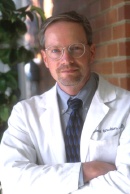
Robert_wachter_3 Robert Wachter is widely regarded as a leading figure in the modern patient safety movement. Together with Dr. Lee Goldman, he coined the term “hospitalist” in an influential 1996 essay in The New England Journal of Medicine. His most recent book, Understanding Patient Safety, (McGraw-Hill, 2008) examines the factors that have contributed to what is often described as “an epidemic” facing American hospitals. His posts appear semi-regularly on THCB and on his own blog “Wachter’s World.”

A humorous and telling story about quality measurement, decision support, and human nature:

I was visiting professor at a very good academic medical center a year or so ago. On these trips, one of the fun things I get to do is meet with the residents. Sometimes they present a clinical case to me, but this day they wanted to talk about healthcare policy. So I thought I’d check out what they knew about the new world of quality measurement and transparency.

“Who admitted a patient with pneumonia last night?” I asked the bleary-eyed, overcaffeinated group of 20 somethings, each looking only slightly older than my kids. Three interns hesitatingly raised their hands.

“If I wanted to figure out whether you provided high quality care,” I continued, “what should I look at?”

“I think we saved this guy’s life,” one beamed. “Yeah, and I had a lady who was confused, hypotensive, and hyperglycemic,” said another, “and we did a really good job taking care of her. She’s much better this morning.”

Continue reading…

Physicians: Sermo allowing docs to discuss chart errors about them!

By MATTHEW HOLT

Sermo got some press this week about a thread that’s of lots of interest to all of us–medical errors and inaccurate records:


Several years ago, Botney visited a specialist to check out a
bothersome lump in his cheek. He took some medicine and the problem
went away.Out of curiosity, Botney thumbed through his chart and was
surprised to find a note from the doctor saying he had a stroke."I
never even had the symptoms of a stroke. No visual changes, no
weakness, no numbness, nothing," Botney, an anesthesiologist at Oregon
Health & Science University, said in a telephone interview from
Portland.

The key difference here is that
physicians were talking about this with other physicians. The next
question is whether this will blossom as an issue because it’s now
being talked about online? Or will it get hidden under the medical
carpet as has been the issue of medical errors for all these years?

Also worth noting that one of the leading docs in the patient safety movement, Bob Wachter, has a new-ish blog out too that’s well worth a look. I’m happy to report that Bob is also now a contributor at THCB. If you haven’t yet, immediately sally forth and read his recent posts "Dennis Quaid’s Kids – Are VIPs Safer?" and  "When is a Medical Error a Crime." Both have interesting comment threads developing.Comment on this post at the Health 2.0 Blog


When the Patient is a pain the doctor blames Google

By MATTHEW HOLT

This article in Time written by an New York-based orthopedic surgeon is called When the Patient Is a Googler. But the problem is not Google, or online health information searching. Most doctors like a better informed patient. The problem is that this patient didn’t respect the doctor and that the doctor in turn didn’t respect the patient.

Trot over to Tara Parker-Pope’s Well blog on the NY Times to see a lot of comments about the surgeon’s attitude. (And no cracks from those of you who know a few orthopedic surgeons!)

Matthew Holt

When is a Medical Error a Crime? by Bob Wachter

Robert Wachter

By ROBERT WACHTER

Bob Wachter is one of the nation’s leading experts on medical safety and one of the pioneers of the hospitalist movement. And now he’s descending into the mire of blogging! So we’re pleased to cross post one of the more recent pieces from his (relatively) new blog Wachter’s World.

Robert_wachterThe first commandment of the modern patient safety movement was “Thou Shalt Not Blame.”
Old-Think:
errors are screw-ups by “bad apples,” and can only be prevented by some
combination of shaming and suing the doctor or nurse holding the
smoking gun. New-Think: errors represent “system problems;” any
attempt to assess blame will drive providers underground, inhibiting
the free-flow of information so crucial to error prevention. Like
most complicated issues in life, the truth lives somewhere between
these polar views. In the main, the “no blame” view is right – most
errors are committed by good, hardworking docs and nurses, and
finger-pointing simply distracts us from the systems fixes that can
prevent the next fallible human being from killing someone.Yet,
taken to extremes, the no blame argument has always struck me as both
naive and more than a little PC. Anyone who has practiced for more than
a month can name docs and nurses who they would never want caring for
their loved ones. And what about the substance-abusing nurse, the
internist who doesn’t keep up with the literature, the
retractor-throwing surgeon, or the provider who refuses to follow
reasonable safety rules. If nobody is ever to blame, who is
accountable?

Continue reading…

Think Again: Payments to doctors

Eric Novack

By ERIC NOVACK

Eric NovackI am frankly a bit surprised at the lack of comment at THCB on the recent orthopedic device
manufacturers’ settlement
with the government for concerns about illegal payments to physicians.  I would have expected Matthew or Maggie, at least, to be sounding the alarm over the dangers of the private sector in healthcare. The most interesting byproduct of the settlement is the development of a public database where you can search by company to see who is getting the ‘big bucks’.

But like many simple statistics, the data can be misleading.

Let me be clear—paying a surgeon for ‘work’ with the real expectation that he or she will use a specific product is unethical, not to mention illegal (but a problem inherent in our 3rd party paymentsystem in medicine, but that is another issue entirely…).

One Phoenix area surgeon has been paid $3 million this year by Stryker.

‘Outrageous’, you say. “Ah- ha—see, all doctors are corrupt and need to be controlled”, others exclaim.  But what are the facts?  In this case, the surgeon helped develop some of the early hip and knee replacement designs… These designs have served as the basis for literally millions of replaced joints over the last 20 years.  He owns a piece of the patent.Is it immoral to get paid for people using a product you work hard to develop?  Should Google’s founders still benefit?  How about those who own patents on everything vacuum cleaners to hair care products?

Of course they should– because our society encourages innovation by protecting the value of innovation.

Continue reading…

A Patient in my own hospital

Paul Levy

By PAUL LEVY

Paul Levy is CEO at Beth-Israel Deaconess Medical Center in Boston. Paul was one of the  first CEOs to embrace blogging and continues to use his popular online column as a forum to express his views on the business of healthcare, public policy in Massachusetts and the challenges of being a manager in a very challenging field.  In this latest post he addresses a problem you wouldn’t think would be problem for a top manager at a facility affiliated with Harvard Medical School:  The very real risk to his health his job poses. He blogs at Running a Hospital. 

Two stories about being a patient in my own hospital.

(1)
I am really lucky to have a primary care doctor who knows how to
protect me, as president of our hospital, from our well meaning
doctors. Why do I need protection? Well, because the specialists are
really proud of their work and want to use any malady that I have to
show me their stuff. My doctor knows how dangerous this can be!

A
few years ago, I signed up for an ocean kayaking trip in Patagonia.
This was to entail pretty strenuous outdoor living and paddling all day
long for two weeks. The program therefore required a physical exam and
recommended a stress test for those over a "certain age." So I asked my
PCP to order one.

She says, "No.  I refuse to order a stress test for you."

"Huh?", I reply intelligently.

"Here’s
the deal," she says. "If I order the stress test, our especially
attentive (knowing who you are) cardiologist will note some odd
peculiarity about your heartbeat. He will then feel the need, because
you are president of the hospital, to do a diagnostic catheterization.
Then, there will be some kind of complication during the
catheterization, and you will end up being harmed by the experience."

Continue reading…

Why Aren’t More Students Applying To Medical School?

Did you know that there are only two applicants for every place in U.S. medical schools?

In Canada, surprisingly, close to four students apply for each opening. The training in the two countries is very similar; indeed, the Association of American Medical Colleges (AAMC) accredits medical schools in both countries.  And, in the U.S., at the high-end, physicians  can hope to earn far more than Canadian doctors.

Why then do so few Americans apply to medical school?

The answer is that we have priced a medical education well beyond the reach of most middle-class students.  In 2004, tuition and fees at a public medical school averaged $16,153. Students who attended a private school paid $32,588 according to a 2005 study published in The New England Journal of Medicine.

The author, Dr. Gail Morrison, Vice Dean for Education at University of Pennsylvania School of Medicine, tacks on $20,000 to $25,000 a year for living expenses, books and equipment to calculate that the total cost of four years of medical education comes to a heady $140,000 for public schools and $225,000 for private schools.  I’d add that, in many American cities, students would be hard-pressed to cover rent, food, clothing, utilities and transportation for $20,000 a year—let alone books and equipment.

This helps explain why 60 percent of all medical students come from the wealthiest one-fifth of all U.S. families. Another 20 percent come from families lucky enough to be on the fourth step of a five step ladder.

In Canada, by contrast, a medical education is much more affordable. In Quebec province, for example, students paid a piddling $2,943 in tuition last year—though admittedly, this deal was available only to Quebecers. But elsewhere in Canada, tuition averaged just $12,728—about 25 percent less than Americans were paying to attend a public medical school back in 2004, and about 60 percent less than they laid out to attend a private school.

As a result Canadian students are much more open to becoming primary care physicians, even though they know that internists earn lower salaries than specialists. Granted,  in Canada the government determines the ratio of residencies for primary care versus specialties, but students are willing to fill the spots. Canada is now close to its goal of having 50 percent of its physicians practicing primary care.

In the U.S., where the Association of Medical Colleges strongly supports free choice of specialty for students, only about one-third of medical school graduates become primary care physicians. This is understandable: the average U.S. student leaves med school with $130,000 in debt. Moreover, unlike law or business students who enter the workforce immediately after graduation and can begin to pay off their debt, the average medical school graduate spends an additional three to six years in postgraduate training programs while interest continues to pile up. Meanwhile, he is painfully aware of salary differentials: recent numbers show the average family doctor earning $146,000 while the typical invasive cardiologist brings home $400,000. And at the beginning of his career, a family doctor can expect to earn much less—perhaps $100,000, before taxes.

Little wonder then, that the share of medical students pursuing careers in primary care has plummeted from 49 percent in 1997 to 37 percent in 2003; over the same span, the number gravitating toward careers in radiology, orthopedics, ophthalmology, and dermatology has sky-rocketed.

Yet we don’t need more dermatologists. But we do need more primary care physicians. Decades of research done at Dartmouth University show that when Americans see more family doctors and fewer specialists, outcomes are better, in large part because patients receive more preventive care and ongoing management of chronic diseases before they become serious. (I have previously written about this issue for Dartmouth.)

But it’s not just that the high cost of med school is leaving us with too many specialists and too few generalists. Spiraling tuition also explains why middle-class and working-class Americans are not well-represented in the profession. Keep in mind that only 20 percent of physicians come from the lowest three steps on that five-step ladder—which includes the third step where median-income families live.

According to the NEJM, a recent national survey of under-represented students reveals that the cost of attending medical school was the number-one reason they did not apply. Meanwhile an Institute of Medicine report found that while Hispanics constitute 12 percent of the population, they account for only 3.5 percent of all physicians, and though 1 in 8 Americans is black, fewer than 1 in 20 physicians is black. As Morrison observes: “Continuing this trend has far-reaching consequences for the national health care workforce, which needs diverse physicians in order to address the needs of an increasingly heterogeneous patient population.”

Of course low-income students could take out loans just the way more affluent students do. But if you are coming from a median-income household (with a joint income of roughly $50,000), it is easy to see how the idea of being $130,000 in debt could seem terrifying. After all, what if you married, your wife became pregnant, and you had to move out of your tiny one-bedroom apartment just as you were beginning your career? What if you and two fellow graduates opened a small practice—and discovered, after a year, that the three of you just couldn’t make the overhead? More fledgling practices go under than one might imagine. What if you gave birth to twins and realized that you needed to take a nine-month sabbatical from your medical career? How would you continue paying off your debt?

Students coming from families on the top step of the ladder have a financial safety net. They know that, in an emergency, it is likely that parents or grandparents will come forward with interest-free loans or a gift. Students from poorer families realize that they will be out there, alone, with tens of thousands of dollars in loans.

Finally—and perhaps most importantly—the sky-high cost of a medical education creates a shallow applicant pool, making it harder for medical schools to find the very best doctors. Schools, after all, are looking for those rare individuals who are not only fiercely intelligent, but compassionate and committed to medicine as a service profession. What a patient needs is both competence and kindness.

Yet, if medical schools are accepting one out of every two applicants, just how discriminating can they be? How often must they wind up taking students who are bright, hard-working and ambitious enough to nail the required GPA—but lack the imagination to understand that there is more to being a doctor? A larger applicant pool—a pool that was both broader and deeper—would be more likely to yield students who possess the range of talents needed to become  an exceptional physician.

When Morrison tries to find a solution to these problems, she runs into a brick wall.  She suggests that the federal government needs to do more by expanding and protecting the National Health Service Corps Loan Repayment Program, for example, and broadening the tax-exempt status of medical scholarships. “But,” she acknowledges, “these initiatives may not be top priorities for a government dealing with war in Iraq, a growing national debt, and threats of terrorism.”

“Perhaps, then,” she concludes, “our best hope lies in individual medical schools finding creative ways to reduce the need for loans and to adjust financial policies so as to reduce tuition.”

But the truth is that in order to train students, medical schools need to make enormous capital investments in the priciest, newest medical technologies. As a result, the cost of educating a student can easily outstrip the tuition the school receives. And while academic medical centers have other sources of government funding, many also provide more care for uninsured and Medicaid patients than the average hospital. They’re in no position to slash tuition.

Ideally, the federal government would find the funds to offer far more generous scholarships to students willing to become primary care physicians and practice in the areas where they are most needed for four or five years after graduating. Many might well put down roots.

As an alternative, Princeton economist Uwe Reinhardt has proposed an intriguing solution. In a “Health Affairs” article titled “Dreaming The American Dream: Once More Around On Physician Workforce Policy” Reinhardt suggests that the government might create a “human capital market in which medical students could borrow the funds needed to pay for their own medical education”—and pay off the debt gradually, the way one pays off a mortgage.  “A graduate’s indebtedness of, say, $200,000 upon entry into medical practice could  be fully amortized over twenty-five years, at an interest rate of 8 percent, with annual payments of about $18,700,” Reinhardt explains.  “If the payments were made tax-deductible, as they should be, the net burden on the physician might be no higher than half that amount. As Main Street enterprise goes, this is not an enormous debt-service burden.” [my emphasis]

“If all physicians were forced to debt-finance the full cost of their medical education,” he continues,  “then a public physician workforce policy might take the form simply of judiciously targeting tax-financed loan forgiveness to achieve certain desired social ends, be it a desired ethnic or gender mix in the physician supply, a desired specialty or spatial distribution of physicians, or a desired delivery of health services, such as care provided below the physician’s opportunity costs (including uncompensated care.) In principle, one could even use the mechanism to modulate the overall size of the physician workforce.”

“In effect,the policy would be a slight variant of the current ROTC program for the military or the National Health Service Corps for physicians. These two programs prepay the cost of the student’s human capital and then hope to collect on it through mandated subsequent service. The program proposed here would force the student to accumulate financial indebtedness first and forgive that debt only in step with actual service delivery.”

Reinhardt admits that this would be “a radical departure from conventional physician workforce policy in the United States and in other countries.” Though he notes that, “unlike the United States, most other countries do not treat health care as basically a private consumer good and medical practice as just another form of free enterprise. Instead, they tend to treat physicians as quasi civil servants with explicit social obligations.”

Would such a program fly in the U.S.? It’s hard to imagine requiring all medical students to take out loans to finance their education. (Though the truth is that today, only 20 percent pay cash for tuition—the other 80 percent go into debt.) Moreover, the idea of amortizing medical school loans, like a mortgage, over 25 years, and making them tax-deductible is appealing. It means that young doctors who are trying to start a career and a family won’t be as strapped as they are today. And if the government “judiciously” targeted loan-forgiveness programs to achieve desired social ends, we could hope to have both primary care doctors and specialists more evenly distributed around the country, in the places where they are needed most. This, in turn, could make universal health care more affordable.

Reinhardt’s proposal is just one scheme for financing the cost of medical education.  But it’s provocative, and should encourage us to begin thinking about how to open the doors of our medical community to a larger group of applicants coming from a much broader spectrum of society.

Maggie Mahar is an award winning journalist and author. A frequent contributor to THCB, her work has appeared in the New York Times, Barron’s and Institutional Investor. She is the author of  “Money-Driven Medicine: The Real Reason Why Healthcare Costs So Much,” an examination of the economic forces driving the health care system. A fellow at the Century Foundation, Maggie is also the author the increasingly influential HealthBeat blog, one of our favorite health care reads, where this piece first appeared.

Patients: Coordinated Physician Care Pilots – Paul Grundy MD, IBM

Dr. Paul Grundy helped organize
the Patient-Centered Primary Care
Collaborative at IBM and serves at its Chair. IBM spends about $1.7 billion a year on
healthcare for its employees and families,
providing coverage for half a million people. The company is working to improve their
healthcare quality, while lowering costs through wellness programs, but believes that more could be accomplished if a critical mass of key
healthcare participants work together to drive even more significant change. Executives believe the Patient-Centered Primary Care Collaborative is a major step towards that goal.   

Many studies have shown that patients with a personal
physician who coordinates their comprehensive care have better outcomes
with lower costs.  We want to make this a reality for patients in the
US. So we joined with the four major primary care physicians’
professional societies, national employers and their associations, quality
advocacy groups, academic centers and consumer advocacy  groups to create the
Patient-Centered Primary Care
Collaborative
. The Collaborative is
advancing a new primary-care-based healthcare model called the \u003cu\>Patient-Centered Medical Home \n(PCMH)\u003c/u\>\u003c/font\>\u003c/a\>\u003cfont face\u003d\”Times New Roman\” size\u003d\”3\”\>. We're also \nworking to \u003cbr\>restructure traditional reimbursement practices, which currently \nincent physician \u003cbr\>specialization. We want to support and reward the \ncomprehensive delivery of \u003cbr\>primary care and expand the role of primary care \nphysicians as patient care \u003cbr\>coordinators. \u003c/font\>\u003cfont size\u003d\”3\”\> \n\u003cbr\>\u003c/font\>\u003cfont face\u003d\”Times New Roman\” size\u003d\”3\”\>\u003cbr\>Last week, we added to our \nmomentum. Aetna, BCBS Association, CIGNA, \u003cbr\>Humana, MVP Health Care, \nUnitedHealthcare, and WellPoint \u003c/font\>\u003ca href\u003d\”http://newsroom.cigna.com/article_display.cfm?article_id\u003d791\” target\u003d\”_blank\” onclick\u003d\”return top.js.OpenExtLink(window,event,this)\”\>\u003cfont face\u003d\”Times New Roman\” color\u003d\”blue\” size\u003d\”3\”\>\u003cu\>announced\u003c/u\>\u003c/font\>\u003c/a\>\u003cfont face\u003d\”Times New Roman\” size\u003d\”3\”\> they \u003cbr\>will support Medical Home pilot \ndemonstrations. \u003c/font\>\u003cfont size\u003d\”3\”\>\u003cbr\>\u003c/font\>\u003cfont face\u003d\”Times New Roman\” size\u003d\”3\”\>\u003cbr\>Together, we want to start one or more pilots \nnext year. Stay tuned! \u003c/font\>\u003cfont size\u003d\”3\”\> \n\u003cbr\>\u003c/font\>\u003cfont face\u003d\”sans-serif\” size\u003d\”2\”\>\u003cbr\>\u003cbr\>Steve\u003cbr\>\u003cbr\>IBM Analyst & \nInfluencer Relations\u003cbr\>Phone 845-677-1017 t/l 320-8929\u003c/font\>\u003cfont size\u003d\”3\”\>\u003cbr\>\u003cbr\>\u003cbr\>\u003c/font\>\n\u003ctable width\u003d\”100%\”\>\n \u003ctbody\>\n \u003ctr valign\u003d\”top\”\>\n \u003ctd width\u003d\”45%\”\>\u003cfont face\u003d\”sans-serif\” size\u003d\”1\”\>\u003cb\>"Matthew Holt" \n <\u003ca href\u003d\”mailto:ma*****@*********lt.net” title=”This contact has been encoded by Anti-Spam by CleanTalk. Click to decode. To finish the decoding make sure that JavaScript is enabled in your browser.” data-original-string=”n2rpKoOnXXKQTPf8TLEe1g==57d8K1LrgFmHuT1QXfTppMT2EOrOA0jRPg7Y6FyPes2yqA=\” target\u003d\”_blank\” onclick\u003d\”return top.js.OpenExtLink(window,event,this)\”\>ma*****@*********lt.net\u003c/a\>>\u003c/b\> \u003c/font\>\n \u003cp\>\u003cfont face\u003d\”sans-serif\” size\u003d\”1\”\>10/19/2007 07:48 PM\u003c/font\>\u003cfont size\u003d\”3\”\> \n \u003c/font\>\u003cbr\>\n \u003ctable width\u003d\”100%\” border\u003d\”4\”\>\n \u003ctbody\>\n \u003ctr valign\u003d\”top\”\>\n \u003ctd width\u003d\”100%\” bgcolor\u003d\”white\”\>\n \u003cdiv align\u003d\”center\”\>\u003cfont face\u003d\”sans-serif\” size\u003d\”1\”\>Please respond \n to\u003cbr\><\u003ca href\u003d\”mailto:ma*****@*********lt.net” title=”This contact has been encoded by Anti-Spam by CleanTalk. Click to decode. To finish the decoding make sure that JavaScript is enabled in your browser.” data-original-string=”PnXhH9zoLwY3AXZnuDwX+w==57dIxJBXX06RlV25Oad9Hmn31SXKUTp70bYsCmdganjIaw=\” target\u003d\”_blank\” onclick\u003d\”return top.js.OpenExtLink(window,event,this)\”\>”,1]
);
//–><span face="Times New Roman" Patient-Centered Medical Home
(PCMH)
  We’re also
working to restructure traditional reimbursement practices, which currently
incent physician specialization.  We want to support and reward the
comprehensive delivery of primary care and expand the role of primary care
physicians as patient care  coordinators.   
Last week, we added to our
momentum.  Aetna, BCBS Association, CIGNA, Humana, MVP Health Care,
UnitedHealthcare, and WellPoint announced they will support Medical Home pilot
demonstrations.   Together, we want to start one or more pilots
next year.  Stay tuned!