Categories

Category: Medical Practice

“The Innovator’s Prescription”: Christensen’s Book Offers Insightful Dx, Unrealistic Rx

By Vince Kuraitis and David C. Kibbe

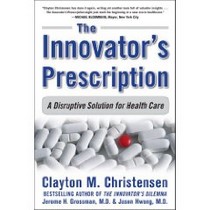
Ip Being big fans of Clay Christensen and his theory of disruptive innovation (DI), we have been awaiting his just-released book The Innovator’s Prescription: A Disruptive Solution for Healthcare .  The book is co-authored by Dr. Jerome Grossman and Dr. Jason Hwang.

We have mixed reactions.

The book is mistitled. It should have been titled “The Innovator’s Diagnosis”. The book does a fantastic job at diagnosis (Dx) of problems in the U.S. health care system. It presents many new, innovative analytical frameworks and lenses through which to view the U.S. health system.

However, it’s weak on prescription (Rx): many of the proposed solutions are speculative, ungrounded, and/or defy political reality.

We understand that the very nature of disruptive innovation implies inevitable resistance from organizations that benefit economically from the status quo. But at some point a proposed solution becomes so disruptive that you have to suspend reality to believe that it could be adopted or implemented — and many proposed solutions in this book enter that realm.

The book applies Christensen’s general theory of DI specifically to the health care system. It addresses questions such as:

  • What is DI?
  • Why is it important to create an environment in health care where DI can flourish?
  • How can we create the right environment in health care for DI to flourish?

The introductory chapter of the book is available here at no charge (right column under Downloads). It’s a great overview.

Continue reading…

Sanjay Gupta as Surgeon General? Not so fast.

By VAL JONES

This week’s news that Sanjay Gupta, CNN’s medical correspondent, is being considered for the office of Surgeon General by President-elect Obama came as quite a shock to me.  I’ve met and interviewed 3 of the recent Surgeons General over the past few years. Of course, I like Sanjay Gupta as a reporter. He’s a fine communicator and does a good job covering subjects for a consumer audience. But I don’t think he has the gravitas or appropriate experience for the role of Surgeon General of the United States.

I spoke with one source close to the nomination proceedings, and he said that most senior people were secretly disappointed with the choice. My source requested that I not reveal his name.

If Sanjay Gupta is confirmed as Surgeon General he will achieve the immediate rank of admiral, even though he has no previous military or public health experience whatsoever. It will be difficult for Gupta to be taken seriously by peers at the Pentagon and State Department. The office of Surgeon General is a very important position given only to the most senior and experienced medical professionals with decades of achievements in their fields. Gupta is a good reporter, he should consider a role in public relations for the U.S. government, not the office of Surgeon General.

Continue reading…

Commentology

Longtime THCB reader Barry Carol writes in on Matthew’s "Shocker …"

"Most hospital CEO’s, especially those who oversee academic medical centers, would probably tell you that their profit margins are quite low and that they could not make ends meet or continue to provide the quality of care they do now if they had to accept Medicare rates from all comers, even with no uncompensated care …"

David Kibbe continued the ongoing dialogue on the thread on the "Rebooting Health IT" series he is co-authoring with Brian Klepper.  

"Having thoughtful physicians like yourself enter the debate and discussion is one of the primary reasons that Brian Klepper and I are doing these blogs on re-thinking health IT! Thanks for your input, which I think is brilliant … Let’s not forget the story of John Snow and the removal of the Broad Street pump handle, during the deadly cholera outbreak in London in 1854. While all the experts were debating the causes of the infection and what to do about it, Dr. Snow had the simplest and most direct answer of all: remove access to the offending source of the calamity."

Continue reading…

Whata Gupta Fuss

MATTHEW HOLT

By MATTHEW HOLT

Mostly because he went off erroneously at Michael Moore in what I remember as two amateur policy analysts being unable to either get their facts straight or explain what was important, Sanjay Gupta’s floated appointment as surgeon general has got the left in a tizzy. And I agree that a neurosurgeon is not exactly who I’d go to for information about public health. But part of the amusement/confusion is that via a now contrite Merril Goozner, CNN’s Sanjay Gupta was confused with another Sanjay Gupta who was a big time recipient of drug company funding.

But does any of this this matter? I know that the rumor is that he’ll have input into health reform, but then again so does anyone who went to a Daschle house party. And if this position is so important, answer me this: who is the current Surgeon General and what notable thing has he or she done?

I knew you couldn’t do it sans Google….

If you really care, Val Jones has recently interviewed the last but one surgeon-general Richard Carmona. In your piece of trivia for today Carmona knows about Health 2.0, or at least is on the board of Healthline.

Anyway we may not have enough general surgeons according to their trade group, but why should the head of public health for the nation be a surgeon. Shouldn’t they be an epidemiologist? And why are they a general? Don’t we waste enough money on the military as it is?

Can the physical examination save us from the dehumanization of medicine?

ROBERT WACHTER

By ROBERT WACHTER

In last week’s NEJM, physician-author Abraham Verghese paints a disturbing picture of a medical world in which technology has morphed from tool to object, the patient relegated to a supporting role. To me, Abraham has nailed the diagnosis but not the treatment.

I had the distinct pleasure of getting to know Abraham when we both served on the board of the ABIM (actually I came to know his work 15 years earlier, when I reviewed his bestselling book, My Own Country, for the NEJM). Abraham is a romantic and a traditionalist, and in last week’s New England Journal piece he poignantly lays out a problem he has fretted about for years: namely, that information technology is dehumanizing the practice of medicine. Describing rounds with his ward team at Stanford, his new academic home (he was recently recruited there from the UT-San Antonio), he recalls:

When I stroked a patient’s palm and caused a twitch of the mentalis muscle under the chin — the palmomental reflex — it was as if I were performing magic. Still, the demands of charting in the electronic medical record (EMR), moving patients through the system, and respecting work-hour limits led residents to spend an astonishing amount of time in front of the monitor; the EMR was their portal to consultative teams, the pharmacy, the laboratory, and radiology. It was meant to serve them, but at times the opposite seemed true.

Continue reading…

Are We Finally Entering the Golden Age of Healthcare Transparency?

By BOB WACHTER, MD

When will patients start reviewing quality data before choosing their doctors and hospitals? The answer has been “soon” for several years, but “soon” may finally be the right answer. If you doubt it, check out the Commonwealth Fund’s new site, “Why Not The Best?” The central premise of the healthcare transparency movement has been that putting data on the Web (quality, safety, satisfaction, even cost) will change consumer behavior, the way such data does for autos and restaurants. The movement, which began in earnest with the launch of the HospitalCompare website by Medicare in 2003, lives by the following catechism:

  1. Let’s post some, even rudimentary, quality data on the Web
  2. Patients will look at the data, and demand improvement of their existing providers or choose better ones
  3. This consumerism will create “skin in the game” around performance data
  4. Hospitals and providers, now motivated to improve, will do what it takes to get better.

Continue reading…

The Connected Medical Home: Health 2.0 Says “Hello” to the Medical Home Model

By David Kibbe & Joe Kvedar

The concept of participatory medicine is taking hold, fueled, at least in part, by what we see as two complementary forces, these being the patient-centered medical home (PCMH) and Health 2.0. Health 2.0 is very much a grass roots phenomenon, dominated by a small but significant group of patients who are testing the hypothesis that the wisdom of the crowd can rival the wisdom of physicians. The PCMH is a concept, not new, but gaining tremendous traction in the provider sector now as a best-try effort by some providers to be truly patient centric in their approach. The two should be complementary and mutually self-supporting. One might even suggest their respective champions should be collaborating right now, when the scent of health reform is in the air in our nation’s capital. But they are not. Lets examine why and explore ways in which to create a natural bridge between these two concepts and their champions.

The medical home concept was first introduced by the American Academy of Pediatrics in the 1960s. But several factors are now converging to update this original concept for today’s health care environment. The growth in chronic illness, the emergence of new reimbursement models designed to improve quality and control costs (e.g. pay for performance), and the greater availability of monitoring and messaging technologies have providers, payers and patients taking a fresh look. This is a good thing, in that it is an effort by organized medicine and large corporations to get into the reform conversation.

But the aspects of the medical home that are getting the most airtime are largely focused on rounding out office staff, adding new roles that take work away from the physician so that the physician can tend to more patients, and taking a population view of the patient panel. This vision is idyllic, but several challenges suggest that as conceived it will be tough to get it out of the womb.

Continue reading…

California transplant surgeon acquitted

Sarah Arnquist

By SARAH ARNQUIST

A jury acquitted a San Francisco transplant surgeon Thursday of criminal charges related to his alleged actions during an attempted organ harvest nearly three years ago in a small town on California’s central coast.

In what’s thought to be the first case of its kind in the United States, prosecutors accused surgeon Hootan Roozrokh of ordering excessive amounts of painkillers to hasten the death of a potential organ donor.

The not-guilty verdict relieved the transplant community, which feared the case would have chilling effects on the public’s willingness to donate organs and surgeons’ willingness to participate in the rarer type of donation done in this case, called donation after cardiac death or DCD.

Continue reading…

The Hospitalist as Bed Czar: Indispensability, But At What Cost?

BOB WACHTER

By BOB WACHTER

In last week’s Annals of Internal Medicine, Eric Howell and colleagues describe an innovative experiment in which the hospitalists at Johns Hopkins Bayview became the institution’s bed czars. It worked.

So should my program and yours take this one on? If you looked up “Thankless Task” in the dictionary, you might see “Active Bed Manager.” So how did they do this?  And why?

Hopkins Bayview is a 335-bed teaching hospital affiliated with Johns Hopkins. The Chief of Medicine, David Hellmann, is an old friend and a gem, a graceful and eloquent man who is constantly looking for improvement opportunities. Under his guidance, several years ago the hospitalist group, led by Howell, agreed to become the medical center’s “Active Bed Managers” for medical patients. The ED sees 54,000 patients a year, and admits about one-quarter of them, three-quarters of these to Medicine.

One hospitalist at a time serves on the ABM service, in 12-hour shifts. During this shift, the hospitalist has no other responsibilities, freeing him or her up to act as a full-time air traffic controller for all medical patients. This involves keeping up to speed on the bed status of all medical, step-down, and intensive care units, “prediversion” round in the ICU, evaluating (by phone or in person) all new admissions, expediting ED-to-floor transfers, and sundry other tasks.

After a few years of doing this during the days, in 2006 they began providing ABM around the clock, 365 days a year. When all hell breaks loose, the ABM hospitalist notifies the “Bed Manager” – Eric or another senior hospitalist leader – who has the authority to activate resources or knock heads to free up beds or expedite transfers.

The results were truly impressive. ED length of stay for admitted patients fell by 98 minutes (458 minutes in control period to 360 minutes after the intervention), a tremendous improvement, particularly when multiplied by 10,000 patients a year. The time that the ED was on full divert – which costs the hospital both money and good will (and probably costs a few lives as well, as patients are shunted to less appropriate or more far flung hospitals) – went down by a staggering 87% (from 31% to 4% of the time)!

I spoke to Howell last week to find out more, since I was reasonably sure that I – and my fellow hospitalist leaders around the country – would receive “why don’t you do this?” calls from our CMOs within minutes of the publication of these results. “I watched for years as the hospital tried to improve throughput and stay off ambulance diversion,” he told me. “Nothing worked, but we knew that we could help fix this. After a while, we decided that it was worth trying.”

A short fiscal primer for those of you who don’t traffic in DRGs and bed-days-per-thousand: Hospitals that run full spend staggering amounts of money on efforts to improve throughput. They hire consultants (which never works, but their PowerPoint presentations are pretty to look at), they tweak admission criteria, they shop eBay to buy second-hand electronic tote boards discarded by the Hyatt. These interventions rarely make a significant dent, because to make a real impact you need someone to make scores of tough, contentious decisions in real-time, preferably someone with the negotiation skills of Richard Holbrooke.

Most hospital ultimately throw up their hands and solve the problem of throughput by – you guessed it – building more beds, at a cost these days of 1-2 million dollars per bed, depending on whether you have to meet earthquake standards (the cost is even higher for ICU beds). But hospitals can’t afford to leave their bed shortage problem unsolved – not just because they need to dis-impact the ED, but more importantly (for the bottom line) because they need to free up beds upstairs for elective surgeries. Canceling such surgeries because of bed shortages is intensely expensive and demoralizing to the C-suite folks. Plus it makes the surgeons very unhappy, a bad job retention strategy for most COOs.

I wanted to know how the ABM intervention had affected Howell’s hospitalists’ relationships – with the ED, the nurses, and the residents. He told me this:

“All relationships got better. The ED loves us – the ED chief sits in medical board meetings and asks for more hospitalists. The ICUs like us, maybe love us, because we got rid of ambulance diversion. The nursing supervisor loves us, because we help them enforce stuff, or can override policy if needed (when common sense dictates). The residents? First they were reluctant, now they love it.  But it does put the hospitalist in the middle of resolving conflicts between two house officers, house officers and the ED, sometimes house officers and the nurses…”

This intervention can’t be done on the cheap: having dedicated hospitalists on this service 24-7-365 (not performing billable activities) would likely require about 4-6 FTEs-worth of hospitalists, or close to a million dollars a year (Eric and I didn’t get into the precise numbers at Hopkins Bayview, but the math is pretty straightforward). And, in order to motivate Eric’s group to do this, the hospital anted up some additional salary support for both rank-and-file hospitalists (who saw an increase in academic “protected” time) and for leadership positions. The latter was particularly important, since the junior hospitalists were instructed to bump issues to a senior hospitalist leader (the “Bed Manager”) when the disputes got too difficult or new resources were required. At first, this was just Eric and one colleague who were always on call for this purpose; by the end, four leaders were sharing this difficult but crucial role.

Finally, I asked Eric – given what must have been Too-Numerous-To-Count political challenges – whether he was glad he did it. I also asked how he’d rank this intervention against alternative uses of the same dollars (such as surgical co-management or proceduralist services), most of which would cause less loss of hair and gastric mucosa. He responded this way:

“Yes, I am glad I did it. It put my group on the map at Johns Hopkins. Before hospitalists were largely considered “non-essential” by other faculty. Now they see us as equals, because we fixed something that they could not… for years. Also the hospital LOVES us; the president introduces me as the man who runs the entire hospital (not true but flattering)…”

I’m going to give this intervention a very high degree of difficulty – in the Hospitalist Olympics, I’d rank it as a reverse one-and-a-half somersault with three-and-a-half twists, with a good chance for a Belly Flop if it isn’t skillfully executed. In other words, Active Bed Management is not for the faint of heart, nor something to take on if you have staffing challenges elsewhere.

In part because of that, although you might get a warm and fuzzy feeling about improving throughput and decreasing diversion for your hospital, there is no way a group should take on this role simply to have its costs recouped. If you do ABM and see Eric’s results, you have created several millions of dollars of value for the average hospital (and many hundreds of thousands for the surgeons), and some of this needs to be allocated to the hospitalist program itself, in the form of more protected time, higher salaries, or other items on its wish list.

But my premise from the moment this field began was that hospitalists – because of their near-universal dependence on outside (usually medical center) support – had to constantly be looking for opportunities to add value. Particularly in tough economic times, the opposite of being Indispensable is being Dispensable. That’s not a good thing to be right now.

I haven’t told my group this (or perhaps I just did) but, assuming we have sufficient staffing, I think we should begin looking at ABM in the not-so-distant future, probably starting with a daytime service to see whether it is do-able before taking on the much more challenging task of nighttime coverage.

The American Hospital Association just released its 2008 estimates, and the number of hospitalists is now pegged at 27,000, which makes the field larger than cardiology or emergency medicine – the largest non-primary care field in Internal Medicine, and the fastest growing field in the history of medicine. This is staggering (next time, please remind me to trademark a term when I coin it), and owes to the fact that when most docs are running in the other direction, hospitalists step up to the plate and fix problems that need fixin’.

So a shout out to Eric Howell and the Hopkins Bayview crew for adding one more arrow to the hospitalist Quiver of Indispensability.

Low tech ways to improve patient care: sleep and manners

By MICHAEL MILLER

A few recent reports point to ways for improving the quality of physician delivered care that has little to do with technology or complex interventions.  The first involves how physicians interact with patients, and the second examines the work hours for physicians in training.

Etiquette in Medicine
The first article, by Dr. Michael Kahn in the New York Times, describes six recommended actions for physician to create a good rapport with hospitalized patients. Dr. Kahn collectively calls these actions “etiquette-based medicine”:

  1. Ask permission to enter the room; wait for an answer
  2. Introduce yourself; show your ID badge
  3. Shake hands
  4. Sit down. Smile if appropriate
  5. Explain your role on the health care team
  6. Ask how the patient feels about being in the hospital

Clearly these actions are all directed towards creating a stronger person-to-person connection between the physician and the patient as a step toward improved communications – which is the foundation for developing and effectively delivering a treatment plan to and for the patient.

Physicians Getting Rest
Another challenge physicians have in this process is being awake and aware enough to actually engage in those 6 steps. (Having enough energy also would effect their ability to engage patients empathetically – something I’ve written about before.)  [Also see the previous posting about napping being better than caffeine for improving verbal and physical memory and learning.]

How much sleep physicians need to act appropriately – and avoid making errors – is the subject of a recent Institute of Medicine report, (“Resident Duty Hours: Enhancing Sleep, Supervision and Safety”), that makes new recommendations for limits to the work hours for physicians in training:

  • Duty hours should not exceed 16 hours per shift; For 30 hour shifts there should be an uninterrupted five hour break for sleep
  • Residents should have variable off-duty periods between shifts based on the timing and duration of shifts to increase residents’ opportunities for sleep each day, as well as regular days off that enable residents to recover from chronic sleep deprivation.
  • Medical moonlighting, (additional paid healthcare work), should be restricted [A chart comparing the current and new recommendations is available here.]

While all these changes would certainly make for more aware and awake residents, the IOM also estimates that recruiting and paying professional staff to substitute for the work hours the residents would have been (over)working, would cost about $1.7 billion.

Besides figuring out how to pay for these new staff hours, one policy question for implementing these recommendations is how to find the clinicians to actually work these hours considering there is such a shortage of non-physician clinicians.

Anther policy question these recommendations raise, is why they should they only apply to physicians in training?  Why shouldn’t they also apply to physicians who’ve finished their training and are supervising, teaching, and mentoring residents and medical students – and of course are directly responsible for patients?  While it might be argued that most physicians don’t work these long hours, for some that may not be the case – particularly in hospitals without many residents.

Considering that many quality improvements for medicine have been taken from the airline industry – such as the pre-flight/pre-surgery checklist – then why shouldn’t the limits on pilot shifts and hours also be applied to fully licensed physicians?  [I suspect that this will not make me popular with some physicians, but I wonder how they will defend their right to treat patients round-the-clock without sleep?]

Conclusions
Perhaps work hours and etiquette should be other aspects of quality improvement and patient safety that are considered as part of health reform discussions at the Federal and State levels. Certainly well-rested, empathetic physicians trained to interact with their patients with etiquette should improve the quality of healthcare by reducing errors and making physician-patient communications more effective.

How to integrate all these “innovations” into physician training and practice will be a significant challenge, because teaching such skills and promoting their use is not very exciting or technological, and it will be hard for such behaviors to be tied to economic incentives – which are often the carrot or stick for quality improvement initiatives.  Hopefully, as health reform ideas move forward and become crafted into comprehensive packages and plans, they will expand beyond direct economic incentives for improving clinical processes, to include non-economic inducements to promote quality enhancing actions and attitudes for clinicians as well as patients.

Dr. Michael Miller started HealthPolCom Consulting in 2000 after 12 years in health policy positions in Washington, DC.  He works with an extensive network of policy and communications consultants. He blogs regularly at Health Policy & Communications, where this post first appeared.