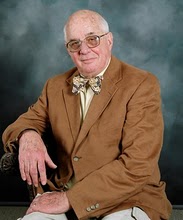
By MICHAEL MILLENSON
My father is in his late 80s, so it’s not surprising that he’s had a brush with prostate cancer. That’s why the
Los Angeles Times’ obituary of Donald F. Gleason, the Minnesota pathologist who invented the “Gleason score” for characterizing cancerous growths in the prostate, caught my eye. Gleason died at the age of 88 from a heart attack.The Gleason score is now used almost universally to predict the likely outcome of prostate cancer. But the obituary provided unexpected insight into yet another instance of an agonizingly slow spread of evidence-based medicine for a common and deadly condition and unavoidably raised the question about diffusion of innovation today.Gleason had been an unknown, junior-grade pathologist in 1962 when he was approached by his hospital's chief of urology to develop a standardized rating system for determining the grade of prostate tumors; that is, a measure of how far they had progressed and their likely course. At the time, the obit noted, “each pathologist pretty much used his own system, which made comparing research results among different groups nearly impossible.”