Categories

Category: Medical Practice

Tele-what?

By NEIL VERSEL

As a journalist who for the last decade has covered the use of information technology in health care, I’m rather disgusted at some of my brethren in the mass media. I’m none too happy with the medical establishment, either. Both seem hopelessly stuck in the past, refusing to look beyond the status quo. And the public suffers because of it.

This fall, for example, the Los Angeles Times and other news outlets covered a Yale University study that sought to determine whether or not “telemonitoring” heart failure patients recently discharged from the hospital would reduce heart attacks or readmission. The study, published in the New England Journal of Medicine and presented at a November meeting of the American Heath Association, concluded that that telemonitoring, which involved patients calling in their weight measurements and health symptoms after being discharged, made virtually no difference in the outcome. The Times called the trial “a good, commonsense idea that simply didn’t work out.”

Was it, really?

Keeping in touch with one’s physician on a frequent basis after being hospitalized for heart failure is a fine idea, as is monitoring one’s weight. But, as happened in the Yale study, patients generally don’t stick with the program. One in seven study participants never called their doctors, while just 55 percent of patients were making at least three calls per week six months after discharge.Continue reading…

Looking For Quality In the Wrong Place

By CHRIS LANGSTON

Last week I attended the first annual meeting of the Long-Term Quality Alliance and listened to Gregg Pawlson (a geriatrician and executive with NCQA) talk about quality measurement.  Right now, quality measurement does too little to drive practice towards quality care because it is based only on things that are “feasible,” or easy to measure—like what gets coded on medical bills. Pawlson observed that while feasibility must be one of the watchwords of quality measurement for now, in the near future electronic medical records should allow us to move beyond billing codes to gather real clinical data for more important quality measurement, including key care processes and outcomes.

I sure hope so. Because those who have looked beyond the dim illumination of current billing-based “quality measures” and searched in the darkness where real processes of clinical care can found have found that the situation is grave.  The ACOVE (Assessing Care of Vulnerable Elders) process, while laborious, looks at clinical care where it really happens – in offices and charts – rather than in bills and therefore has a better chance of driving meaningful quality improvement. Readers  know that I am a big fan of this work, begun at RAND by outstanding clinician-researchers including Neil Wenger, David Solomon, David Reuben, and many others.  I believe that ACOVE is an example of what we need in elder care: high quality evidence about essential clinical practices that are sensibly related to real health outcomes and show how we could (often easily) do better for older people.  ACOVE is a blessing.Continue reading…

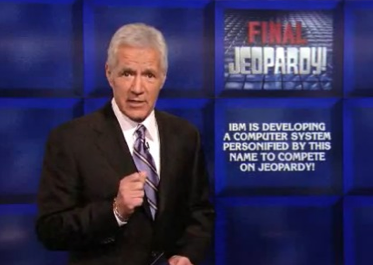
From Jeopardy! To Your Physician’s Black Bag: Could a Supercomputer Really Assist With Health Care?

By DAN PELINO

IBM’s Jeopardy-champion computer, Watson, has huge potential for helping physicians and other clinicians work with patients.

The leap from TV game show to physicians’ offices will probably take at least two years. But Watson’s understanding of natural language, vast storehouse of information and ability to keep up with rapidly changing medical research could significantly improve medical care.

The medical faculty at Columbia University and University of Maryland are helping program a Watson-type computer to assist clinicians.

A few years from now, consulting Watson could become a routine part of a clinician’s practice. Caregivers have traditionally resisted computerized assistance in diagnosis and treatment because the technology has been awkward to use and questionnaire-based systems have been too rigid. But Watson can “understand” descriptions of a patient’s symptoms in natural language, and it can even scan years of medical records and doctors’ notes to determine what diagnostic and therapeutic options it might suggest. Doctors can ask it questions using the same terms they would use in an e-mail to a colleague. Continue reading…

A Doctor is Not a Bank

By KEITH W. BOONE

All too often I’ve heard the comparison between the financial industry and its efforts to make transactions electronic, and the healthcare industry.  But health is not something that I can make deposits on and withdraw later.  We aren’t talking about a case where there are only two organizations completing business transactions on behalf of their customers.

There’s a lot more going on here.  A better comparison would be to automation supporting electronic commerce between multiple businesses.  I’ll use electronic publishing as an example, since I have some history in that space.

Imagine that you had a customer needing a new web page.  You have to understand what the customer is trying to accomplish, and then design a page to meet their needs. Along the way, you have to obtain assets:  Text content, media (pictures or video), put it together, get approvals, and publish the content.  Obtaining the assets might involve negotiating access to content from others, paying someone to provide it, or simply assigning the job of creating it to someone on your staff.  Afterwards, you need to put all those pieces together into a coherent whole, possibly get someone to review and approve it, and then it gets pushed out to the web.  Anywhere along the way you may learn that there are other tasks to perform.  Some of the content may need to be coded in Flash, in which case, you might need to put a flash player download button on the site (which means you need another piece of content), et cetera. Oh, and if you are providing full service, you might also evaluate how people respond to the page, and make any adjustments necessary to improve their response.  Now, consider making that whole process electronic, and you begin to understand the complexity of healthcare. BTW:  There are systems that support this process electronically, but they are proprietary.Continue reading…

Tough Talk

By PAUL LEVY

Some people at the University of Washington and colleagues from around the country run a wonderful website called Tough Talk: Helping Doctors Approach Difficult Conversations. They call it a “toolbox for medical educators” who want to teach about ethics and communication. Topics include:

Common teaching challenges plus tips for recovering from them • Optimizing small group dynamics • Providing effective, honest feedback • Helping clinicians develop and operationalize personal learning goals • Motivating engagement and self-assessment in reluctant participants

Look at this statement of philosophy:

Many argue that ethics and communication cannot be taught. Since these skills lie in the realm of the interpersonal, they do build on skills and practices we begin developing from our earliest interactions. However, evidence shows that practice and experience can lead to development and enhancement of these skills. This human element is where the moral work of medicine happens. We have a responsibility to attend to these skills and work to develop them, even as we strive to perfect our other core clinical skills. Quality patient care depends on it.Continue reading…

Why Medical Ethics Should Matter to Patients

By MICHAEL KIRSCH, MD

Medical ethics has properly gained a foothold in the public square. There is a national conversation about euthanasia, stem cell research, fertilization and embryo implantation techniques, end-of-life care, prenatal diagnosis of serious diseases, defining death to facilitate organ donation, cloning and financial conflicts of interest. Nearly every day, we read (or click) on a headline highlighting one of these or similar ethical controversies. These great issues hover over us.

We physicians face ethical dilemmas every day. They won’t appear in your newspapers or pop up on your smart phones, but they are real and they are important. Here is a sampling from the everyday ethical choices that your doctor faces.

How would you act under the following scenarios?

1. A physician has one appointment slot remaining on his schedule. Two patients have called requesting this same day appointment. The first patient who called has no insurance and owes the practice money. The second patient has medical insurance coverage. Neither patient is seriously ill. Who should get the appointment?

2. Two hours before a doctor is to see a patient, her husband calls to relate private information that he fears the patient will not share with the physician. Should the physician disclose this conversation to the patient? What is the risk if she discovers at a later time that a confidential conversation occurred?

3. A patient has been non-compliant with medical care. He has missed appointments and does not take his medication reliably. The physician is contacted by a local emergency room after the patient arrives there for a medical evaluation. Can the doctor ethically decline to treat this patient who has repeatedly rejected the physician’s advice?Continue reading…

Nurses: Protocol -ed to Extinction?

By SARAH BETH COWHERD

If you have been at your nursing job for a while, you’ve probably almost forgotten.

Forgotten what it was like to come in to the healthcare system you now work for and realize there are hundreds of new protocols for you to learn and adhere by as a nurse. After years of routine, you now go about your day as if you actually have some choice in the way you give care.

At one point you probably did. I was not around during this age of nursing. The age when we had autonomy. Freedom to practice. Freedom to be innovative.

Today, I am somewhat saddened by the current state of the nursing profession. Don’t get me wrong: I LOVE what I do. I am so thankful for the opportunities set before me.

But whatever happened to “nursing judgment”? Or “nursing decision”?

I can’t tell you how much recently I’ve heard the phrase, “It is hospital policy that…” “You can’t do that, it is protocol that…”

I understand the need for protocols. They help us in the case that something goes wrong and the hospital gets sued. Did the nurse adhere to the protocol? If not, they will be subject to disciplinary action and take the fall. If something goes wrong and there is no protocol, the hospital can say in its defense: “There is now a protocol in place.”

Maybe a less cynical need for protocols: promote and regulate evidenced-based practice among nurses. Evidenced-based practice was developed for a reason: it brings good outcomes and protects the patients.

Even so, to me it seems we are being protocoled to extinction.

Continue reading…

Health Insurance Doesn’t Necessarily Mean Better Health

By JIM MARKS, MD MPH

A new study in the influential policy journal Health Affairs gives added credence to the idea that much of what drives health falls outside of the realm of medical care. In fact, this must-read study points out what so many of us know: that simply providing someone a health insurance card is not enough to make them healthy.

What better place to test this theory than in Canada – our northern neighbor with a publicly financed universal health care system. Researchers looked at nearly 15,000 Canadians in the nation’s health system who were free of heart disease and tracked them for at least a decade.  Not surprisingly, people disadvantaged by little education and low income, used the health care system more than those with higher incomes. But more importantly, this increased use of services had no discernable effect on improving their health or cutting their death rates – the ultimate bottom line – when compared with others with higher education, higher income and LESS usage of health care.

Almost all of the debate about health care here has been about how many Americans will be covered, for what care, and at what cost. The results of this Canadian study are clear. It may be helpful to have insurance to get care, but the United States cannot expect that giving people medical care will diminish differences in health outcomes or the likelihood of an early death among disadvantaged people. The authors explicitly warn against relying on universal coverage to eliminate inequalities in health.Continue reading…

The Ultimate Sacrifice

By JOHN MAA

An estimated 60% of American bankruptcies result from overwhelming medical costs. My uncle’s tale illuminates the dual tragedy of suffering catastrophic illness and being uninsured.

The 2008 recession claimed my uncle’s job, health benefits, and assets, except for a small inheritance. By 2009 he found work (but not health coverage) as a consultant.

One day he noticed that his eyes were yellow. He emailed a photograph, and I immediately recognized jaundice. I calmed him by suggesting benign causes such as hepatitis, gallstones, or liver cirrhosis. But I secretly dreaded a liver or pancreas cancer, given his recent weight loss and itching.

Laboratory and x‐ray tests, which he charged to his credit card, all suggested cancer. His doctor in New Jersey indicated urgent surgery was necessary. An appointment was unavailable for weeks at the county hospital, and private surgeons wouldn’t see him without a cash deposit. Time was ticking. Cure was already unlikely, and delays were allowing the tumor to grow. He decided to travel to the West Coast to expedite surgery.

My uncle arrived around midnight, glowing yellow; he had worn sunglasses to avoid frightening other airline passengers.Continue reading…

Third Place Health Care

By EVAN FALCHUK

Media reports on misdiagnosis continue to mount.

A recent study on patients with Alzheimer’s found that half had been misdiagnosed.  Half.

Another headline blared “4 out of 10 patients being misdiagnosed.”  The article encouraged patients to “see another doctor” if they are worried about their diagnosis.

You know what it makes me think about?

Starbucks.

Why?

Because the way Starbucks revolutionized coffee drinking shows a way forward for health care.

Starbucks realized that since our lives focus on two places – home and work – most of us don’t have a “third place” to go.  A place where we can be free of everyday distractions and take care of ourselves.  Starbucks set out to create that “third place,” by making its stores comfortable, inviting places.  It works.  “Third place” makes customers’ lives better – and Starbucks has almost 20,000 stores to prove it.

It’s time for a kind of “third place” in health care.Continue reading…