Categories

Category: Health Policy

ACO 101: Koka Completely Misses The Mark on Medicare ACOs

Recently, Anish Koka, MD, a Cardiologist from Pennsylvania, posted his anti-Accountable Care Organization (ACO) manifesto here on The Health Care Blog. [1] Koka argues that ACOs don’t work and are doomed to fail because they were designed by non-practicing physician policymakers and academics in ivory towers. He appears to be basing his judgment on a commercial ACO contract that only pays him $4 per month extra for care coordination and requires that he meet specific quality measures. He is also conflating his experience in a commercial ACO with Medicare ACOs, and interprets the initial results of one Medicare ACO program to mean that all ACOs are a failure. Finally, he relays an anecdote of caring for one of his patients, Mrs. K, a patient with chronic illness who doesn’t want to take her medication.

In his post, Dr. Koka calls out “well-meaning, hard-working folks that own a Harvard Crimson sweater…[whose] intent is to fundamentally change how health care is provided.” As luck would have it, I do own a Harvard Crimson sweater, and I’d like to respond.

The Affordable Care Act (ACA) of 2010 gave the Centers for Medicare & Medicaid Services (CMS) the authority to create ACOs in two forms. One, the Medicare Shared Savings Program (MSSP), is a large program that does exactly what its name says: it allows physicians and care organizations to share savings with CMS based on their previously-expected health care spending. The other was the Pioneer ACO model run by the CMS Innovation Center (CMMI). This five-year experiment was intended to test if physicians and care organizations could bear both upside and downside risk while still delivering high quality care. The Pioneer ACO program has ended as planned, and CMMI has incorporated its findings from the model thus far into the Next Generation ACO model. [2] Any other ACO program is a non-governmental agreement between a private insurer and group of health care providers that is neither designed nor controlled by CMS or any other part of the government. 

Dr. Koka’s main point of criticism appears to be with the terms of a commercial, non-Medicare, non government ACO with which he contracts. Commercial ACOs tend to have stricter, less-generous terms for physicians; a 2014 study in the American Journal of Managed Care found that commercial ACO contracts were more likely to include both downside risk and upfront payments. [3] CMS cannot be held responsible for the terms of an ACO contract between Dr. Koka and a private insurer, but I’ll leave that aside for now.

Dr. Koka cites a recent Harvard study on the first year and a half of results from the MSSP as evidence for the failure of ACOs. [4] This study looked at Medicare claims data for two cohorts of practices–one starting mid-year in 2012 and one starting on January 1, 2013, through the end of 2013. In short, the mid-year 2012 cohort delivered a small amount of savings per beneficiary, and the 2013 cohort achieved a negligible amount of savings. Additionally, some quality measures showed improved performance, while others were the same as the control group. I do not interpret these results as a “failure” at all. These are early results from a generous program that is easing physicians and care organizations into accountable care by limiting the amount of risk that they must take on at first. Equivalent or better-quality care was delivered, along with small savings.

Leavitt Partners, a health care consulting firm, has been tracking and reporting on Medicare and commercial ACOs since 2010. In their recent report on the early takeaways from the MSSP results, they highlighted that physician group-led ACOs tended to do a better job than hospital-only ACOs, and that ACOs residing in high-cost markets were more likely to generate shared savings. [5] Based on all of these findings, I cannot agree with Dr. Koka that Medicare ACOs are a failure, and I certainly cannot extrapolate from commercial ACOs to Medicare.

The evidence is widespread and irrefutable that our current payment and delivery system has resulted in the highest health care costs in the world, along with some of the lowest-quality care.  [6] We simply cannot continue to pay doctors and hospitals on an unrestricted fee-for-service basis. ACOs are the beginning of a massive shift in how we deliver, pay for, and measure health care in order to address these cost and quality issues.

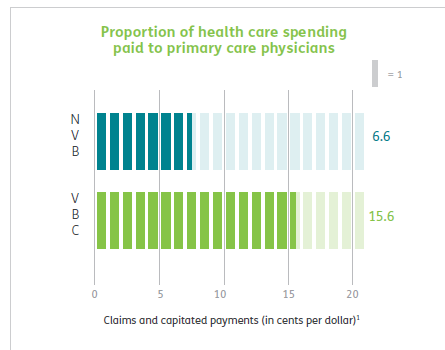
Dr. Koka also fails to acknowledge a critical point about ACOs: they are generally designed with the Primary Care Physician (PCP) as the central care coordinator versus a specialist. PCPs are best situated to coordinate care for their patients and manage preventive care and population health measures. A more expensive specialist like Dr. Koka should not be the physician responsible for coordinating patient care in an ACO–it makes little sense. One reference point comes from The Accountable Care Guide for Cardiologists from the Toward Accountable Care Consortium. They highlight PCPs and good teamwork as critical central elements in any ACO. [7]

He also does not acknowledge that it takes time to get accountable care and care coordination right. A PCP or primary care organization is not going to have the tools they need or the right contracts in place with specialists and hospitals on day one. The processes and technology for effectively managing an ACO take time. The initial results from the MSSP prove this out.

Let’s say we assume for the sake of argument that Dr. Koka is right; that ACOs don’t work, and they are a colossal waste of time. Even then, his proposed solution is more than a bit ham-handed. There is no agreement among either the American public or the health care system that we should directly ration care. I suggest that we start by making PCPs the gatekeepers to specialists like Dr. Koka rather than asking him to spend many hours coaxing a patient to take her medications. Undoubtedly, this is what his commercial ACO intended. We need to do a better job of delivering the right care at the right time, from the right physician, nurse, or other provider–yes, this is care coordination.

And if all else fails, well, there is one easy, proven way to slow the growth of health care costs: making a blunt cut in reimbursement rates to providers, as we saw in the Budget Control Act of 2011. I am almost certain that Dr. Koka would not welcome another cut like this. [8]

If Dr. Koka would like to avoid this last-ditch option, perhaps it is time to partner with primary care organizations and see how he can help them to be a successful ACO…and allow Mrs. K’s PCP and case manager or health coach to field those Saturday calls.

As avid followers of federal health policy will know, this week CMS released the notice of proposed rulemaking for the Medicare Access and CHIP Reauthorization Act (MACRA) of 2015. The MACRA encompasses a massive shift in Medicare physician payment. The bad news for Dr. Koka? Accountable, value-based care is not going away anytime soon. The good news is that the proposed payment and delivery system models include more flexibility for physicians and will better reward them for high quality care.

In my opinion, the best news is that the MACRA provides a clear path for our public health care system to move away from fee-for-service once and for all. I hope that Dr. Koka can reconcile himself with a world where care providers, in partnership with patients, are asked to be more accountable for the high cost of health care. At a minimum, I hope that the difference between commercial and Medicare ACOs is now clear.

Lisa Bari is a Master of Public Health candidate at the Harvard T.H. Chan School of Public Health, and previously worked in health IT. She loves primary care health policy, health care payment reform, interoperability, and health data APIs. She never thought she’d own a Harvard sweatshirt. You can find her on Twitter @lisabari.

1 https://thehealthcareblog.com/blog/2016/04/25/the-aco-delusion/

2 http://www.brookings.edu/~/media/research/files/papers/2015/05/12-aco-paper/impact-of-accountable-careorigins-052015.pdf

3 http://www.ajmc.com/journals/issue/2014/2014-vol20-n12/aco-contracting-with-private-and-public-payers-a-baseline-comparative-analysis

4 http://www.nejm.org/doi/pdf/10.1056/NEJMsa1600142

5 http://leavittpartners.com/wp-content/uploads/2016/04/MSSP_ACOs_takeaways_whitepaper_final.pdf

6 http://www.commonwealthfund.org/publications/press-releases/2015/oct/us-spends-more-on-health-care-than-other-nations

7 http://www.ncmedsoc.org/wp-content/uploads/2014/06/ACO-Guide_Cardiologist_052814_reduced-file.pdf

8 http://www.cbpp.org/research/how-the-across-the-board-cuts-in-the-budget-control-act-will-work

9 http://www.politico.com/tipsheets/politico-pulse/2016/04/exclusive-andy-slavitt-on-macra-214014


PCMH Fails Natural Experiment

flying cadeucii

Medical Homes Fail Yet Another “Natural Experiment”

Three “natural experiments,” three failures.  Such is the fate of patient-centered medical homes (PCMH), a well-intentioned but unsuccessful innovation now kept afloat by the interaction of promoter study design sleight-of-hand with customer innumeracy.

By way of review, a natural experiment is an experiment in which the design is outside the control of investigators, yet mimics an experiment.  The first two natural experiments below involve applying the intervention across entire states. The third involves a stimulus-response experiment in one specific community.

Statewide Natural Experiments: North Carolina and Vermont

In North Carolina, a statewide Medicaid PCMH was implemented years ago and steadily expanded until most Medicaid recipients belonged to one.  There was no reduction in relevant event rates (for ambulatory care-sensitive admissions) and costs increased. While the overall Medicaid budgets were routinely exceeded and that should have caused legislators to realize that something in their PCMH was amiss, Milliman fabricated data to pretend the PCMH program was a success.  Milliman got caught making up data (and ignoring other data that quite definitively invalidated its conclusion, and changed their story 180 degrees, a tacit admission that they lied.  And shortly thereafter (at least “shortly” by the standards of state government), North Carolina announced that it is abandoning this failed experiment.

Continue reading…

Does the ACA Actually Mandate Free Checkups?

flying cadeucii“Where in the Affordable Care Act (ACA) does it mandate that every health insurance policy must include a free annual checkup?”

I posed this question to Al Lewis and Vik Khanna in the comments of their recent post entitled: The High Cost of Free Checkups, where they argue against the Affordable Care Act (ACA) provision that requires “free checkups for everyone.” They cite a recent New York Times Op-ed authored by ACA co-architect, Dr. Ezekiel Emanuel, that essentially debunks the link between annual checkups and overall health outcomes.  For Lewis and Khanna the solution is simple, we need to “remove the ACA provision that makes annual checkups automatically immune from deductibles and copays.” But for me there’s an enormous problem with their argument: The ACA doesn’t actually have any such provision.

After raising the issue in the comments section of the post, Mr. Lewis responded informing me that: “It’s definitely there” and “You’ll have to find it on your own, though — I unfortunately have to get back to my day job.” What Mr. Lewis doesn’t consider with his quick dismissal, is that I have already looked.  I’ve combed through the law and other policy guidance, rules and regs; searching for any mention of this required annual wellness exam, physical, visit, or any other linguistic derivative.  It doesn’t exist.

It turns out that while the law does require that an annual wellness visit be covered (sec. 4103. “Medicare coverage of annual wellness visit providing a personalized prevention plan”), this requirement is specific to Medicare beneficiaries and does not apply to individual or group plans. Beyond this particular section you won’t find any mention of a requirement within the ACA.

So what gives?  Lewis and Khanna aren’t the only ones who’ve mentioned this “free” Obamacare benefit. Even when researching this piece I had to engage in a lengthy discussion with a friend who is a healthcare policy advisor, unexpectedly defending my position. This claim has to be coming from somewhere, surely people smarter than me have gotten it right?

Continue reading…

Have Doctors Joined the Working Class?

Marx und Engels Alexsander Platz Berlin

By

On September 28, 1864, exactly 150 years ago this weekend, the first meeting of the International Workingmen’s Association (IWA) was convened at St. Martin’s Hall, London.  Among the attendees was a relatively obscure German journalist by the name of Karl Marx.  Though Marx did not speak during the meeting, he soon began playing a crucial role in the life of the organization, in part because he was assigned the task of drafting its founding documents.

The work of the IWA and Marx is increasingly relevant to the practice of medicine today, largely because of the rapidly shrinking percentage of US physicians who own their own practices.  This moves physicians into the category of what Marx and his associates called, “working people.”  According to data from the American Medical Association, in 1983 76% of physicians were self-employed, a number that had fallen in 2012 to 53%.  And the trend is accelerating.  It is estimated that in 2014, 3 in 4 newly hired physicians will go to work for hospitals and health systems.

To put this change in Marx’s terms, the rapid fall in physician self-employment means that a shrinking percentage of physicians own what he called the means of production.  In his view, this alienates workers – in this case physicians – from other physicians, themselves, the work they do, and from patients.  Whether we agree with Marx on every point, his writings on this topic provides a provocative perspective from which to survey the changing landscape of contemporary medicine.

Continue reading…

Halbig corpus interruptus

By MATTHEW HOLT

In more stunning proof that America’s 18th century style governing process just doesn’t work, a subset of a regional Federal court ruled against part of Obamacare. The Halbig ruling is certain to be overturned by the full DC court and then probably will stay that way after it makes it’s way through the Supremes–at least Jonathan Cohn thinks so.

But think about what the Halbig ruling is about. Its proponents say that when Congress (well, just the Senate actually as it was their version of the bill that passed) designed the ACA, they wanted states only to run exchanges and only people buying via states to get subsidies. But that they also wanted a Federal exchange for those states that couldn’t or (as it turned out) wouldn’t create their own. But apparently they meant that subsidies wouldn’t be available on the Federal exchange. That would just sail through Logic 101 at any high school. Well only if the teacher was asleep, as apparently most Senators were.

Now two judges interpret what was written down to imply that subsidies should only be available on state exchanges–even though logic, basic common sense and fairness would dictate that if we’re going to subsidize health insurance we should do it for everyone regardless of geography.

Don’t forget that in the House version of the bill there was only a Federal exchange. Continue reading…

How Can Patients on Medicaid Possibly Be Worse Off than Those Who Don’t Have Insurance?

“Extraordinary claims require extraordinary evidence,” said Carl Sagan.

The claim that health insurance improves health outcomes is hardly ground breaking. Studying whether insurance affects health status is like wondering whether three meals a day lead to a higher muscle mass than total starvation.

Well that’s what I thought. Until I read the study on Oregon’s Medicaid program by Baicker and colleagues in the NEJM earlier this year and, more recently, Avik Roy’s short treatise “How Medicaid Fails the Poor”.

Baicker et al found that Medicaid enrollees fared no better in terms of health outcomes than those without insurance. That is, no insurance no difference.

The study is an exemplar of policy research laced with regression equations, control of known confounders and clear separation of variables. There is only so much rigor social science can achieve compared to the physical sciences. Yet this is about as good a study as is possible.

The one thing the study did not lack was sample size. It’s useful to bear in mind sample size. Large effects do not need a large sample size to show statistical significance. Conversely, if study with a large sample size does not show even a modest effect, it means that the effect probably does not exist.

There are several interpretations of the Medicaid study, interpretations inevitably shaped by one’s political inclination. The ever consistent Paul Krugman, consistent in his Samsonian defense of government programs against philistines and pagans, extolled critics of Medicaid as “nuts” and asked, presumably rhetorically, “Medicaid is cheaper than private insurance. So where is the downside?”

Unlike Krugman I am not a Nobel laureate and am about as likely to win a Nobel Prize as I am of playing the next James Bond, so it’s possible that I am missing something blatantly obvious.  Could the downside of a government program paying physicians, on average 52 cents, and as low as 29 cents, for every dollar paid by private insurance in a multiple payer system be access?

Indeed, it’s darn impossible for patients on Medicaid to see a new physician.  As Avik Roy explains “…massive fallacy at the heart of Medicaid….It’s the idea that health insurance equals healthcare”.

But wait. It gets better.

I am accustomed to US healthcare throwing more plot twisters than Hercule Poirot’s sleuth work. But one I least expected was that patients on Medicaid do worse than patients with no insurance (risk-adjusted, almost). I am not going to be that remorseless logician, which John Maynard Keynes warned us about, who starting with one mistake can end up in Bedlam, and argue that if you are for Medicaid that is morally equivalent to sanctioning mass murder. Rather, I ask how it is possible that possessing Medicaid makes you worse off than no insurance whatsoever.

To some extent this may artifactually appear so because poverty correlates with ill health, and studies that show Medicaid patients faring worse than uninsured, cannot totally control for social determinants of health.

Continue reading…

The Email I Want to Send To Our Tech Guys But Keep Deleting…

Dear Tech Guys:

So today I’m doing anesthesia for colonoscopies and upper GI scopes. Nowadays we have three board-certified anesthesiologists doing anesthesia for GI procedures every single day at my institution. I’ll probably do 8 cases today. I will sign into a computer or electronically sign something 32 times. I have to type my user name and password into 3 different systems 24 times. I’m doing essentially the same thing with each case, but each case has to have the same information entered separately. I have to do these things, but my department also pays four full-time masters-level trained nurses to enter patient information and medical histories into the computer system, sometimes transcribed from a different computer system. Ironically, I will also generate about 50 pages of paper, since the computer record has to be printed out. Twice.

No wonder almost everyone I know hates electronic medical records! I don’t know anything about computers, and I don’t know what systems other hospitals have. I may be dreaming of a world that doesn’t exist or that world is here and I haven’t heard about it. Nevertheless, here’s my wish list for a system that doctors would actually want to use:

1. Eliminate the User Names and Passords: You can’t tell me that in this day of retinal scans and hand-held computers that there isn’t a better way to secure data. What if each person had their own iPad that you only have to sign into ONCE a day that automatically signs your charts. If you’re worried about people leaving them sitting around use a retinal scan or fingerprint instant recognition system.

2. Eliminate the Paper: If you’re going to have full-time people entering data for you, why print it out? It’s on the computer for anyone to access.

3. All Data Systems Must Be Compatible: You can’t have patient data entered in one place that doesn’t automatically import into another place. If my anesthesia record can’t talk to the hospital OMR, I have to RE-TYPE everything in, which is completely ridiculous.

4. Everybody Has to Use the Same System: Everybody, state-wide. Right now, electronic records from a nearby hospital are not available at my hospital, even though the two hospitals are right across the street from each other.

5. Don’t Make Me Turn the Page All the important information about a patient should be on the first page you open when you look up a patient. I shouldn’t have to click six different tabs. Specific to anesthesia, all the relevant data about the patient including what medications they have received during the case should be automatically displayed on the screen when you start a case. Specific to primary care, all the latest labs and data, recent appointments with specialists, current med list and anything else the doctor wants to see commonly should be right on the first screen.

Continue reading…

The bleak state of the (health care) economy

By MATTHEW HOLT

Health care spending increased at 3.9%, its slowest rate for decades in 2010 following a slowdown in 2009. Merill Goozner has the play by play but it’s clear that the numbers are starting to reflect what Jeff Goldsmith said in his keynote at Health 2.0 last year.–even the health care industry can not grow geometrically forever.

But there’s something hiding in these data. Recently I gave an update for a talk that I’d given 15 years before at the Oregon Medical Association. I reviewed the 2010 year forecast I did for IFTF in 1997 and I was struck by how in our scenarios we had overestimated the per capita spend on health care, but underestimated its share of GDP. That meant while overall health spending didn’t grow as fast over the decade as we’d forecast, the economy grew much slower. And of course the big jumps in health care as share of GDP that we saw in 1991-4 and 2007-9 came when the economy tanked

As we enter the 7th year of our lost decade with the stock market starting to predict a double dip recession, and real unemployment in the high teens, we face the prospect of getting to 20% of the GDP going to health care via not a boom in spending brought on by the ACA or a rich economy making rational choices, but by default. Of course these days the loonies in the Tea Party are reminding us of  the other meaning of the word default!

Continue reading…

Wellpoint and Their “39%” Rate Increase

By MATTHEW HOLT

Wellpoint is getting killed in the press over a “39%” rate increase for their individual health insurance block in California.

HHS Secretary Sebelius has pointed to the Wellpoint individual rate increases demanding an explanation. The President even brought it up in his interview on Sunday. At a time Democrats are fond of calling insurance executives “villains” this story just adds more fuel to the fire.

No less than five reporters  called me the day the story broke asking me to explain it all.

Falling back on my industry experience it is probable:

  • The “39%” headline is anecdotally the biggest increase the press has found—the average is probably less albeit in the high 20% range.
  • This is likely driven by a combination of increasing medical cost trend, a bad economy, and anti-selection as healthier people disproportionately drop their coverage leaving a sicker group in the pool.
  • The rate increase is probably “defensible,” at least actuarially, based upon the actual experience in that block.

When the day is done this probably says more about why systemic health care reform is so critical than about any one company’s behavior. Last week we heard national health care spending skyrocketed to 17.3% of the economy. This is a real life example of what that macroeconomic statistic really means.

Continue reading…

A vote for single payer, austerity-style

By MATTHEW HOLT

I spent summer 1984 in Boston and generally found it an oppressively hot place. I’ve spent a few winter days there and found it an oppressively cold place. I’ve always thought that, given the absence of passport controls, if you lived there and could move to California and didn’t, you were probably crazy. And yesterday the residents of that fair state proved me right.

As I said earlier this week, it now appears that health care reform is dead. I just can’t see a scenario in which there are 60 votes to pass anything. I also don’t see the Dems having the cojones to go to reconciliation or to cram the current Senate bill through the House quickly. Instead (as Bob Laszewski says below) the moderate Dems will run for their lives away from health insurance reform—although I just don’t understand what Bob thinks “reform” would have meant if it had really required 6–10 Republican Senators.

So my prediction is that we end up with nothing.

Continue reading…

assetto corsa mods