Categories

Category: Uncategorized

What the World Might Look Like If We Taught Docs How to Hack Spreadsheets

Screen Shot 2015-10-11 at 8.15.56 AM

I am an IT geek physician. I have my an EHR which I created and control.

Today, I wanted to understand my diabetic practice a little more, so I dumped all my HbA1c data out of my EHR and into a spreadsheet where I was able to manipulate the data and learn a few things about my practice.

I learned that:

If my patient had a HbA1c ≥ 8, the likelihood that the HbA1c would be < 8 at the next visit is 68%.

If my patient had a HbA1c ≥ 8, the likelihood the HbA1c would be even higher at the subsequent visit is 29%.

If my patient had a HbA1c ≥ 8, the average change in the HbA1c at the next visit was -0.7.

If my patient had a HbA1c < 8, the likelihood that HbA1c at the subsequent visit would exceed 8% would be 15%.

Continue reading…

Shared Baselines as a Guide to Protocols

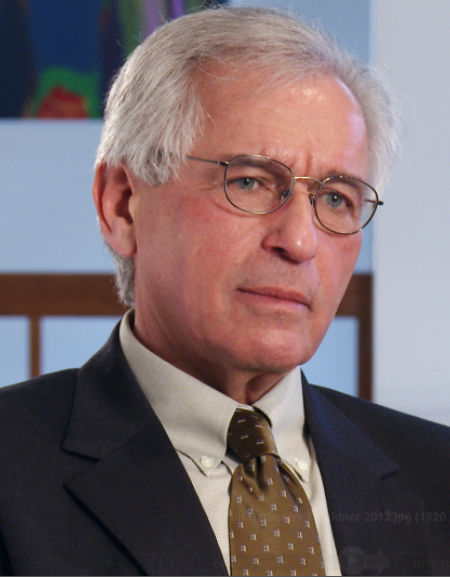
Paul Levy 1There have been some interesting and important discussions flying across the web in recent days on the issue of protocols in helping to reduce variation and reduce the incidence of harm to patients.  My mistake in the debate was assuming that medical leaders would be reasonable about how protocols should and should not be used.

A doctor friend, highly committed to patient safety, notes:

My point about the protocols is that I have been chastised for not following them in situations where it was blatantly obvious that they did not apply. (“The protocol is there for a reason.”)

The chastisement comes not from hospital administrators, but from clinician leaders in the doctor’s own department:

We just got another email scolding us for not following the “colorectal pathway” sufficiently. One of the provisions of that pathway, for example, is strict limitation of iv fluids, sometimes difficult to “comply” when patients are severely dehydrated from their bowel preps, particularly the elderly.

The initial goals were to decrease opiate use and decrease PACU LOS, both worthy goals, but we’re all annoyed at being beaten over the head with them and getting our hands slapped if we deviate, even with good reason.

It’s ironic that on the one hand we are extolling the virtues of gene-based individualized therapies, but on the other hand we are trying to pigeon-hole every patient into a standardized protocol.

Continue reading…

Healthcare Startups – Why Now and So What?

It’s Screen Shot 2015-10-09 at 8.03.52 AM8:15 on Friday evening.  I’m almost through editing the job description for a user interface engineer after sending off an introductory slide deck to a potential client.  Today I met with a business development prospect, held calls with a potential advisor, a potential client, and finally made those changes to the website.  There’s not time to write this but when will there be?
I’m part of a growing trend of academics, programmers, and clinicians taking the startup path to try to make healthcare a better place. In fact, record breaking amounts of venture funding are pouring into healthcare with 2014 seeing $4.13 billion in digital health venture funding and 2015 showing no signs of slowing.  Established tech companies not typically associated with healthcare including Apple, Samsung, Google, and IBM are getting in on the act with substantial investments.  It seems that nearly every hospital and insurer is launching its own incubator or innovation fund.  

The real question is why, after decades of lagging behind nearly all other industries in the adoption and use of information technology, does healthcare seem to suddenly be such a hotbed of activity?  

The answer: data matters like never before in healthcare.   

Continue reading…

Rehabilitating Health Charities

Nortin HadlerFall is when I attend to charitable contributions. It is the season for writing all those checks in a timely fashion so that I’ll receive the paperwork needed to garner tax credits. My wife and I want to do what we can to soften the hardships of those whose ability to do for themselves is compromised. It is a moral obligation, explicit in the Old Testament: The giving of charity is a duty for the advantaged and the receiving of charity a right, even an obligation according to Maimonides, of the needy. Alms-giving is one of the Five Pillars of Islam. Pope Francis embodies the Christian tradition.

Continue reading…

Misunderstanding ProPublica

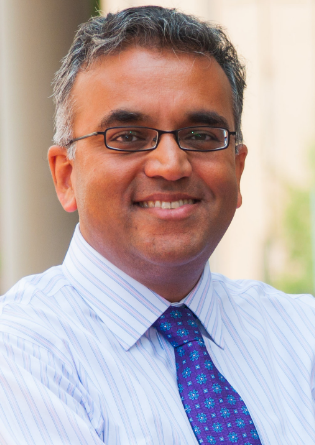
Ashish Jha

In July the investigative journalists at ProPublica released an analysis of 17,000 surgeons and their complication rates. Known as the “Surgeon Scorecard,” it set off a firestorm. In the months following, the primary objections to the scorecard have become clearer and were best distilled in a terrific piece by Lisa Rosenbaum. As anyone who follows me on Twitter knows, I am a big fan of Lisa –she reliably takes on health policy group think and incisively reveals that it’s often driven by simplistic answers to complex problems.

So when Lisa wrote a piece eviscerating the ProPublica effort, I wondered – what am I missing? Why am I such a fan of the effort when so many people I admire– from Rosenbaum to Peter Pronovost and, most recently, other authors of a RAND report – are highly critical? When it comes to views on the surgeon scorecard, reasonable people see it differently because they begin with a differing set of perspectives. Here’s my effort to distill mine.

Continue reading…

An Error about Mistakes

Paul Levy 1There are few neurologists I admire more than Martin Samuels, chief of service at Brigham and Women’s Hospital in Boston.  So it truly pains me to see him engaging in a convoluted approach to the issue of mistakes.  Read the whole thing and then come back and see what you think about the excerpts I’ve chosen:

“The current medical culture is obsessed with perfect replication and avoidance of error. This stemmed from the 1999 alarmist report of the National Academy of Medicine, entitled “To Err is Human,” in which the absurd conclusion was propagated that more patients died from medical errors than from breast cancer, heart disease and stroke combined; now updated by The National Academy of Medicine’s (formerly the IOM) new white paper on the epidemic of diagnostic error.”

No, the obsession, if there is an obsession, is not about perfect replication and avoidance of error.  The focus is on determining the causes of preventable harm and applying the scientific method to design experiments to obviate the causes.  The plan is, to the extent practicable, implement strategies to help avoid such harm.

[T]here is actually no convincing evidence that studying these mistakes and using various contrivances to focus on them, reduces their frequency whatsoever.

Yes, there is convincing evidence (from Peter Pronovost’s work on central line protocols, for example) that the frequency of errors that lead to preventable harm can be dramatically, and sustainably, reduced.

Continue reading…

In Defense of Mistakes

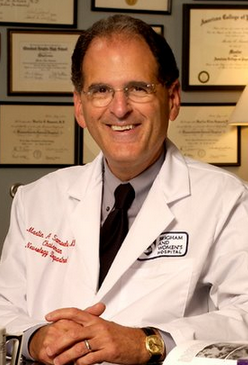
Martin Samuels“How much of the medicine that you now use, did you learn during medical school?”

My answer may be surprising. It is not the response given to me by my professors, when they were asked similar questions. I recall them telling me that virtually nothing that I was learning in medical school would be correct 20 years later.

I have thought about this since and will reveal my answer shortly, but before I do, we should pause for a moment to reflect on the process of medical education. I will refer here to natural selection as an analogue of this process, a concept that I have adapted from some ideas gleaned from David Dawkins and Susan Blackmore.

Darwinian natural selection is based on the concept that replicators (eg genes, viruses, prions) compete for their locus based on the phenotype produced. In the case of genes, these replications are done with high fidelity, but not perfectly, so that there are a few imperfect copies (mutations) produced, such that there are alternative genes meant for the same chromosomal locus (alleles). It is the competition among the alternative alleles, measured by their phenotypic expression that is the basis of natural selection.   This process accounts for all of the dramatic variation seen in nature, including the present state of the information processing hardware (the brain), but it does not account for more rapidly changing behaviors and beliefs (cultures).

Continue reading…

Small Groups Changing the World: ReThink Health’s Report On Multi-Sector Partnerships for Health

Susan-Dentzer-For-Post“Never doubt that a small group of thoughtful, committed citizens can change the world; indeed, it’s the only thing that ever has,” goes the quotation usually attributed to the late anthropologist Margaret Mead. Today, huddled around conference tablesand hatching ambitious plans, relatively small groups of committed leaders are trying to improve health and transform health care in their communities.

Consider these examples:

  • In California, Live Well San Diegois attacking a tidal wave of chronic diseases and rising costs, and is halfway through a 10-year plan to improve the health and well-being of county residents. More than 100 partnering organizations, including the county health department, are working to halt tobacco use, increase healthy eating, improve access to quality health care, and even make the area more resilient in the event of natural disasters or other emergencies.
  • In Georgia, the Atlanta Regional Collaborative for Health Improvementhas brought together local government officials, philanthropies, health care systems, public health authorities, and others to chart a strategy that could lead to lasting improvements in the community’s health. ARCHI aims to improve quality and save money in health care, and reinvest those savings to raise local citizens’ education and incomes, which are fundamental determinants of community health.
  • In Colorado, the Pueblo Triple Aim Corporation, a nonprofit organization, has worked for the past five years to make Pueblo County the state’s healthiest based on theircounty health ranking(Pueblo ranked among the bottom 5 of the state’s 64 counties when the effort began). The local health department, hospitals, federally qualified health centers, the Pueblo Latino Chamber of Commerce, and other organizations have banded together to fight obesity and unintended pregnancy, and deter unnecessary emergency department use and avoidable hospital readmissions.
  • In Minnesota, Hearts Beat Back: The Heart of New Ulm Project is working to create “a world without heart disease,” starting in the rural communities of New Ulm (population 13,500), Springfield (pop. 2,215) and Sleepy Eye (pop. 3,600). Beginning in 2009, this collaboration of The Minneapolis Heart Institute Foundation and two local health systems launched several initiatives to reduce heart attacks and heart disease. For example,with more than two-thirds of local adults overweight or obese, they launched a media campaign thataims to persuade people to “swap it to drop it” – that is, to exchange sugary sodas for water when shopping in local grocery or convenience stores.

Continue reading…

Finding Common Ground in the Search for Better Patient Care and Outcomes

A basic rule of scientific discovery is that the answers you get are only as good as the questions you ask.

That is certainly the case in health care. Traditionally, it has been the sole responsibility of health researchers to develop questions for study that, when answered, can provide reliable and relevant information for patients and clinicians. For the most part, they’ve done an exceptional job, as evidenced by countless discoveries about the nature of disease and remarkable advances in diagnosing, preventing and treating them. But when researchers are the only ones determining scientific inquiry, other critical perspectives can be missed – most notably, the practical, frequent questions asked by patients, caregivers and clinicians about the best choice among two or more for options that are available.

But what if we tried something different – still soliciting the best ideas for studies from the research community but focusing on questions most important to patients, their families, clinicians and other healthcare stakeholders not traditionally involved in the research process? What if we then brought those same stakeholders, plus top scientists, into the room where proposals to study those questions are judged? What if we also sought to make them partners on the research teams that design and conduct the studies and help get the word out on results that could improve care and outcomes?

Continue reading…

assetto corsa mods