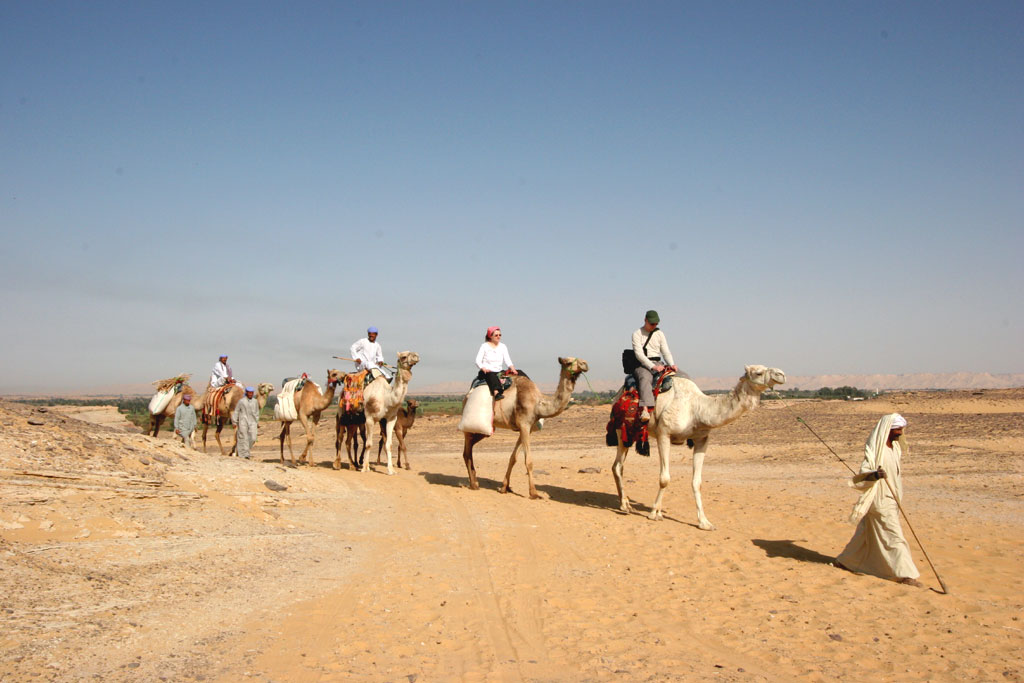
Consider the poor bloke depicted below. He lies, exhausted, on a sand dune in the Sahara desert, literally dying of thirst.

Along comes a camel caravan, evidently with a group of tourists in the lead. The caravan is bound to be loaded with water.

Surmising that the dying man’s demand for water is bound to be highly price-inelastic (the economist’s jargon for “insensitive to price”), one of the camel riders jumps off his camel and waves a bottle of water in front of the dying man’s face, asking him: “What would you give me for this bottle of water?”
“Everything I own,” moans the dying man, knowing that none of his assets would be worth anything to him unless he got water soon.
“Done deal,” says the tourist, beckoning one of his fellow travelers, a lawyer, to draft up the necessary documents, which the thirsting man quickly signs in return for that life-saving bottle of water.
What might we call this hypothetical transaction and the price the tourist extracted from the dying man for that life-saving bottle of water?

 It is well recognized that over the past several decades US prisons and jails have become the nation’s largest inpatient psychiatric hospitals.

 Her voice cracked with strain. I could imagine the woman at the other end of the line shaking, overcome with remorse about the hospital where her husband had had esophageal surgery. Might he still be alive, she asked me, if they had chosen a different hospital?


 When is the last time anyone received an estimate of the cost of a healthcare service upfront?