Categories

Month: February 2019

The Power & Perils of Unconventional Healthcare Partnerships

By LYGEIA RICCIARDI 

Last week’s announcement by Aetna and Apple of their Attain “experience” designed to enable Aetna members to achieve better health using the Apple watch was the latest in a series of partnerships vying to shake up healthcare from an unconventional angle. Others include Amazon-Berkshire Hathaway-JP Morgan’s collaboration to reshape health insurance, and Uber and Lyft’s numerous partnerships with Sutter, CareMore Health, and other healthcare systems to address transportation challenges for patients.

The Heat is On

Big changes in healthcare—including the shift to value-based care, the growing influence of consumerism, and a recognition that health outcomes depend on a wide array of everyday life factors ranging from foods to moods—are forcing the old guard in healthcare to recalibrate. Healthcare provider organizations alone engaged in a record-breaking 115 mergers and acquisitions in 2017, and continued apace until now, with deals already announced in 2019 between Dignity Health and Catholic Health Initiatives (CHI), among others.   

The most interesting partnerships, from my perspective, pair traditional healthcare players with non-traditional ones: it’s a recognition that something fundamental has to change, a point which hasn’t been lost on the 84% of the Fortune 50 companies that are already in healthcare, up from 76% in 2013. Everyone from tech giants to car manufacturers seems to gambling to some extent on healthcare. And why not, when the potential jackpot just keeps growing?

Continue reading…

Innovation Amidst Crisis: Health IT and the Opioid Abuse Epidemic | Part 2 – Fostering Situational Awareness

Dave Levin MD
Colin Konschak, FACHE

By COLIN KONSCHAK, FACHE and DAVE LEVIN, MD

The opioid crisis in the United States is having a devastating impact on individuals, their families, and the health care industry. This multi-part series will focus on the role technology can play in addressing this crisis. Part one of the series proposed a strategic framework for evaluating and pursuing technical solutions. 

A Framework for Innovation

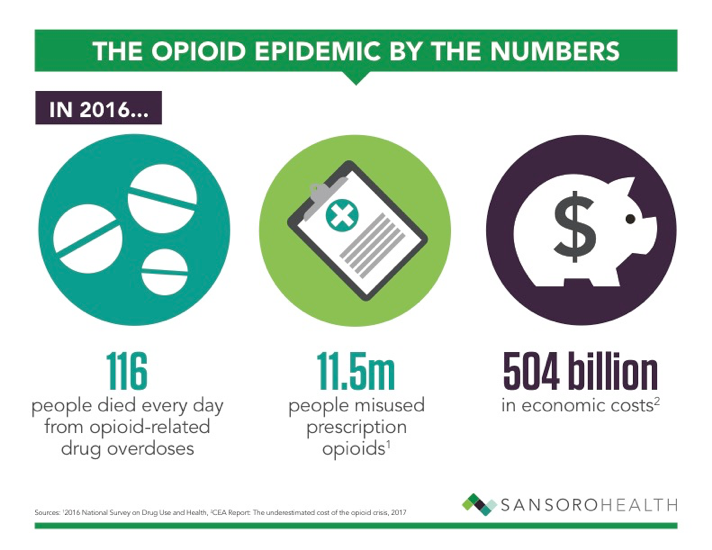
Deaths from drug overdoses in the United States jumped nearly 10 percent last year, according to recent estimates by the Centers for Disease Control. One major reason for the increase: more Americans are misusing opioids.

Health IT (HIT) can play a pivotal role in addressing the opioid-abuse epidemic. To maximize impact, however, we believe it’s essential to organize and prioritize IT innovations and approaches. In part one of this series, we proposed a conceptual framework that sorts opportunities based on five types of functionality. In this article, we will explore one of these categories: technologies that enhance situational awareness.

Continue reading…

Innovation Amidst the Crisis: Health IT and the Opioid Abuse Epidemic | Part 1 – A Strategic Framework

Dave Levin MD
Colin Konschak, FACHE

By COLIN KONSCHAK, FACHE and DAVE LEVIN, MD

The opioid crisis in the United States is having a devastating impact on individuals, their families, and the health care industry. This multi-part series will focus on the role technology can play in addressing this crisis. In this article, we propose a strategic framework for evaluating and pursuing technical solutions. Future articles will explore specific areas and solutions within this framework.

A Full-Blown Crisis

One of the authors recently had the opportunity to participate in a multi-stakeholder workshop in Cleveland, OH dedicated to finding new, collaborative approaches to addressing the nation’s opioid abuse epidemic. While Ohio might be considered ground zero for this epidemic, the evidence is clear that this is a national crisis and it is getting worse. The numbers are frightening, especially the 2016 estimate that 2.1 million people misused opioids for the first time.

Given the statistics, it is likely that many of you have been personally touched by the epidemic.

In our experience, successful improvement efforts in health care almost always address the role of people, process and technology. Strategic innovations aimed at the opioid abuse crisis should account for all three of these in a holistic manner. Innovation should be pursued as a series of practical experiments that address current gaps, result in near-term improvement, provide insights for future tests of change, and lead to a set of sustainable and scalable solutions that will be essential to ensuring long-term success in addressing this enormous problem.

Continue reading…

Checking Boxes

By HANS DUVEFELT MD 

I pay $500 per year for UpToDate, the online reference that helps me stay current on diagnostic criteria and best treatment options for most diseases I might run into in my practice. They also have a rich library of patient information, which I often print out during office visits.

I don’t get any “credit” for doing that, but I do if I print the, often paltry, patient handouts built into my EMR. That was how the rules governing meaningful use of subsidized computer technology for medical offices were written.

If I describe in great detail in my office note how I motivated a patient to quit smoking but forgot to also check the box that smoking cessation education was provided, I look like a negligent doctor. My expensive EMR can’t extract that information from the text. Google, from my mobile device, can translate between languages and manages to send me ads based on words in my web searches.

When I do a diabetic foot exam, it doesn’t count for my quality metrics if I freetext it; I must use the right boxes. If I do it diligently on my iPad in eClinicalWorks, one of my EMRs, even if I use the clickboxes, it doesn’t carry over to the flowsheet or my report card.

Continue reading…

assetto corsa mods