Categories

Above the Fold

The Reckoning: What Happens to Digital Health After COVID?

By JEFF GOLDSMITH and ERIC LARSEN

It has been a rough year so far for digital health. After an astonishing $45 billion poured into new digital health companies in 2020 and 2021, and an early 2021 peak in market valuations of publicly-traded digital health providers, valuations and multiples have collapsed. Once high-flying Teladoc, which traded at an eye-watering 42x revenues and commanded a $45 billion market capitalization, is now trading around 2.7X at about $5.7 billion. AmWell, the next largest telehealth player, has seen its stock drop more 90% from its high.

Nor is the evaporation in market value is confined to just a few highly visible incumbents. The 29 healthtech companies to go public (either via IPO or SPAC) in 2021 were collectively trading 45% lower than their opening day price by the end of the year, according to STAT. Among the privately held firms, re-valuation of digital health is getting underway. Bearish market signals portend a sharp correction in digital health, characterized by brutal price competition, widening (and less tolerated) operating losses, layoffs, and ultimately, widespread consolidation. 

However, there is also major pushback from the ‘demand side’ of the digital health equation. With the explosion of digital health players, potential customers are confused and frustrated. There is a fundamental disconnect between the exuberant (and as yet largely unsubstantiated) promises of digital health startups and the needs of the four ‘phenotypes’ of health care customers. How digital health firms respond to those customers’ needs will ultimately determine the shape and size of the digital health market.

Why is the Digital Health Market Correcting?

Let’s start with the supply side. It is not difficult to identify the source of the digital health boom: hyper liquidity in the market fueled by expansive COVID-related fiscal and monetary policy. In the heat of COVID, Congress enacted three enormous stimulus/relief packages in eighteen months. The Federal Reserve also turned deeply dovish, keeping interest rates near zero and embracing epic quantitative easing – pumping $120 billion a month into the economy and expanding its balance sheet by more than $6 trillion. Much of this newly printed cash found its way into the coffers of private investors. Private equity, growth equity, and venture capital collectively raised $733 billion in new capital across 2021.  Globally, private equity firms alone invested $151 billion in healthcare in 2021.

Telehealth Ignition

The spark to ignite the digital health explosion came from the surprise growth in telehealth visits in the spring of 2020. In the wake of the spring 2020 lockdown and freeze on elective hospital care that accompanied the COVID public health emergency, telehealth visits went from less than 1% of total Medicare Part B patient visits in 2019 to nearly 13% during the spring of 2020 (and nearly 38% of all behavioral health visits), according to an analysis by DHHS’s ASPE. Private insurers saw 50-70% of behavioral health visits turn virtual.

This surge was not caused by a spontaneous surge of consumer activism but rather by hospital systems desperate to remain in touch with existing patients during the spring COVID lockdown. These systems saw plummeting visit volumes not only due to service closures but to patient reluctance to visit hospital ERs and outpatient clinics crowded with contagious COVID patients. Larger systems with extensive IT infrastructure were able to stand up far more robust telehealth offerings than smaller systems. As Bob Wachter, Chair of Medicine at University of California at San Francisco said, “We made 20 years’ worth of progress in twenty days.”

The sudden multi-thousand percent rise in telehealth volumes led to breathless estimates of future growth in telehealth volumes and revenues. In July 2020, McKinsey estimated a total addressable market (TAM) of $250 billion for telehealth services — this from a business with a revenue base McKinsey itself estimated at $3 billion in 2019-2020, and $5.5 billion in 2020-2021. This risible TAM estimate assumed that 24% of all physician and outpatient visits (a 1.8 billion visit “universe”) and 25% of Emergency Department visits would be addressed through telehealth alternatives.

However, more than 90% of telehealth visits during the spring of 2020 were with physicians patients already knew, not random, anonymous physicians signed on to cover telehealth services by vendors. And 47% of those visits were one-time users, according to a recent Trilliant analysis. Visit volume growth was also materially aided by Congressional approval of temporary Medicare coverage for telehealth visits as part of the COVID Public Health Emergency declaration. 

Continue reading…

THCB Gang Episode 90, Thursday May 5 – Cancer Special

#THCBGang on May 5 was an extraordinary special on cancer & navigation. Everyone on this gang has been touched by cancer as a patient or caregiver.

Joining Matthew Holt (@boltyboy) will be fierce patient activist Casey Quinlan (@MightyCasey); Jennifer Benz (@Jenbenz); Suntra Modern Recovery CEO JL Neptune (@JeanLucNeptune); patient advocate Grace Cordovano (@GraceCordovano); policy consultant/author Rosemarie Day (@Rosemarie_Day1); Jeff Goldsmith; Jennifer Benz (@Jenbenz); PLUS Adam Pellegini (@adampellegrini) from cancer navigation company Jasper Health. It really was a great conversation about what to do (and what is being done) to make the experience better for people with cancer and those that love them.

You can see the video below & if you’d rather listen than watch, the audio is preserved as a weekly podcast available on our iTunes & Spotify channels.

#HealthTechDeals Episode 27: Levels, Waltz Health, Safety Wing & Implicity

In this episode of #HealthTechDeals, Jess is enjoying Cinqo de Mayo in an Addams Family-themed hotel where she is playing “the mummy” introducing health tech companies coming back from the dead. There’s gossip about Amazon’s pharmacy operation over supplying insulin, and there’s deals for Levels ($38m) in CGM analysis, Waltz Health ($35m) in pharmacy search, Safety Wing ($25m) for health insurance for nomads & Implicity ($23m) doing cardiac implantable monitoring in France.

The Pandemic, Bad Habits, Riskier Population Health & The Case for Prevention Coming from Newtopia

BY JESS DaMASSA, WTF HEALTH

With 61% of American adults reporting a negative behavior change – troubled sleep, changes in diet, increased alcohol consumption, more time on screens, etc. – as a result of the pandemic, AND healthcare payers looking at 2022 cost increases in the range of 8-10%, one has to wonder just how bad our collective health has become thanks to the past two years.

Jeff Ruby, CEO of tech-enabled habit change provider, Newtopia, shares some startling stats about our population’s health, particularly when it comes to those lifestyle-related metabolic disorders that his company is trying to prevent. And, thus, we get into a fiery conversation about condition prevention versus condition management… at-risk payment models versus per-member-per-month models… behavior change versus prescription drugs… and whether or not a biz like Newtopia (running at-risk on goals related to prevention) is better placed or worse off as a result of this population that, though sicker and riskier than before, is showing up in greater numbers to try their program.

It’s clear where Jeff stands with his genetics-plus-behavioral-psychology-based platform, but questions about how to best handle our population’s health as the pandemic wans are still very much up for debate. Even on the public markets – Newtopia was one of the first digital health companies to go public during the pandemic, hitting the Canadian TSX as $NEWUF in March 2020 – investors’ sentiment for virtual care just isn’t what it used to be. Maybe we can apply some behavior change psychology there too? (wink, wink) Though Jeff talks about “uncertainty about how US healthcare works” in the context of the market, it seems like that “uncertainty” is also pervasive in our approach to spending for chronic care – especially now. Are dollars toward prevention dollars that are better spent? A compelling case is made…

#HealthTechDeals Episode 26: Hello Heart, Concert Health, Vivian Health, Curebase, Mendel.ai & Blue Spark

It’s the May the 4th be with you day! In Episode 26 of #HealthTechDeals, Jessica is huddling in Boston after the American Telehealth Association conference, and has Star Wars-related trivia. There’s gossip there, there’s more gossip about Cerebral & its ADHD med strategy. Meanwhile a lot of copy cats in deals today with Hello Heart ($70m) for hypertension, Concert Health ($40m) for mental health, Vivian Health ($60m) for nurse staffing, Curebase ($40m) for DCTs, Mendel.ai ($40m) for NLP & Blue Spark ($40m) for RPM — all joining very crowded markets.

Learning from This War

BY KIM BELLARD

There’s an old military adage that generals are always fighting the last war.  It’s not that they haven’t learned any lessons, it’s more than they learned the wrong lessons.  I fear we’re doing that with the COVID pandemic.  

The next big health crisis may not come from another COVID variant; it may not be caused by coronavirus at all.  Even if we learn lessons from this pandemic, those may not be lessons that will apply to the next big health crisis.  

What started me thinking about this is a C4ISRNET interview with Mike Brown, the Director of the Defense Innovation Unit, and DARPA Director Dr. Stefanie Tompkins.  Dr. Tompkins and Mr. Brown are both watching the war in the Ukraine closely.  As Dr. Tompkins says in the interview, the war is a “really good test” about the programs her agency has invested in and/or is investing in for the future.

E.g., Russia has clear advantages in numerical superiority, and in “traditional” weapons like tanks, airplanes, ships, and artillery, but Ukraine has been able to blunt the invasion through asymmetrical warfare, using things that DARPA helped foster, including Javelin missiles, drones, satellite imagery, secure communications, and GPS.  Even Russia’s vaunted cyber capabilities have been overmatched by Ukraine’s own capabilities.  Current DARPA investments like hypersonic missiles and AI are being tested.

I’m comforted that DARPA and DIU are learning in real time what lessons their agencies can learn to help fight future wars, but I’m wondering who in our healthcare system, and who in our governments (federal/state/local), are not just fighting COVID but learning the bigger lessons from it to fight future crises.  

I trust that smarter people than me are looking at this, but here are some the lessons I hope we’ve learned:

Information: it’s shocking, but we don’t really know how many people have had COVID.  We don’t really know how many have it now.  We like to think we know how many have been hospitalized and how many have died, but due to reporting inconsistencies those numbers are, at best, approximations.  

We need early warning systems, like through wastewater monitoring.  We need standardized public health reporting, with real-time data and a central repository in which it can be analyzed.  We need easy-to-understand dashboards that both public officials and the public can access and base their decisions on.  We can’t be building these during a health crisis.

Supply Chains: just-in-time, globally distributed supply chains are a marvel of modern life, bringing us greater variety of products at more affordable prices, but, in retrospect, we should have understood that in a global health crisis they would prove to be an Achilles heel.  Masks and other PPE, ventilators, vaccines and other prescription drugs have all suffered from supply chain issues during the pandemic.  Shortages led to unevenly distributed supplies and higher prices.  

We’re never going back to the days of local production, but we do need to prioritize what things need to be produced regionally/nationally, how that production can scale in time of crisis, and how that production should be fairly allocated.  The mechanisms to do that can’t be built on the fly.

The sick and the dead: Among the many images of the pandemic’s worst (so far) days, some of the most haunting are the ones of hospitals filled to overflowing, with patients on gurneys in hallways, or the refrigerator trucks filled with dead bodies.  Our healthcare system’s capabilities for both were simply overwhelmed – as was the healthcare workforce.

Hospital beds are expensive to build, and expensive to maintain.  We can’t afford a healthcare system that builds them for the worst case scenario.  But we can learn from innovative efforts during the pandemic, like building temporary hospitals that can be expanded or contracted as needed.  

Similarly, there has to be a strategy for dealing with dead bodies during a global health crisis, especially one in which those bodies themselves may carry ongoing risks.  Existing morgues, mortuaries, and even graveyards may not be sufficient.  There needs to be a plan.

Hardest to solve are healthcare workforce shortages.  It’s not easy to train new healthcare workers, and retaining them when they’re stressed beyond belief proved to be a challenge.  In a crisis, we need them all working at the top of the licenses, able to cross workplaces and even state lines, and properly supplied and compensated.  None of those is a “normal” state of affairs for our healthcare system, and all are inexcusable in a crisis.

Telehealth: telehealth seemed to finally gets its day during the pandemic, with relaxed regulation, improved reimbursement, provider adoption, and consumer preference.  It took pandemic to make us realize that making sick, potentially contagious, patients travel to get care is not a good idea.

That being said, now that the pandemic is in a more manageable phase, the bloom seems to be off the telehealth rose, with regulations being reapplied, providers not fully incorporating into their practice patterns, and patients returning to in-person visits.

Hey: it’s 2022.  We have the technology to do telehealth “right.”  Aside from, say, a heart attack or an auto accident, telehealth should always our first course of action.  Our licensing, our reimbursements, and our work flows need to facilitate this – not just to prepare for the next health crisis, but simply as part of a 21st century healthcare system. 

Communication: One of the most unexpected results of the pandemic is the distrust of public heath advice – vilifying public health officials, spurning mitigation efforts like masking or isolation, and spurring on the already-present anti-vaxx movement.  “Science” is seen as in the eye of the beholder. It’s an information war, and health is losing.

We need the tools to fight the health information war more effectively. We need to learn how to communicate more effectively.  We need to reestablish faith in science.  We need responses to a health care crisis to be a health issue, not a political one.  

————

We will be taken by surprise by the next health crisis.  We had plans for a pandemic, but, when it hit, we fumbled every response.  Next time we’ll be expecting another COVID, and, if it’s not, we’ll be caught flat-footed again.  

The current crisis is, to use Dr. Tompkins’ words, a really good test for whether we’re working on the right things for our next health crisis.  I’m not so sure we are.  

Kim is a former emarketing exec at a major Blues plan, editor of the late & lamented Tincture.io, and now regular THCB contributor

ONC Explainer: Micky Tripathi Deep-Dive on Info Blocking, API standardization & TEFCA

By JESS DaMASSA, WTF HEALTH

Micky Tripathi the National Coordinator for Health Information Technology at HHS says this year will be a “transformative” year for Health IT as the decade-long, $40 billion dollar effort to lay an electronic foundation for healthcare delivery heads to the next level. Why is this year THE YEAR when it comes to the digital exchange of health information? Where is federal health IT strategy headed in order to provide the standards and policies health tech co’s need to be able to kick up the pace of innovation?

We get into a SWEEPING chat about the technology and business implications of all the work coming out of ONC, including implementation of those new information blocking regulations, goals for API standardization, and TEFCA (Trusted Exchange Framework & Common Agreement). Micky not only gives the background on the regulations and policies, but also provides some analysis on what they actually mean for those health technology companies trying to do business in-and-around a more digital healthcare ecosystem.

Healthcare Suffers from Patient Bias

By KIM BELLARD

If you went to business school, or perhaps did graduate work in statistics, you may have heard of survivor bias (AKA, survivorship bias or survival bias).  To grossly simplify, we know about the things that we know about, the things that survived long enough for us to learn from.  Failures tend to be ignored — if we are even aware of them. 

This, of course, makes me think of healthcare.  Not so much about the patients who survive versus those who do not, but about the people who come to the healthcare system to be patients versus those who don’t. It has a “patient bias.”

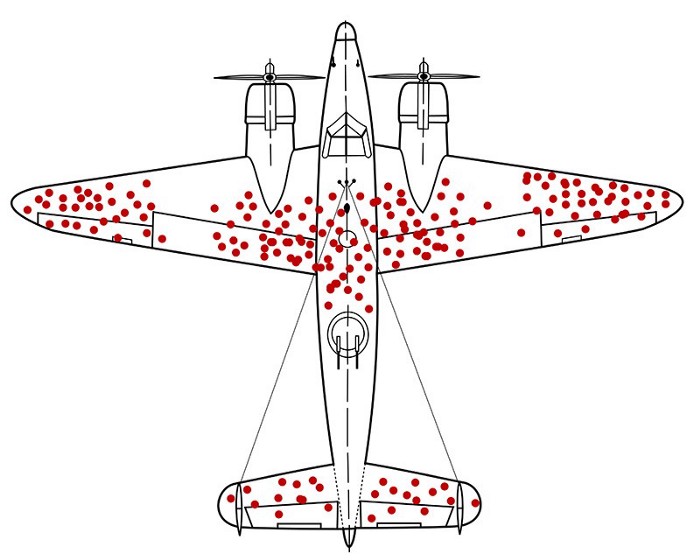
Survivor bias has a great origin story, even if it may not be entirely true and probably gives too much credit to one person.  It goes back to World War II, to mathematician Abraham Wald, who was working in a high-powered classified program called the Statistical Research Group (SRG).

One of the hard questions SRG was asked was how best to armor airplanes.  It’s a trade-off: the more armor, the better the protection against anti-aircraft weapons, but the more armor, slower the plane and the fewer bombs it can carry. They had reams of data about bullet holes in returning airplanes, so they (thought they) knew which parts of the airplanes were the most vulnerable.

Dr. Wald’s great insight was, wait — what about all the planes that aren’t returning?  The ones whose data we’re looking at are the ones that survived long enough to make it back.  The real question was: where are the “missing holes”?  E.g., what was the data from the planes that did not return?

Continue reading…

THCB Gang Episode 89, Thursday April 28, 1pm PT 4pm ET

Joining Matthew Holt (@boltyboy) on #THCBGang on April 28 for an hour of topical and sometime combative conversation on what’s happening in health care were: THCB regular writer and ponderer of odd juxtapositions Kim Bellard (@kimbbellard); medical historian Mike Magee (@drmikemagee); patient safety expert and all around wit Michael Millenson (@mlmillenson) & Principal of Worksite Health Advisors Brian Klepper (@bklepper1). Matthew had COVID so didn’t do much & Kim ran the show. Lots of discussion on telehealth, primary care, private equity and much more…

You can see the video below & if you’d rather listen than watch, the audio is preserved as a weekly podcast available on our iTunes & Spotify channels.

Amwell CEO Roy Schoenberg: Telehealth Tech Is Now Changing Provider & Payer Business Models

BY JESS DaMASSA, WTF HEALTH

Amwell’s ($AMWL) President & co-CEO Roy Schoenberg called it early when he predicted pre-Covid that there would be a paradigm shift for telehealth that would take the technology from “healthcare product” to “healthcare infrastructure.” Now he’s back as (in my opinion) the best kind of market analyst to give us a new high-level take on where telehealth is headed next, how its customers’ demands have changed, and how the public market’s understanding of this technology and its utility in healthcare is starting to evolve.

The bottom line: Telehealth as infrastructure is just the tip of the iceberg. As Roy puts it, “The organizations that we work with now understand that distributing healthcare over technology is part of their future.” And whether it’s payers, health systems, private practices, or even Medicare, the seismic shift Roy sees now is that instead of looking at telehealth as a way to do their old business using new channels, the new channels are being looked at as an opportunity for healthcare organizations to completely remake their old business models. “Technology,” he says, “is being considered a change agent for how healthcare is actually arriving at the hands of its patients.”

So much more ground covered in this big telehealth trends conversation – it’s the PERFECT watch for the week before the American Telemedicine Association’s Annual conference. In addition to an update on the roll-out of Amwell’s new platform Converge (2/3 of the way there) and the integration of its latest acquisitions SilverCloud Health and Conversa Health, you’re going to want to listen in to our little gossip sess about telehealth policy and reimbursement at 17:45 AND our talk about the health tech investment market of privately and publicly traded companies that starts at the 20-minute mark.

assetto corsa mods