Categories

Above the Fold

Inside the NHS Health IT Program

I had an opportunity to speak with NHS National Director for Patients and Information Tim Kelsey, who will be speaking at the at the Health 2.0 7th Annual Fall Conference on Monday, September 30th.


HM: Can you tell us a little bit about your vision for open data, transparency and participation. How do you believe this will actually transform the NHS?

TK: I believe that if we can create an environment in the health service in which data and information can freely flow, it will improve the quality of patient care because it will give doctors, clinicians and patients the tools they need to measure the quality of care in their environment. It also gives patients the opportunity to make more decisions themselves, of benefit to people with long-term conditions who may want to take more control of their own care, but also of benefit to people who want to look after their health and well being, and avoid interaction with the health services altogether.

HM: You often make reference to the ‘internet banking revolution’; how can this be applied to healthcare and how will actually benefit patients?

TK: In pretty much every area of our lives, digital technology has transformed the way we do things. A combination of transparency of data and our ability to participate with it to do things, has resulted in a revolution in the quality of customer experience, and so too has the cost of providing this service been reduced. It is not a perfect example – banking is not the same as healthcare – but at least it gives us an insight into what is possible. The story of online financial services in the UK started back in 1997 when online banking was launched. Those old enough to remember it will know just how skeptical the public were of doing their banking online. The issues of trust back then I think are to some degree comparable to healthcare today. Anyway, today in 2013, more than 22 million adults in this country only do online banking. It has been a phenomenal social shift. If you ask me what are the most important social transformations of our time, it was through a combination of been given access to our own data transparency and the ability to transact with it (pay our bills, and so on), participation, that that revolution was effected.

HM: To what extent do you see the patient influencing these kind of changes in the NHS? How do we encourage patients to embrace this?

TK: We in the NHS in England have a massive financial problem – and we are not alone, it is a problem that afflicts most healthcare systems. In the UK it has been estimated that over the next five to ten years we’re going to have a deficit of around 30 billion pounds in the cost of providing health care. We need to do something different to find new ways of creating better value for patients in healthcare. A model that stands out and suggests a new way forward is to get the patient – the customer – to do a lot more for themselves. We need to unleash the power of patients, get them managing their own health and healthcare, making the health service more effective by telling it how they want services to be delivered, and how they can be delivered more efficiently.

Continue reading…

Not Quite Ready For Prime Time: The State Health Insurance Marketplaces and Google

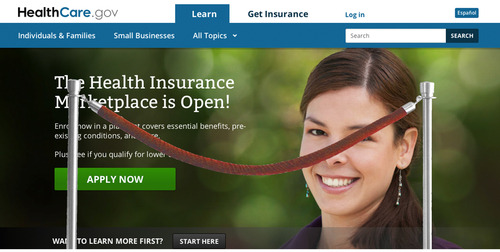
All of the state health insurance marketplaces (also known as exchanges) are online, but millions of expected users may have a hard time finding them.  Marketplaces will enable shopping and enrollment mainly through their websites. States are using a variety of promotional strategies, but most people will likely find marketplaces in the same way they find other websites—through common keyword searches on Google, by far the nation’s dominant search engine. Poor search engine results can create serious barriers to shopping and enrollment, the major measures of success for marketplaces and, by extension, the success of the Affordable Care Act (ACA).

We used standard methods to assess Google results for the 17 marketplaces operated by 16 states and Washington, DC that offer individuals, families, and small businesses a place to shop for health care coverage.  Over three days in mid-September, we looked at results for keywords that data from Google show people are commonly using to search for health insurance. We examined both unpaid (or “organic”) and paid (or “sponsored”) results. Although research shows that unpaid results get more attention, paid results can also lead to page views.

Our preliminary findings show that marketplaces for four states—Idaho, Maryland, New Mexico, and New York—and Washington, DC did not appear on the first page of Google results, which generates 92% of all page views.  In addition, both unpaid and paid search results for most of the remaining 12 states were frequently absent from page one.

With enrollment in the marketplaces opening October 1 for coverage beginning January 1, this would be a good time to focus on search engine optimization (SEO), the process of increasing the rankings of unpaid or “organic” search results. Once implemented, SEO results can be seen quickly, especially for a topic as popular and important as new health insurance options. However, it requires analysis, planning, and time to implement.

Methods for Conducting Search Engine Result Testing

To test search engine results for state-operated health insurance marketplaces, we used the five keywords most effective in producing page views of a prominent healthcare-related website produced by a federal client: Affordable Care Act, affordable health care, health care, health insurance, and Medicaid.

Continue reading…

Understanding the Hospital Consolidation Numbers: The Centrality of Data Quality

Is hospital consolidation creating new efficiencies or does it give health care providers clout over health care insurers?  A well-publicized study published in Health Affairs last year by Robert Berenson, Paul Ginsburg, et. al said the latter:  hospital consolidation has resulted in “growing provider market clout.”

The Berenson study’s key conclusion is that growing hospital clout has resulted in insurers not aggressively containing their claims payments, a view that will stun every patient who has had a health insurance company deny coverage for a procedure, prescription or preferred health care provider.

Because the Berenson study’s finding are counterintuitive to consumer experience, and because they have been widely discussed in publications ranging from Forbes to National Journal, the Center for Regulatory Effectiveness, a regulatory watchdog with extensive experience in analyzing federal health policies, undertook an analysis to see if the study complied with the Data Quality Act (DQA).

The DQA, administered by the White House Office of Management and Budget (OMB), sets standards for virtually all data disseminated by the agencies.  Under the DQA, agencies may not use or rely on data in federal work products (reports, regulations) which don’t comply OMB’s government-wide Data Quality standards. Thus, unless the Health Affairs study complies with federal Data Quality standards, it is useless to Executive Branch policy officials.

The primary data source cited by the Berenson study as the basis for their conclusions regarding trends in relative clout between hospitals and health insurers is a well-respected, longitudinal tracking study which included interviews with heath care leaders from insurance companies, hospitals, and academia.   The health care interviews, however, were only conducted in a single year following a change in longitudinal study’s methodology.

Continue reading…

Give Us Our Damn Lab Results!!

Two years ago, the Department of Health and Human Services released proposed regulations that would allow patients to obtain their clinical lab test results directly from the lab, rather than having to wait to receive the results from their health care provider.  CDT and other consumer groups enthusiastically supported this proposed rule at the time of its release.

Yet an Administration largely characterized by increasing patient access to health information seems inexplicably unable to close the deal on this important access initiative.  As a result, patients still must wait for their providers to contact them with test results.

Under the current regulations, known as the Clinical Laboratory Improvement Amendments (CLIA), laboratories are restricted from disclosing test results to patients directly.  Instead, labs can only send the test results to health care providers, people authorized to receive test results under state law or other labs. Only a handful of states permit labs to send patients test results directly, and some of these states require the provider’s permission before patients can have the results.  The HIPAA Privacy Rule reflects this restriction, exempting CLIA-regulated labs (which are the great majority of clinical labs) from patients’ existing right to access their health information.

This existing regime has put patients at risk. A 2009 study published in the Archive of Internal Medicine indicated that providers failed to notify patients (or document notification) of abnormal test results more than 7 percent of the time. The National Coordinator for Health IT recently put the figure at 20 percent.  This failure rate is dangerous, as it could lead to more medical errors and missed opportunities for valuable early treatment.

The 2011 proposed regulations would modify CLIA to permit labs to send results directly to patients, and they would also modify the HIPAA Privacy Rule to give patients the right to access or receive their lab results.  Contrary state laws would be preempted.  Patients would have the ability to request their lab results in a particular form or format, as with their other health information; for example, patients could request a paper copy of their test results, or to have the results sent electronically to the their personal health records

Continue reading…

Can Entrepreneurs “Cure” Health Care With Technology?

Today marks the beginning of the 8th annual Healthcare IT Week. Healthcare IT Week was started and continues on as a collaborative forum for public and private healthcare constituents to discuss the value of health information technology (health IT) for the U.S. healthcare system.

It is amazing to see how far health IT has come over the last 10-15 years.  It has its own week!  If, a decade ago, you told people that health IT would be a core focus of investors, entrepreneurs and everyone else in healthcare, the energy produced from the eye rolling alone could power the lights on the Las Vegas Strip for a month.  The basic sentiment back then was this: Why would anyone invest in, think about, care about health IT when the consumer Internet was rocking and companies selling online dog food could get started on Monday and sold on Friday for a bull mastiff’s weight in gold?

Today it is quite clear that healthcare IT is a hugely significant part of any success we are having and will continue to have in transforming our healthcare system from one where 30% of cost and care is wasted or the result of error to one where value reigns supreme.  We do not believe anyone rational would now argue that healthcare IT is non-essential to improving the quality, productivity, efficiency, cost and outcomes we produce in our healthcare system, although the path is not always smooth.

And it’s about time. Technology has been used to optimize and redefine virtually every key industry except healthcare. Manufacturing has gone from human assembly lines to robotics; banking has gone from tellers to home banking; travel has gone from agents with brochures to Travelocity; and yet in many ways, the fundamental practice of medicine hasn’t changed in decades.

Continue reading…

What to Do About Futile Critical Care

Thanks to extraordinary advances in medicine, critical care providers can save lives even when the cards are stacked against their patients. However, there are times when no amount of care, however cutting-edge it is, will save a patient. In these instances, when physicians recognize that patients will not be rescued, further critical care is said to be “futile.” In a new study, my RAND and UCLA colleagues and I find that critical care therapies that physicians regard as “futile” are not uncommon in intensive care units, raising some uncomfortable questions.

Of course, we’re fortunate to have such fantastic technology at our disposal — but we must address how to use it appropriately when the patient may not benefit from high-intensity measures. When aggressive critical care is unsuccessful at achieving an acceptable level of health for the patient, treatment should focus on palliative care.

In our study, my colleagues and I quantified the prevalence and cost of “futile” critical care in the journal JAMA Internal Medicine. This can be seen as the first step toward reevaluating the status quo and better optimizing care for critical care patients.

After convening a group of critical care clinicians to determine a consensus definition of “futile treatment,” our research team analyzed nearly 7,000 daily assessments of more than 1,000 patients.

We found that 11 percent received futile treatment, while an additional 9 percent received “probably futile” treatment.

So physician-perceived futile critical care is indeed prevalent. But what about the cost?

Continue reading…

Can Social Media Really Influence Health Behaviors? A Small Clinical Trial Argues The Answer Is Yes.

Thanks to the technologic allure of iPhones replacing stethoscopesapps substituting for doctors and electronic information substituting for having to actually talk to patients, this thoroughly modern correspondent is all about medical-social media.

Think Facebook for the flu.  Twitter for tinnitus. Egads, listen to the typical consultant, pundit or futurist and it’s easy to believe that we’re on the verge of a silicon-based health care revolution.

But then reality intrudes and some skeptic somewhere always asks about the bang for the buck, the juice for the squeeze, the return for the investment. It’s a good question.

For something of an answer, consider the results appearing in a recently published randomized clinical trial by researchers at UCLA. Over a 4 month period, “at risk persons” were recruited for a clinical research trial with on-line ads (Facebook banners, Craigslist, for example) as well as announcements in community settings and venues.  Once subjects met the inclusion criteria and had a unique Facebook account, they were randomly assigned to one of two treatment arms.

One treatment arm used a closed Facebook group to coach persons about their at risk condition.  The other treatment arm similarly used Facebook to coach persons about general health improvement.  Lay “Peer Leaders,” who were given a three hour training session on “epidemiology of the condition or general health subjects and ways of using Facebook to discuss health and stigmatizing topics,” were assigned to lead the groups.

Peer Leaders attempted to reach out to their assigned group persons with messaging, chats and wall posts.  Once the link was established, the relationship in the intervention group included communication about prevention and treatment of the condition. At the end of 1, 2 and three months of the study, participants completed a variety of surveys.

Results?

57 individuals were in the control general health group and 55 were in the condition coaching group.  According to the surveys, intervention patients were ultimately statistically significantly more likely to agree to condition testing (44%) than the control patients (20%).  Because there were few participants, the modest decrease in actual tests or risk behaviors were not statistically meaningful.

This correspondent’s take:

While this was a small study, this is the first time that I have seen reasonable proof that social media by itself can move the behavior needle.  On the other hand, this did not result in a patient engagement stampede toward better care or hard clinical outcomes.  A majority of participants (56%) did not appear to benefit.  Nonetheless, the results do support the inclusion of Facebook-style closed group social media in the suite of population health management services.

Continue reading…

Patient Engagement: On Metrics and Meaning

What is patient engagement?

Everyone agrees that it’s a good thing, and that we healthcare providers should be fostering it.

How to do so, however, depends on just what you believe patient engagement means.

As Dan Munro recently pointed out, the term “patient engagement” is a hot buzz phrase, and – in the best tradition of such phrases – it’s amorphous enough and appealing enough to mean…just about anything.

Provided that it that makes us feel good about healthcare, of course. Better yet, provided that it casts our favorite healthcare approaches in a favorable light. (Rob Lamberts nicely summarizes some angles of the term here.)

I actually rather liked Munro’s post, titled “Patient engagement: Blockbuster Drug or Snake Oil?” until he got to this part: “We now have some very real metrics around what constitutes real patient engagement and Leonard highlighted two impressive examples.” He goes on to point to two studies of care coordination for chronic illness — one at Kaiser and the other at the VA – and summarizes some key improvements in outcomes.

At Kaiser, they included things like decreased mortality rates and fewer emergencies, as well as improved cholesterol screenings and more people meeting cholesterol goals. With the VA’s Telehealth program, hospital days were reduced and patient satisfaction was 86%. (BTW, I had a VA primary care clinic from 2006-2010, and several of my patients were in Telehealth.)

These are indeed nice results. Still, somehow they didn’t impress me as constituting “real patient engagement.” They seemed more like “real population health management, facilitated by teams, care coordination, communication infrastructure, and organized protocols.”

Shouldn’t real patient engagement mean more than this?

Defining patient engagement

Here’s my current take:

Supporting patient engagement means fostering a fruitful collaboration in which patients and clinicians work together to help the patient progress towards mutually agreed-upon health goals.

Continue reading…

When Your Doctor Dies

Several studies have explored the experience of grief that physicians feel when they lose a patient.

But what about when the patient loses a physician—when the doctor dies?

Dr. K was a well-known child psychiatrist, a loving husband, a father of two, and an irreplaceable support and friend for a number of children suffering from trauma, schizophrenia, bipolar disorder, autism and other challenging psychiatric conditions. Earlier this year, Dr. K passed away in a tragic accident while vacationing with his family. His loss was nearly unbearable for most of us.

Days after the funeral, a colleague of Dr. K inquired into whose care his patients would be transferred. She was shocked to hear that one of his patients, a young teenager suffering from Asperger’s syndrome, anxiety, and depression, had overdosed on his medication and committed suicide the day he heard of Dr. K’s death. It was no coincidence.

Behind the family members, close friends, colleagues, and acquaintances are the physician’s patients. They are part of a separate, almost secret life that the physician leads. And yet, the patient is whom the physician spends more time with than anyone else—they are in some ways the truest reflection of the doctor. While family and others grieve together in collective remembrance, patients often do so isolated, alone, confidential.

Continue reading…

assetto corsa mods