Categories

Above the Fold

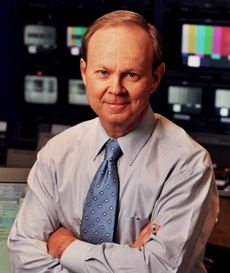
Greg Whisman, CareMore Health

Greg Whisman is the Chief Medical Officer of CareMore Health, a venerable prepaid medical group caring for seniors. It’s been part of Anthem/Elevance for many years but this year spun off as part of a larger PE backed group called Millennium. We really got into the what and the how of primary care for seniors and, yes, we delved deep into the future of primary care. This is a topic that will never die on THCB and getting a real expert to opine on it was really valuable. This is a great conversation–Matthew Holt

Sami Inkinen, Virta Health

Virta Health is in the diabetes reversal business. It’s a medical group that for a decade has been aggressively coaching people with diabetes and cardiometabolic disease to radically change their eating habits–basically to eat the right things for them, to saity. Some how in a nation obsessed with processed food and carbs they have succeeded for a lot of people. And the business is growing fast, with over $160m in annual run rate. Ten years in since it started I spoke with CEO Sami Inkinen about how and why it works, and what the future for this approach is in a world of GLP1s (and no there’s no GLP sales in that revenue number!)–Matthew Holt

Concierge Care for all: What would it look like?

By MATTHEW HOLT

A few weeks back I wrote an article on what’s wrong with primary care and how we should fix it. The tl:dr version was to give every American a concierge primary care physician paid for by the government. We would give everyone a $2k voucher (on average, dependent on age, medical status, location, etc) and have an average panel of 600 people per PCP.

My argument was that a) this would be cheaper than health care now – due to cutting back on Emergency Department visits and inpatient admissions and that b) it would enable us to pay PCPs the same as specialists (roughly $500K a year). This would mean that many current ED docs, internists, hospitalists etc would convert to being PCPs. I also think that we could and would make better use of the now 400,000 nurse practitioners in the US. We would only need about 600,000 PCPs to make this work. Although it would double spending on primary care, it would reduce health care costs overall. (OK there’s some debate about this but the Milliman study linked above and common sense suggests it would save money).

There are obviously two huge issues with my proposal. First we would have to go through the conversion process. Second, we would have to do something big with the three major players who are sucking at the teat of health care $$ right now—those being big hospital systems and their associated specialists, health insurers, and pharma and device companies.

I don’t think that there will be any problem selling this to most doctors or to the American people.

The doctors know that they are trapped in the current system. This would free them to practice as they want to practice, and to remember why they got into medicine in the first place—to care for their patients holistically.

People know all too well that accessing primary care is both good for them and also very difficult. Wait lists are way too long. In this system primary care would be abundant. And I and many others have only horror stories of how big hospital systems, insurers and big pharma treat them badly. They would much rather have an empowered PCP on their side.

The only concern about primary care for patients is if the PCP is incented to not refer them to needed specialty care. In my system there would be no global capitation or risk to the PCP, and thus no incentive not to refer out. But no reason to refer out unnecessarily. They would do the right thing because it is the right thing. (It has taken Jeff Goldsmith 30 years to convince me of this). So there would be no need for insurance companies to manage primary care at all. No claims, no bills, no utilization management. Instead we should have 600,000 primary care docs paid well and able to manage their practices to do the right thing.

And this would probably involve a ton of variation. There would be PCPs who work in groups. There would be solo. There would be those specializing in specific types of patients (think kids or people with serious diseases or geriatricians). They would all make the same amount of salary but their practice’s revenue and number of patients would be adjusted in a similar way to how we do risk adjustment for Medicare Advantage now, but without the games, and with no profit motive.

This system would create a lot of innovation. PCPs would be responsible for those with chronic conditions. They would have budget from the $2,000 per head (of which they would get roughly $800 as income) to build remote monitoring programs, to use AI, to build teams of assistants and nurses et al.

So can it be done in the US? Yes it already has. I urge you to take the time to read this ingenious ChatGPT summary of the Nuka system in Alaska. (I believe created by Steve Schutzer MD). Nuka went from being a hidebound bureaucratic expensive system–that its patients hated–to being a system with culturally appropriate care that its “consumer-owners” love today. And its costs are lower and outcomes better. There are lots of other examples of similar approaches across the US.  Just ask Dave Chase. They just haven’t scaled because the current incumbents have killed them.  (One great example is this case in Texas where a hospital chain bought and killed a big primary care group led by Scott Conard because it was costing them $100m a year in reduced hospital FFS admissions).

What we need is to set up the incentives, prod doctors and patients hard to get into these arrangements and let American ingenuity and medical professionalism go at it.

The other side of the equation is the need to reign in the costs of specialty and hospital care. How this would happen is up for debate.

Continue reading…

AAAA (the four A)

By JACOB REIDER

I haven’t blogged this yet, which kinda surprises me, since I find myself describing it often.  
Let’s start with an overview. We can look at health information through the lens of a lifecycle. 

The promise of Health Information Technology has been to help us – ideally to achieve optimal health in the people we serve.

The concept @ the beginning of the HITECH act was: “ADOPT, CONNECT, IMPROVE.”

These were the three pillars of the Meaningful Use Incentive programs.

Adopt technology so we can connect systems and therefore improve health.

Simple, yes?

Years later, one can argue that adoption and even connection have (mostly) been accomplished.

But the bridge between measurement and health improvement isn’t one we can easily cross with the current tools available to us.

Why?

Many of the technical solutions, particularly those that promote dashboards, are missing the most crucial piece of the puzzle. They get us close, but then they drop the ball.

And that’s where this “simple”AAAA” model becomes useful.

For data and information to be truly valuable in health care, it needs to complete a full cycle.

It’s not enough to just collect and display. There are four essential steps:

1. Acquire. This is where we gather the raw data & information. EHR entries, device readings, patient-reported outcomes  …  the gamut of information flowing into our systems.  Note that I differentiate between data (transduced representations of the physical world: blood pressure, CBC, the DICOM representation of an MRI, medications actually taken) and information (diagnoses, ideas, symptoms, the problem list, medications prescribed) because data is reliably true and information is possibly true, and possibly inaccurate. We need to weigh these two kinds of inputs properly – as data is a much better input than information.  (I’ll resist the temptation to go off on a vector about data being a preferable input for AI models too … perhaps that’s another post.)

2. Aggregate. Once acquired, this data and information needs to be brought together, normalized, and cleaned up. This is about making disparate data sources speak the same language, creating a unified repository so we can ask questions of one dataset rather than tens or hundreds.

3. Analyze. Now we can start to make sense of it. This is where clinical decision support (CDS) begins to take shape, how we can identify trends, flag anomalies, predict risks, and highlight opportunities for intervention. The analytics phase is where most current solutions end. A dashboard, an alert, a report … they all dump advice – like a bowl of spaghetti – into the lap of a human to sort it all out and figure out what to do.

Sure … you can see patterns, understand populations, and identify areas for improvement … All good things. The maturity of health information technology means that aggregation, normalization, and sophisticated analysis are now far more accessible and robust than ever before. We no longer need a dozen specialized point solutions to handle each step; modern platforms can integrate it all. This is good – but not good enough

A dashboard or analytics report, no matter how elegant, is ultimately passive. It shows you the truth, but it doesn’t do anything about it.

Continue reading…

Avasure: Tech for helpful watching & remote care in hospitals

Lisbeth Votruba, the Chief Clinical Officer and Dana Peco, the AVP of Clinical Informatics from Avasure came on THCB to explain how their AI enabled surveillance system improves the care team experience in hospitals and health care facilities. Their technology enables remote nurses and clinical staff to monitor patients, and manage their care in a tight virtual nursing relationship with the staff at the facility, and also deliver remote specialty consults. They showed their tools and services which are now present in thousands of facilities and are helping with the nursing shortage. A demo and great discussion about how technology is improving the quality of care and the staff experience–Matthew Holt

What A Digital Health Doc Learned Recertifying His Boards

By JEAN LUC NEPTUNE

I recently got the good news that I passed the board recertification exam for the American Board of Internal Medicine (ABIM). As a bit of background, ABIM is a national physician evaluation organization that certifies physicians practicing internal medicine and its subspecialties (every other specialty has its own board certification body like ABOG for OB/GYNs and ABS for surgeons). Doctors practicing in most clinical environments need to be board-certified to be credentialed and eligible to work. Board certification can be accomplished by taking a test every 10 years or by participating in a continuing education process known as LKA (Longitudinal Knowledge Assessment). I decided to take the big 10-year test rather than pursue the LKA approach. For my fellow ABIM-certified docs out there who are wondering why I did the 10-year vs. the LKA, I’m happy to have a side discussion, but it was largely a career timing issue.

Of note, board certification is different from the USMLE (United States Medical Licensing Examination) which is the first in a series of licensing hurdles that doctors face in medical school and residency, involving 3 separate tests (USMLE Step 1, 2 and 3). After completing the USMLE steps, acquiring a medical license is a separate state-mediated process (I’m active in NY and inactive in PA) and has its own set of requirements that one needs to meet in order to practice in any one state. If you want to be able to prescribe controlled substances (opioids, benzos, stimulants, etc.), you will need a separate license from the DEA (the Drug Enforcement Administration, which is a federal entity). Simply put, you need to complete a lot of training, score highly on many standardized tests, and acquire a bunch of certifications (that cost a lot of money, BTW) to be able to practice medicine in the USofA.

What I learned in preparing for the ABIM recertification exam:

1.) There’s SO MUCH TO KNOW to be a doctor!

To prepare for the exam I used the New England Journal of Medicine (NEJM) review course which included roughly 2,000 detailed case studies that covered all the subspecialty areas of internal medicine. If you figure that each case involves mastery of dozens of pieces of medical knowledge, the exam requires a physician to remember tens of thousands of distinct pieces of information just for one specialty (remember that the medical vocabulary alone consists of tens of thousands of words). In addition, the individual facts mean nothing without a mastery of the basic underlying concepts, models, and frameworks of biology, biochemistry, human anatomy, physiology, pathophysiology, public health, etc. etc. Then there’s all the stuff you need to know for your specific speciality: medications, diagnostic frameworks, treatment guidelines, etc. It’s a lot. There’s a reason it takes the better part of a decade to gain any competency as a physician. So whenever I hear a non-doc saying that they’ve been reading up on XYZ and “I think I know almost as much as my doctor!”, my answer is always “No you don’t. Not at all. Not even a little bit. Stop it.”

2.) There is so much that we DON’T KNOW as doctors!

What was particularly striking to me as I did my review was how often I encountered a case or a presentation where:

  • It’s unclear what causes a disease,
  • The natural history of the disease is unclear,
  • We don’t know how to treat the disease,
  • We know how to treat the disease but we don’t how the treatment works,
  • We don’t know what treatment is most effective, or
  • We don’t know what diagnostic test is best.
  • And on, and on, and on…

It’s estimated that there are more than 50,000 (!!) active journals in the field of biomedical sciences publishing more than 3 million (!!!!) articles per year. Despite all this knowledge generation there’s still so much we don’t know about the human body and how it works. I think some people find doctors arrogant, but anyone who really knows doctors and physician culture can tell you that doctors possess a deep sense of humility that comes out of knowing that you actually know very little.

3.) Someday soon the computer doctor will FOR SURE be smarter than the human doctor.

The whole time I was preparing for the test, I kept telling myself that there was nothing I was doing that a sufficiently advanced computer couldn’t accomplish.

Continue reading…

Trade Ya Subsidies For a Government

By KIM BELLARD

As you may have heard, the federal government is currently shut down, although for many federal workers – those deemed “essential” – that just means they keep on working but don’t get paid (and, in fact, some might never get paid). The cause is the now-standard failure of Congress to pass a budget. As it often does in these instances, the House did pass a continuing resolution (CR) to keep the government open (for seven weeks), and Senate Republicans are willing to go along, but Senate Democrats are balking. Even though they’re usually the ones who advocate “clean’ CRs, this time they’re holding out to include some other legislative fixes. Their key demand: continuing the expanded ACA premium tax credits.  

I am a little puzzled why this is the hill upon which they’re willing to keep the government shut down.

Let’s back up. When ACA was passed in 2010, a crucial component was subsidies to help low- income people afford ACA coverage (along with subsidies for cost-sharing features like deductibles). Subsidies were, and are, crucial for the ACA marketplace to survive. These subsidies came in the form of premium tax credits. 

If you recall the dismal individual health insurance marketplace pre-ACA, individuals couldn’t get coverage unless they passed medical underwriting, and, even then, preexisting conditions exclusions applied.  As a result, few qualified and everyone complained. ACA did away with medical underwriting and pre-existing conditions exclusions, but the only way to ensure that enough healthy people would join the risk pool was to generously subsidize their coverage, much as employers do with employment-based health insurance. Thus the premium tax credits.

The trade-off worked for almost ten years. About ten million people got coverage through the exchanges. Then the pandemic hit. People needed coverage more than ever, yet many people’s incomes crashed. So in 2021 Congress passed “enhanced” premium tax credits as part of the American Rescue plan Act. They increased the amounts of the credits and made them available to some higher income families. Those expanded credits were extended to the end of 2025 as part of the Inflation Reduction Act

It is those expanded premium tax credits that are expiring. The original credits would remain. Things would go back to the way they were pre-pandemic (although, of course, premiums are now higher due to inflation). It’d be more of a setback than a catastrophe. 

The expanded tax credits did have a dramatic impact. Enrollment went from about ten million to over 24 million – 22 million of whom had the expanded credits. So it certainly is a non-trivial matter if they expire. KFF estimates that average premiums would double in 2026. 

Still, though, CBO estimates loss of the expanded credits would result in about 3.8 million people losing coverage, which is a far cry from the 14 million whom gained coverage since they were implemented. 

I’m not sure if the CBO is being overly optimistic, or if ACA has taught people to appreciate their coverage. 

Everyone in Congress knew, or should have known, that these tax credits were expiring this year.

Continue reading…

Lynn Rapsilber on Nurse Practitioners

There are a lot of nurse practitioners in the US–over 400,000 (compared to around 900,000 MDs & DOs), and we are training 40,000 a year. But how they are going to be used is not entirely clear. Lynn Rapsilber is an NP whose organization, the National Nurse Practitioner Entrepreneur Network, is working to help her fellow NPs with their professional and business development. She came on THCB to discuss how NPs are developing and how she thinks NPs will contribute in the future as we deal with the current crisis in primary care–Matthew Holt

TytoCare–The Last Few Inches of Telehealth?

Tamir Gottfried, the Chief Commercial and Strategy Officer at TytoCare came on THCB to show us how their remote device works to deliver the last few inches of telehealth. Most telehealth is just a video call but with Tyto’s device, the patient can asynchronously (and/or synchronously) take their vital signs including videos and pictures of the skin, ears, mouth, heartbeat et al, and share it with their doctor. It actually amazes me that they haven’t been more popular but in the last few years Tyto has made significant inroads with health plans and providers delivering their devices, as well as adding chronic care management module, with a forthcoming smart clinic (AI) companion. Tamir explained who, how what and why to me, and gave a not too gruesome demo–Matthew Holt

Penguin–The Flightless Bird of Health AI

Fawad Butt and Missy Krasner started a new AI company which is building a big platform for both plans and providers in health care. Penguin Ai has a cute name, but is serious about trying to provide an underlying platform that is going enable agents across the enterprise. They are health care only, as opposed to the big LLMs. But does health care need a separate AI company? Are the big LLMs going to give up health? And what about that Epic company? Join us as we discuss how this AI thing is going to be deployed across health care, and how Penguin is going to play. Oh and they raised $30m series A to start getting it done–Matthew Holt

assetto corsa mods