Categories

Above the Fold

Change Healthcare’s CEO on Payers, Providers & The New Healthcare Economy

By JESSICA DaMASSA, WTF HEALTH

From his vantage point at the helm of one of healthcare’s biggest IT infrastructure companies, Change Healthcare’s President & CEO, Neil de Crescenzo, has an unrivaled perspective at how covid19 has impacted hospital systems and payers. His business builds the “connective tissue” that not only supports the administrative management and patient engagement aspects of “Big Healthcare,” but it also literally helps those organizations make money, processing about $1.5 Trillion in claims each year. So, what’s he seen so far in 2020? And what’s ahead for 2021? Neil stops by to talk about current challenges facing healthcare provider orgs and payers — and what’s ahead in the “new” healthcare economy where “change” is the only constant. From HHS’s new interoperability rules to telehealth and the more dispersed healthcare system it will inevitably create, we dive into all things future of health including the details behind Change’s two recent health tech acquisitions (each over $200M), what Neil thinks about the Teladoc-Livongo merger, and how digital health startups have an unprecedented opportunity to help expand the healthcare system beyond its traditional footprint.
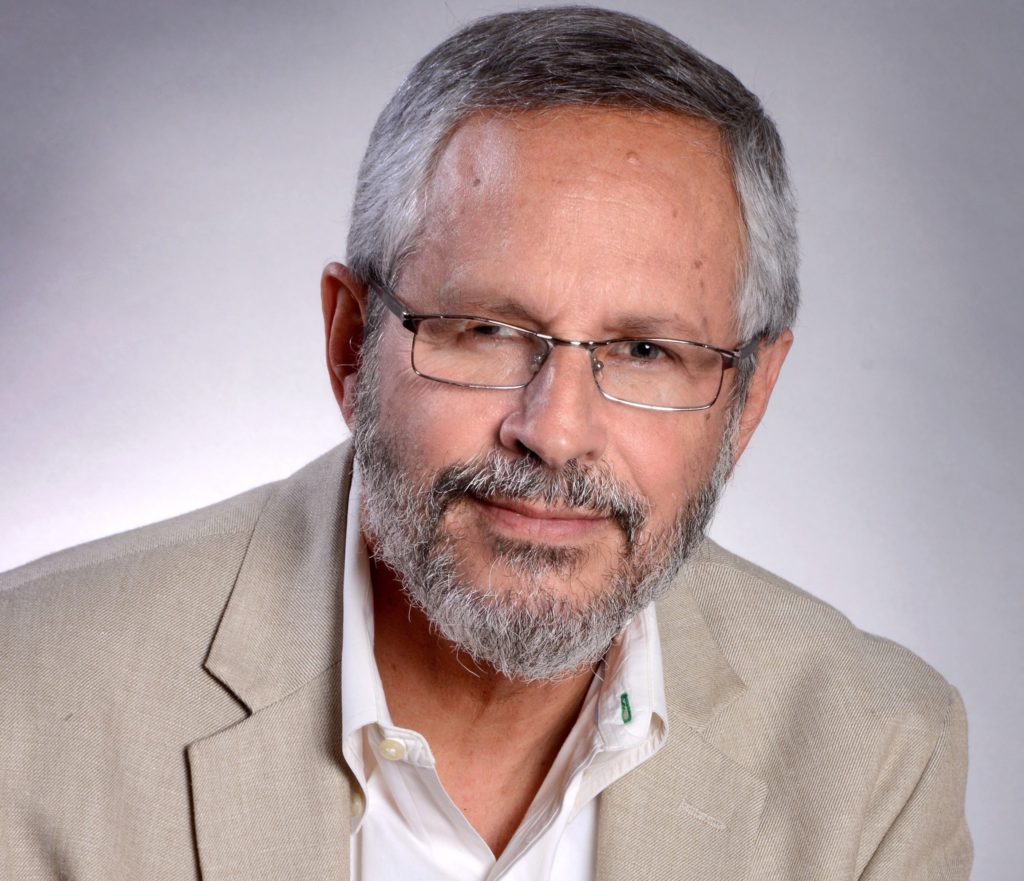
Physicians Should Lead on Healthcare Reform

By KEN TERRY

(This is the first in a series of excerpts from Terry’s new book, Physician-Led Healthcare Reform: a New Approach to Medicare for All, published by the American Association for Physician Leadership.)

Even before COVID-19, healthcare reform seemed to be stuck between a rock and a hard place, but there is a rational way forward. This approach, which I call “physician-led healthcare reform,” would engage doctors in building a healthcare system that was safe, effective, patient-centered, timely, efficient, and equitable, to use the Institute of Medicine’s set of foundational goals in its landmark book, Crossing the Quality Chasm: a New Health System for the 21st Century.Primary care physicians, rather than hospitals, would be in charge of the system, and they’d work closely with specialists and other healthcare professionals to produce the best patient outcomes at the lowest cost.

It would take a decade or more to restructure the healthcare system so that this goal could be achieved. Similarly, the transition to a single-payer insurance system needs to be accomplished gradually—although the pandemic might accelerate that timetable. Most people are not yet ready to abandon employer-sponsored insurance, and there’s still a lot of distrust of the government. Providers are more likely to accept changes in how they’re paid over time than all of a sudden. Additional benefits can also be brought online slowly. Ideally, we could transform healthcare financing over a 10-year period while rebuilding the care delivery system at the same time.

That is why implementing Medicare for America—a reform plan devised by the Center for American Progress and embodied in a current House bill–makes more sense than going directly to Medicare for All: it changes the system incrementally while achieving universal coverage fairly quickly. Medicare for America would do this by enrolling the uninsured, people who purchase individual insurance, and those now in Medicare, Medicaid, and the Children’s Health Insurance Program (CHIP). People would also be enrolled automatically at birth. Companies could enroll their employees in Medicare for America, and employees could opt out of employer-sponsored plans and enroll in the public plan.

Continue reading…

Catalyst @ Health 2.0 Launches Rapid Response Open Call with Grapevine Health

SPONSORED POST

By CATALYST @ HEALTH 2.0

Attention digital health innovators! Do you have innovative text message-based health tech solutions that can disseminate health-focused video content? Apply to the Grapevine Health Rapid Response Open Call! 

As the COVID-19 pandemic continues, the importance of health literacy and communication is more apparent than ever. Catalyst @ Health 2.0 is proud to host a Rapid Response Open Call (RROC) in collaboration with Grapevine Health. Five semi-finalists will receive $1k each and will have the opportunity to demo their technology. A grand prize winner will receive $5k and the opportunity to collaborate with Grapevine Health! 

Do you have a solution that can fit this need? Apply HERE today! Applications close 8/27.

Continue reading…

THCB Gang Episode 22, 8/20

Episode 22 of “The THCB Gang” was live-streamed on Thursday, August 20th! Watch it below.

Joining Matthew Holt (@boltyboy) today are some of our regulars: writer Kim Bellard (@kimbbellard), patient safety expert Michael Millenson (MLMillenson), MD & hospital system exec Rajesh Aggarwal (@docaggarwal), data privacy expert Deven McGraw (@healthprivacy), and Casey Quinlan (@MightyCasey). The conversation revolved around the responsibilities of the CDC & HHS, why the data hasn’t been shared properly around COVID19 transmission, and why payers & providers are cautiously innovating health care.

If you’d rather listen to the episode, the audio is preserved as a weekly podcast available on our iTunes & Spotify channels — Zoya Khan

THCB’s Bookclub, August 2020 – UnHealthcare: A Manifesto for Health Assurance

By JESSICA DAMASSA & MATTHEW HOLT

The THCB Book Club is a discussion with leading health care authors, which will be released on the third Wednesday of every month. And this is the first one!

We kicked off with the new book from Hemant Teneja (VC at General Catalyst who has been writing many big checks lately) and Stephen Klasko (CEO at Jefferson Health System and one of the most unusual hospital system bosses in America). Their book is called UnHealthcare: A Manifesto for Health Assurance which is a how-to for creating a platform for a revolutionary future for health care. You can go buy the book here (eVersion only $6!) It’s an easy read (about 130 pages on your iPad “Books” app).

UnHealthcare is about a new concept called Health assurance– which Tenaja says is “an emerging category of consumer-centric, data-driven healthcare services that are designed to bend the cost curve of care and help us stay well.”

Sitting in on the interview because we can’t get rid of him was Glen Tullman from Livongo (Just kidding, Glen!). He weighed in on how this connects with his new idea of Consumer Directed Virtual Care and the Teladoc-Livongo merger.

This was a great discussion. We had them explain the concept, and pushed them pretty hard on how realistic it was! And you can see it in the video below (and the podcast version will be in our iTunes & Spotify channels very soon)

In September the THCB BookClub will feature Jane Metcalfe with her 2020 book NEO.LIFE

Health in 2 Point 00, Episode 144 | Magical Forests, PsychCentral’s History, & More Funding Rounds

On Episode 144 of Health in 2 Point 00, Matthew has gingerly emerged from his office and gone into a Magical Forest! Jess asks me about Healthline media acquiring PsychCentral, the first-ever online psychiatry support group and I explain the history of how it has been passed around from Corporates to PE firms, Bridge Connector getting 25.5M for its interoperability platform, Cecelia Health raising $13M for its chronic condition management service, and Reify closing $30M to help pharma companies run clinical trials from home. Also, we had our first book club discussion with authors Hemant Teneja (VC at General Catalyst) & Stephen Klasko (CEO at Jefferson Health System) on their book “UnHealthcare: A Manifesto for Health Assurance”. Glen Tullman also made a special guest appearance during the discussion. The episode will be released soon!Matthew Holt

Subscribe To Health in 2 Point 00’s Channel

Matthew Holt on Twitter

Jessica DaMassa on Twitter

An Epic Fight for the Metaverse

By KIM BELLARD

 You might have missed it amongst all the headlines about the U.S.P.S., the 2020 elections, and, of course, that little thing we call the pandemic, but Fortnite got kicked off Apple’s App Store (and subsequently Google Play).

I’m not a gamer, but I am fascinated by gaming, because, as Steven Johnson put it, “The Future is where people are having the most fun.” Tim Sweeney, the founder and CEO of Epic Games, Inc., which makes Fortnite, seems to be having a lot of fun. And he thinks the future is the Metaverse.

Healthcare, take note.

The tech giants were reacting to Epic allowing “permanent discounts” on developer fees for in-game purchases made directly, rather than going through Apple or Google. Developers thus avoid the 30% commission charged in those Stores. Mr. Sweeney has been railing about the commission level for some time, leading to the recent decision.

Apple tried to justify its action:

Today, Epic Games took the unfortunate step of violating the App Store guidelines that are applied equally to every developer and designed to keep the store safe for our users. As a result their Fortnite app has been removed from the store. Epic enabled a feature in its app which was not reviewed or approved by Apple, and they did so with the express intent of violating the App Store guidelines regarding in-app payments that apply to every developer who sells digital goods or services.

Continue reading…

Health in 2 Point 00, Episode 143 | Lumeon, Nurx, Thirty Madison, & More

On Episode 143 of Health in 2 Point 00, we have all the alphabets in the raising series represented ;)! Jess asks me about Lumeon raising a $30M Series D for their care orchestration centers, Nurx raising a $22M Series C to develop out its online pharmacy presence, Thirty Madison getting $47M and Johnson & Johnson is an investor this round, Bodyport closing an $11.2 M Series A for their weighing scale platform that can detect early cardiovascular disease, and Kumanu raising a $3M Series A to grow out its platform that helps people figure out their lives’ purpose.

Be sure to check out our talk from the 7 competitor CEOs to Teledoc & Livongo who weigh in about the $19B merger. If you want to join our book club, we are reading UnHealthcare: A Manifesto for Health Assurance, which is a how-to for creating a platform for a revolutionary future for healthcare, by Hemant Teneja (VC at General Catalyst) and Stephen Klasko (CEO at Jefferson Health System). We will have a video on our discussion with the authors which will be published on the 3rd Wednesday of every month! —Matthew Holt

Subscribe To Health in 2 Point 00’s

Matthew Holt on Twitter

Jessica DaMassa on Twitter

Crossover Health: The Amazon Deal, Primary Care & The Rise of the ‘Health Activist’ Employer

By JESSICA DaMASSA, WTF HEALTH

“Next-gen” healthcare might just be getting its start in primary care. So says Crossover Health’s CEO, Scott Shreeve, who laughingly channels Justin Timberlake and says he’s “bringing sexy back” to it too. With Walmart launching its own Healthcare Super Centers, Walgreens partnering with VillageMD in a $1-billion-dollar three-year deal, and some soaring post-IPO stock prices for OneMedical and Oak Street Health — it appears he’s onto something. And, hopefully, it’s something big that’s borne from Crossover’s recent partnership deal with Amazon. Will this be the tech giant’s next foray into healthcare? We’ve got the analysis on Amazon, Scott’s insider insights on what’s next for the primary care market, AND some phenomenal perspective on the “rise of the ‘Health Activist Employer’” as healthcare’s “most innovative payer.”

Health Insurers Ride High for Now, But Watch What’s Coming Next

By KEN TERRY

In the strangest healthcare business story of 2020, the major health insurance companies are thriving despite—or because of—the pandemic. As the second quarter reports of United, Anthem, Cigna and other insurers reveal, their COVID-19-related costs were outweighed by the sharp drop in claims for other healthcare services.

As a result, the second quarter operating gain for Anthem, one of the largest national carriers, jumped 65% from the prior-year period, while the portion of its premiums spent on member benefits dropped to 78%. The earnings of UnitedHealth, similarly, vaulted 98% as the percentage of its premiums spent on health care fell to 70.3%. Such a low “medical loss ratio” has probably not been seen since the 1990s.

At the same time, the big insurers’ membership has been rising, but not among workers covered by employer-sponsored plans. Commercial insurance members served by United, for example, fell by 270,000 to 26.8 million, following a drop of 720,000 in Q1. In contrast, the number of people in United’s Medicaid managed care plans rose by 330,000.

These trends track with the short-time fallout of the pandemic. Families USA reported that 5.4 million workers who lost their jobs from February to May also lost their health insurance. Another study predicted that by the end of 2020, 10.1 million people will lose employer-based insurance tied to someone in their household.

Continue reading…
assetto corsa mods