Categories

Tag: FDA

Let Them Eat Cupcakes

Can the FDA ban cupcakes?

While this may seem like a silly question, the Center for Science in the Public Interest (“CSPI”) has filed a petition with the FDA urging the agency to regulate the amount of sugar (including high fructose corn syrup) in soft drinks. According to the executive director of CSPI, sugar is a “slow-acting but ruthlessly efficient bioweapon” that causes “obesity, diabetes, and heart disease.”

If soft drinks are a problem, surely cupcakes are too. A twelve-ounce can of Coca-Cola contains 39 grams of sugar. A seasonally-appropriate red velvet cupcake from Sprinkles contains 45 grams of sugar—and who can eat just one? National cupcake consumption increased 52% between 2010 and 2011, and U.S. consumers ate over 770 million cupcakes last year. Sugary soft drink consumption, on the other hand, is down 23% since 1998 and 37% since 2000.

While the FDA can’t regulate sugar as a bioweapon, it probably could regulate sugar as a food additive.

Under the Food, Drug, and Cosmetic Act, a food additive is “any substance the intended use of which results or may reasonably be expected to result—directly or indirectly—in its becoming a component or otherwise affecting the characteristics of any food.” This broad definition would include sugar. The FDA does not, however, regulate food additives that are “generally recognized as safe” (“GRAS”). Presumably the FDA considers sugar to be GRAS—for now. Continue reading…

Tobacco Companies Must Punch Selves in Face, Implement Court Orders

The Washington Post covers a new order by DC district court judge Gladys Kessler, arising out of an old RICO case brought by the federal government, requiring that the tobacco companies publish advertisements to confess publicly that they previously lied about the safety of smoking and manipulated cigarettes to make them more addictive.  I have pulled the district court order and posted it, along with this appendix.  The order provides the exact language of the mandated advertisements, but no analysis.  Below the fold, I trace the convoluted path this case and a related case have taken through the compelled speech doctrine around the First Amendment, all thanks to a single judge on the Court of Appeals.

A. Adverse Health Effects of Smoking

A Federal Court has ruled that the Defendant tobacco companies deliberately deceived the American public about the health effects of smoking, and has ordered those companies to make this statement. Here is the truth:

• Smoking kills, on average, 1200 Americans. Everyday.
• More people die every year from smoking than from murder, AIDS, suicide, drugs, car crashes, and alcohol, combined.
• Smoking causes heart disease, emphysema, acutemyeloid leukemia, and cancer of the mouth, esophagus, larynx, lung, stomach, kidney, bladder,and pancreas.
• Smoking also causes reduced fertility, low birthweight in newborns, and cancer of the cervix and uterus.

Continue reading…

A Coming Storm: FDA Regulation of Mobile Medical Applications

I recently had the great fortune of attending Health 2.0 in San Francisco. The conference was abuzz with new medical technologies that are harnessing the power of innovation to solve healthcare problems including many new mobile medical application companies showcasing their potential. As I walked and talked around the exhibit floor, one thing caught my ear, or I should say one thing didn’t catch my ear. Among the chatter about these products, the concern about FDA regulation of this product segment, or even FDA regulation in general was noticeably absent. While many of the application developers are well aware of potential FDA involvement, most would be hard-pressed to outline the impact this would have on their companies and products.

Being labeled a medical device, which is the direction the FDA is leaning, could have a significant impact on business model organization, top-line revenue, and product deployment. For unprepared start-ups, FDA regulation could signal an end for their company. This is in stark contrast to well informed developers who are preparing themselves for the change and would most likely be able to leverage these regulations to their advantage.

Continue reading…

The New Bioterrorism? The Hacked Medical Device

A time-and-technology challenged FDA, proliferation of software-controlled medical devices in and outside of hospitals, and growth of hackers have resulted in medical technology that’s riddled with malware. Furthermore, lack of security built into the devices makes them ripe for hacking and malfeasance.

Scenario: a famous figure (say, a politician with an implantable defibrillator or young rock star with an insulin pump) becomes targeted by a hacker, who industriously virtually works his way into the ICD’s software and delivers the man a shock so strong it’s akin to electrocution.

Got the picture?

Welcome to the dark side of health IT and connected health. Without strong and consistently adopted security technology and policies, this scenario isn’t a wild card: it’s in the realm of possibility. This is not new-news: back in 2008, a research team figured out how to program a common pacemaker-defibrillator to transmit a “deadly 830-volt jolt,” according to Barnaby Jack, a security expert.

Continue reading…

Rethinking the Provider Certification Game

Quality is the new watchword in healthcare; it’s what we seek – and increasingly, what we try to measure.  Medications, devices, care delivery, hospital services – all are now scrutinized as we seek to gauge their benefit, and justify their cost.

The idea of using metrics to evaluate quality make sense, but only if we can trust the metrics themselves.  Otherwise, we risk becoming party to an updated version of craniometry, systematized false-precision that focuses on easily-measurable parameters (such as head circumference) that may not represent meaningful proxies for the assessments we’re really after (i.e. intelligence).

The good news is that the science of testing, of developing evaluation instruments, has improved over time.  We’re now better able to recognize the qualities and properties of good tests – and to identify where they’re likely to fall short.

We’re also getting more comfortable with demanding robust evaluation instruments.  For example, the FDA’s approach to patient-reported outcomes places exceptional (and appropriate) emphasis on the assessment tool chosen, and requires that it demonstrates the appropriate properties before relying on its results.

Unfortunately, one critically important area within our healthcare system that seems to have escaped such careful review is the way the competence of care providers is typically assessed and certified.

Whether you are an X-ray technician, a physical therapist, a registered nurse, or a transplant surgeon, you are required to pass through a gauntlet of costly certification exams.  These tests, already significant, are assuming an even greater importance as the healthcare system increasingly looks to them as proxies for quality.  Certification can be required for employment and for admission privileges, and frequently impacts the reimbursement rate for healthcare providers.

All this makes complete sense – provided the certification tests themselves are sound.

Unfortunately, the world of healthcare worker certification remains a bit like the wild west, as medical organizations and professional societies approach certification testing with profoundly different degrees of rigor — and generally little-to-no transparency.

Continue reading…

Medical Apps: The Next Generation

Doctors of my generation have experienced dramatic changes in the way we access the information we need to care for patients.

As a medical student 15 years ago, my “peripheral brain” consisted of fat textbooks sitting on office bookshelves or smaller, spiral-bound references stuffed into the bulging pockets of my lab coat. As a doctor-in-training, I replaced those bulky references with programs loaded onto PDAs. Today, smartphone apps allow health professionals at all levels to access the most up-to-date medical resources such as drug references, disease-risk calculators, and clinical guidelines—anytime, anywhere.

Apps have several advantages over traditional medical texts. First, the information is always current, whereas many textbooks are already dated by the time they hit shelves. If I have a question, I can look up the answer on my smartphone without leaving my patient’s side. And unlike textbook chapters, many medical apps have interactive features that help doctors choose appropriate screening tests for patients, recognize when immunizations are due, or calculate a patient’s risk of developing heart problems.

Lastly, apps can enable remote monitoring of high-risk patients and reduce the need for office visits. In a small study published in PLoS ONE, for example, researchers found that patients hospitalized for heart vessel blockages were able to complete “supervised” rehabilitation exercise sessions in their homes with a portable heart monitor and GPS receiver that transmitted real-time data to doctors via smartphone.

Continue reading…

Why the Electronic Medical Record Needs to be Viewed as a Medical Device

In our rush to establish a national electronic medical record (EMR) system as part of the American Recovery and Reinvestment Act of 2009, powerful silos of independent EMR systems have sprung up nationwide.

While most systems are being developed responsibly, like the Wild, Wild West, many have been developed without an objective eye toward quality and the potential  harm they may be causing our patients.

As most readers of this blog are aware, since 2005 the medical device industry in which I work has had widely publicized instances of patient deaths splashed all over the New York Times and other mainstream media outlets from defibrillator malfunctions that resulted in a just a few patient deaths.

The backlash in response to these deaths was significant: device registries were developed, software improvements to devices created, and billions of dollars in legal fees and damages paid to patients and their families on the path to improvement.  In addition, we also learned about the limits of corporate responsibility for these deaths thanks to legal precedent established by the Reigel vs. Medtronic case.

Continue reading…

Obesity: Global Public Health Challenge or Investment Opportunity?

Worried about the potential personal and economic costs of obesity?  Never mind.  It’s time to view obesity as a business opportunity.

As the press release for a new research report from Bank of America Merrill Lynch, Globesity—The Global Fight Against Obesity, points out:

“Increasing efforts to tackle obesity over the coming decades will form an important new investment theme for fund managers…Global obesity is a mega-investment theme for the next 25 years and beyond…The report…identifies that efforts to reduce obesity is a “megatrend” with a shelf-life of 25 to 50 years…BofA Merrill Lynch analysts across several sectors have collaborated to identify the sectors and companies developing long-term solutions.”

Given the worldwide increase in obesity, its high prospective costs, and the ever-present threat of government regulation, the report identifies more than 50 global stocks that provide investment opportunities for fighting “globesity.”  These fall into four categories:

  • Pharmaceuticals and Health Care: companies taking advantage of the FDA’s increased support for obesity drug development; tackling related medical conditions and needs including diabetes, kidney failure, hip and knee implants; making equipment such as patient lifts, bigger beds and wider ambulance doors.
  • Food: companies accessing the $663 billion “health and wellness” market and reformulating portfolios to respond to increasing pressure such as “fat taxes” to reduce sugar and fat levels.

Continue reading…

How the iPhone Might Disrupt The Medical Device Industry

Doctors wanting to determine a patient’s atrial fibrillation burden have a myriad of technologies at their disposal: 24-hour Holter monitors, 30-day event monitors that are triggered by an abnormal heart rhythm or by the patient themselves, a 7-14 day patch monitor that records every heart beat and is later processed offlineto quanitate the arrhythmia, or perhaps an surgically-implanted event recorder that automatically stores extremes of heart rate or the surface ECG when symptoms are felt by the patient. The cost of these devices ranges from the hundreds to thousands of dollars to use.

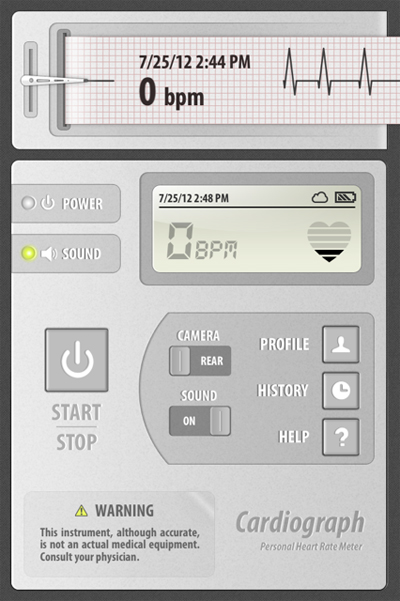
Today in my clinic, a patient brought me her atrial fibrillation burden history on her iPhone and it cost her less than a $10 co-pay.  For $1.99 US, she downloaded the iPhone app Cardiograph to her iPhone.

Every time she feels a symptom, she places her index finder over the camera on the phone, waits a bit, and records a make-believe rhythm strip representing each heart rhythm. With it, comes the date and time.

Continue reading…

Clinical Trials for Beginners

Have you ever wondered about what goes on behind the scenes—how new drugs are magically produced and brought forth? We’ll continue to take the mystery out of clinical research and drug development and to provide background information so that both patients and physicians can make more informed decisions about whether they wish to participate in clinical trials or not.

Why care?

To develop a medicine, from the time of discovery of the chemical until it reaches your drug store, takes an average of 12-15 years and the participation of thousands of volunteers in the process of clinical trials (Fig 1).

Very few people participate in clinical trials—it is even less than 5% for patients with cancer—due to lack of awareness or knowledge about the process. We’ll go into detail about how drugs are developed in later posts.

An inadequate number of volunteers is one of the major bottlenecks in drug development, delaying the product’s release and usefulness to the public. Of course, many people may suffer or even die during this wait, if they have an illness that is not yet otherwise treatable. So if you want new medicines, learn about—and decide if you wish to participate in—the process. I have, as a volunteer subject, researcher, and advocate.Continue reading…

assetto corsa mods