Categories

Category: Uncategorized

Take Your Mom to Work

By KIM BELLARD

If you are a working mom, or married to one, or simply know one, you know that it is tough to balance a job and raising a child even under ideal circumstances.  Even if she has a supportive spouse, chances are that it is the mom who ends up providing the most child care, and whose career it impacts the most.

But, of course, these are not ideal circumstances.  Prior to the pandemic, women had made great strides in the workforce; more women had payroll jobs than men, for example (although they continued to be paid less for them).  Those gains quickly came crashing down once the pandemic hit.  It is believed to be the first time that job and incomes losses have hit women harder than men.  Some are calling our pandemic-driven economic downturn a “shecession” as a result.   

That’s bad enough, but the even bigger danger is that the pandemic could set back women’s careers for a generation. 

recent study by Collins, et. alia confirmed what most might have guessed: in the wake of the pandemic, women are more likely than men to have reduced their work hours to take on additional child care responsibilities due to school/daycare closing — four or five times as much.  

The study found that:

Scaling back work is part of a downward spiral that often leads to labor force exits—especially in cases where employers are inflexible with schedules or penalize employees unable to meet work expectations in the face of growing care demands.  

We are also concerned that many employers will be looking for ways to save money and it may be at the expense of mothers who have already weakened their labor market attachment.

Even more worrying, lead author Caitlyn Collins, a professor at Washington University, says: “Our findings indicate mothers are bearing the brunt of the pandemic and may face long-term employment penalties as a consequence.”  

Continue reading…

The Need for Measuring Clinician-Patient Cost-of-Care Conversations

By MORENIKE AYOVAUGHAN, NELLY GANESAN, EMMY GANOS, and JOSH SEIDMAN

It is no surprise that beyond COVID-19 health risks, the pandemic has also caused significant disruption to the lives of everyone in America. It has caused exacerbating financial pressures and ongoing job losses. An estimated 42 million people have lost their job since March 2020, which has increased the number of uninsured. The loss of coverage has the potential to yield catastrophic healthcare costs for those seeking care during the period.


It is no surprise that beyond COVID-19 health risks, the pandemic has also caused significant disruption to the lives of everyone in America. It has caused exacerbating financial pressures and ongoing job losses. An estimated 42 million people have lost their job since March 2020, which has increased the number of uninsured. The loss of coverage has the potential to yield catastrophic healthcare costs for those seeking care during the period.

While the pandemic has exacerbated coverage challenges, it also highlights gaps that existed long before the outbreak. Prior to COVID-19, average out-of-pocket costs were on the rise with an estimated 24% of Americans spending over $1,000 per year on direct medical care and surprise medical billing. The pandemic-induced economic disruption reinforces the need for physicians and patients to embrace conversations regarding cost in the clinical setting; avoiding such discussion may result in patients foregoing care and not realizing their options.

Patients should be able to rely on their clinicians to help them understand the costs of their care, including losses associated with the time away from work and transportation expenses for visits. Our past research, and the research of others, has demonstrated that these conversations are valued and can be impactful in helping patients understand their options to address concerns upfront. And yet, the concept of having a Cost-of-Care (CoC) conversation is merely optional. These conversations are not typically supported with access to price information, nor are they consistently viewed as a routine part of practice. Cost conversations are not consistently documented, lack standardization, and structure. Furthermore, physicians have not adequately been trained to address CoC conversations with their patients.  

Continue reading…
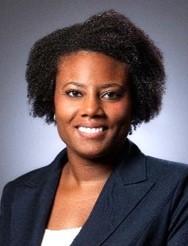
How to Pandemic-Proof Our Health Care Payment System

By AISHA PITTMAN and SETH EDWARDS

The pandemic has focused many policymakers’ attention  on strategies to make the healthcare system better. The obvious answer is one that we know is efficacious, if perhaps not the sexiest: value-based care.

The current healthcare payment system – built around the fee-for-service (FFS) model in which healthcare providers are reimbursed for the quantity versus quality of care – required $175 billion in bailouts and temporary modifications to remain whole during the crisis, a stance that’s unsustainable for both providers and payers.

The Centers for Medicare & Medicaid Services (CMS) admitted as much with its renewed national commitment to value-based care in late June: The movement to value is happening now.

The worth of value-based care models has long been detailed, from more coordinated care to lower costs. In fact, a recent survey conducted by our organization Premier Inc. found that healthcare providers in alternative payment models (APMs) were better positioned to respond to COVID-19 and support reopening plans through the rapid deployment of telehealth, care management and data analytics. These are the types of population health capabilities the industry must focus on spreading – and incenting – in the near future.

Continue reading…

Health in 2 Point 00, Episode 142 | Ginger, Infermedica, Xealth & SOC Telemed

Today on Health in 2 Point 00, Jess and I cover all the deals that got overshadowed by the big news of Teladoc and Livongo’s merger. First up is Ginger, the mental health provider which raised $50 million in a D round bringing their total up to $120 million. Infermedica, an AI enabled symptom checker and triage tool, raised $10.25 million in a series A. Next, Xealth landed a $6 million investment from Cerner and LRVHealth, partnering with Cerner and bringing their digital health prescribing tool to Cerner in addition to its current integration with Epic. Finally SOC Telemed is going public through a “reverse” merger with Healthcare Merger Corp. —Matthew Holt

Redefining Values in American Health Care

By RICHARD HOEHN, MD

Experts claim we could have been better prepared when the COVID-19 pandemic struck in early 2020. With an annual budget of $400-700 million, the Strategic National Stockpile (SNS) is designed to respond to chemical, biological, and other disasters. Its $8 billion inventory included 13,000 ventilators and a limited supply of personal protective equipment, N95 masks, and medical supplies. This left state and local governments scrambling as the COVID-19 pandemic accelerated and the capacity of many hospitals was overwhelmed.

Faced with immediate and visible death and suffering, leaders took drastic steps to contain the virus, “flatten the curve,” and mitigate economic consequences. Trillions of dollars were allocated to recovery and stimulus packages.

This scenario mirrors our general approach to health care: chronic underfunding of public health followed by high costs and loss of life.

While not as shocking as a sudden pandemic, millions of Americans struggle daily with medical and socioeconomic challenges. Our health care system is designed to care for these patients when they have a problem, not to keep them well. This creates a dichotomy where a minority of the population spends most of the health care dollars and little is invested in the remaining majority

Continue reading…

Health in 2 Point 00, Episode 141 | Teladoc Livongo Merger Special

Today, a special Health in 2 Point 00. Jessica DaMassa asks me about the biggest news in public digital health companies ever: this morning’s merger of Teladoc and Livongo. We discuss the deal, the implications for digital health, what’s next for Continuous Clinics, whether our T-Shirts will become a collectors item, and of course what about our book club on August 19! —Matthew Holt

Post Covid Healthcare is Becoming Like Buying from Amazon Instead of Going to the Mall or Reading an eBook Instead of a Paperback

By HANS DUVEFELT, MD

Now that we are seeing patients via telemedicine or even getting reimbursed for handling their issues over the phone, our existing healthcare institutions are more and more starting to look like shopping malls. 

They were once traffic magnets, so large that they created new developments far away from where people lived or worked and big and complex enough that going there became an all day affair for many people. 

What this pandemic has brought us is a shift in our view of where you have to be in order to get things done. If you can earn your wage remotely and still buy things online when offices and physical stores are shut down, it seemed logical to try to offer healthcare the same way. And most of us have found that it works surprisingly well. 

The analogy with Amazon runs deeper than that. Amazon isn’t just one megaprovider, but also a funnel for many small merchants who sell their products through Amazon. Consumers take advantage of the convenience of this centralized ordering or point of contact with a vast supply network of almost any product that money can buy. But they only give their credit card number to one central contact. 

I don’t follow business literature enough to know if Jeff Bezos chose the name Amazon partly (yes, I know he went through the dictionary) because of a vision of many small contributories coming together into the second largest river in the world. But that is certainly a visual representation of what his business looks like. And “Amazon” ranks higher in the alphabet and sounds a lot catchier than “The Nile”. 

Enter healthcare: Imagine the trusted brand names of our “industry” but without their traditional complete reliance on bricks and mortar places that patients have to visit. 

Continue reading…

Quality Virtual Care Is Within Reach – But Only If We Act Now

By JULIA HU

Though it will be impossible to overstate the devastation that the COVID-19 pandemic is leaving in its wake, we can also acknowledge that it has pushed humanity to creatively adapt to our new, socially-distanced reality—necessity is the mother of invention, as they say. Telehealth is not a new invention, but the necessity of keeping people physically apart, especially those particularly vulnerable to COVID, has suddenly put virtual health care at the center of our delivery system. 

Patients and providers quickly pivoted to at-home care as in-person visits were limited for safety, and use of telehealth spiked early in the outbreak. One survey of over 500,000 clinicians showed that by April—only about two weeks after the first stay-at-home orders were issued in the U.S.—14 percent of their usual number of pre-pandemic visits were being conducted via telemedicine. For many, that involved using unfamiliar technology and a big shift in procedures for providers. Congress recognized the need to support providers through this transition and allocated $500 million for waiving restrictions on Medicare telehealth coverage as part of the emergency funding bill that passed in March. 

But, as restrictions have begun to lift and hospitals and medical offices are beginning to reopen for non-emergent care, we have seen the use of telemedicine start to taper off. The same 500,000 clinicians were surveyed  in June, revealing that telemedicine was used for only 8 percent of the usual pre-pandemic number of visits. Providing quality, virtual health care won’t be as easy as flipping a switch, but we currently have an unprecedented opportunity to carry forward the best version of virtual care and create a more holistic health care system. As we work toward that goal, there are three components our virtual care system needs in order to be sustainable, feasible, and manageable for both patients and providers. 

Continue reading…

The THCB Book Club!

By JESSICA DAMASSA & MATTHEW HOLT

We are launching a new THCB program! The THCB Book Club (TM) is going to be a discussion with leading health care authors, which will be released on the third Wednesday of every month.

We are kicking off with the new book from Hemant Teneja (VC at General Catalyst who has been writing many big checks lately) and Stephen Klasko (CEO at Jefferson Health System and one of the most unusual hospital system bosses in America). Their book is called UnHealthcare: A Manifesto for Health Assurance which is a how-to for creating a platform for a revolutionary future for healthcare, Taneja said. “Health assurance is an emerging category of consumer-centric, data-driven healthcare services that are designed to bend the cost curve of care and help us stay well.” Sitting in on the interview because we can’t get rid of him we will also have Glen Tullman from Livongo (Just kidding, Glen!). He will weigh in on how this connects with his new idea of Consumer Directed Virtual Care. Matthew may say something about the Continuous Clinic too, and Jessica will keep score of all the crises, Tsunamis, the many ways the health care is broken, and how many zingers Glen & Matthew get in on each other!

We want YOU to read the book in advance and email us questions or comments for us to ask the author(s) before the show. (We record a day or two in advance so please email us or put question in the comments here or on Twitter by the 17th). 

Please go buy the book here (eVersion only $6!)

It should be a lot of fun and very educational! This will be up on THCB on August 19.

In September the author will be Jane Metcalfe with her 2020 book NEO.LIFE

Health in 2 Point 00, Episode 140 | Heal, Lemonaid, CVS & Sema4

Today on Health in 2 Point 00, Jess helps me celebrate my birthday Kylie Jenner-style. On Episode 140, Jess and I discuss Humana investing $100 million in Heal, Lemonaid raising $33 million in a Series B, CVS Caremark announcing 5 new companies in their digital health platform—4 of which are about weight loss, and perplexing health intelligence company Sema4 raising $121 million in a seed round. —Matthew Holt

assetto corsa mods