

 When diagnosed with abdominal mesothelioma, a rare cancer with a blighted future, evolutionary biologist and writer, Stephen Jay Gould, turned his attention to the statistics; specifically, the central tendency of survival with the tumor. The central tendency – mean (average), median and mode – project like skyscrapers in a populated city and are the summary statements of a statistical distribution.
The “average” is both meaningful and meaningless. The average utility of average is zero. Consider a gamble – fair coin toss where you get $50 if it lands heads and lose $50 if it lands tails. The average (net) gains of this coin toss, if the coin is thrown hundreds of time, is zero. But no one gets nothing – you either get $50 or lose $50. The average is twice wrong – it over estimates for some and under estimates for others. But the average of this gamble has important information. It helps you decide if you could profit from making people play this gamble – you wouldn’t profit unless you charged a small fee to play the gamble.
 Etiology, pathogenesis and translational science beat drums to which modern medicine marches – with escalating cadence. Yes, there is cacophony on occasion and missteps, but we all wait for the next insight to trigger a wave of enthusiasm at the bench and beyond. “Disease” is no longer an elusive monster in the swamp of ignorance; “disease” is prey. It can be defined, parsed, deduced, and sometimes defeated.
 In my personal time away from my role at Deloitte, I am a private pilot and passionate volunteer for a charity that facilitates free air transportation for children and adults with medical conditions who need to get to treatment far from home. In my interactions with these patients I hear how important communication is to their well-being. I also hear how outreach from life sciences companies enables improvements in their lives and puts them back at the center of the health ecosystem.
 If concepts could get awards, then “risk factor” would surely be a Nobel prize winner. Barely over 50 years of age, it enjoys such an important place in medicine that I suspect most of us doctors could hardly imagine practicing without it. Yet, clearly, the concept is not native to our profession nor is its success entirely justified.
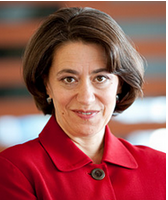 Quality is all the rage in health care these days. It rolls off the presidential tongue and is at the heart of robust targets set by Health and Human Services Secretary Sylvia Burwell. (No less than half of all Medicare payments to be quality based by the end of 2018!)
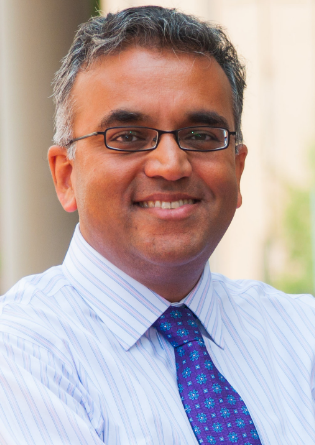 An expert panel convened by the World Health Organization just declared that there is no scientific basis for canceling, postponing or moving the 28th Summer Olympics in Rio de Janeiro in August or the Paralympics in September because of the Zika outbreak. While many of us experts have expressed concerns about how the WHO handled Ebola and other outbreaks, this time the WHO got it right.
 In the United States, we have historically invested far more in treating sickness than we do in maintaining health. The result of this imbalance is not only poorer health, but more money spent in institutions, hospitals, and nursing homes.






