In spite of all the talk these days about health care teams and in spite of more and more physicians working for bigger and bigger healthcare organizations, we are becoming more and more isolated from our colleagues and our support staffs.
Computer work, which is taking more and more time as EMRs get more and more complex, is a lonely activity. We are not just encouraged but pretty much forced to communicate with our nurses and medical assistants through computer messaging. This may provide more evidence of who said or did what at what point in time, but it is both inefficient and dehumanizing.
Why do people who work right next to each other have to communicate electronically? Why can’t my nurse simply ask me a question and then document “Patient asked whether to take aspirin or Tylenol and I told her that Dr. Duvefelt advised up to 2,500 mg acetaminophen/24 hours”. It would be a lot less work for me, even if I have to sign off on the darn thing.
For better and for worse, our healthcare system is built around physicians. For the most part, they’re the ones we rely on for diagnoses, for prescribing medications, and for delivering care. And, often, simply for being a comfort.
Unfortunately, in 2023, they’re still “only” human, and they’re not perfect. Despite best intentions, they sometimes miss things, make mistakes, or order ineffective or outdated care. The order of magnitude for these mistakes is not clear; one recent study estimated 800,000 Americans suffering permanent disability or death annually. Whatever the real number, we’d all agree it is too high.
Many, myself included, have high hopes that appropriate use of artificial intelligence (AI) might be able to help with this problem. Two new studies offer some considerations for what it might take.
The first study, from a team of researchers led by Damon Centola, a professor at the Annenberg School for Communication at the University of Pennsylvania, looked at the impact of “structured information–sharing networks among clinicians.” In other words, getting feedback from colleagues (which, of course, was once the premise behind group practices).
Long story short, they work, reducing diagnostic errors and improving treatment recommendations.
Filling in the holes of recent stories in the New York Times, and Propublica on the outpatient care of patients with peripheral arterial disease
Most have gotten used to egregiously bad coverage of current events that fills the pages of today’s New York Times, but even by their now very low standards a recent telling of a story about peripheral artery disease was very bad.
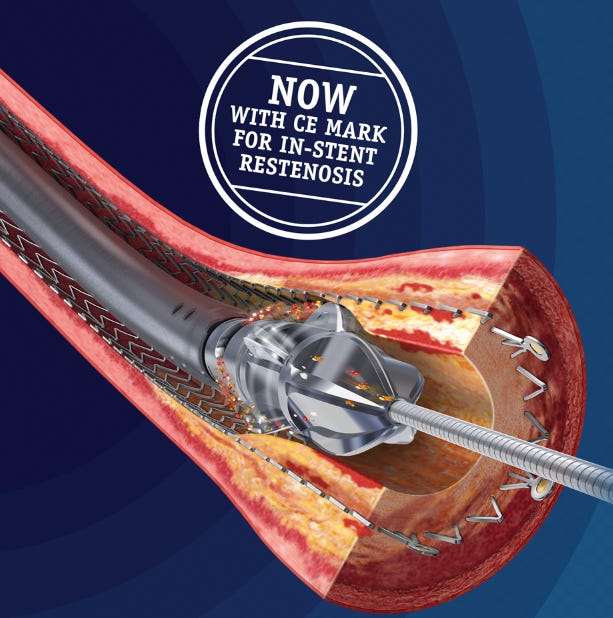
The scintillating allegation by Katie Thomas, Jessica Silver-Greenberg and Robert Gebeloff is that “medical device makers are bankrolling doctors to perform artery clearing procedures that can lead to amputations”.
The reporters go on to tell a story about patient Kelly Hanna, who presented to a physician, Dr. Jihad Mustapha, in a private clinic with a festering wound. After being diagnosed with a poor flow to her leg that was likely contributing to the wound, Dr. Mustapha performed multiple procedures on her leg to improve blood flow in an attempt to ward off a future amputation. The procedures were unsuccessful, and Ms. Hanna ultimately did need an amputation.
Conclusion: For every hour physicians provide direct clinical face time to patients, nearly 2 additional hours is spent on EHR and desk work within the clinic day. Outside office hours, physicians spend another 1 to 2 hours of personal time each night doing additional computer and other clerical work. (Sinsky et al, 2016)
If we only had the tools and the administrative support that just about every one of us has been asking for, there wouldn’t be a doctor shortage.
The quote here is from 7 years ago and things have gotten even worse since then.
Major league baseball players don’t handle the scoring and the statistics of their games. They just play ball.
Somehow, when the practice of medicine became a corporate and government business, more data was needed in order to measure productivity and quality (or at least compliance with guidelines). And somehow, for reasons I don’t completely understand and most definitely don’t agree with, the doctors were asked not only to continue treating our patients, but also to more than double our workload by documenting more things than we ourselves actually needed in order to care for our patients. Even though we were therefore becoming data collectors for research, public health and public policy, we were not given either the tools or the time to make this possible – at least not without shortchanging our patients or burning ourselves out.
We didn’t sign up to do all this, we signed up to care for our patients. And we were given awkward tools to work with that in many ways have made it harder to document and share with our colleagues what our clinical impressions and thinking are.
The All-in podcast is a fairly popular show that features successful silicon valley investors commenting about everything worth commenting on from politics to health. The group has good chemistry and interesting insights that breaks the mold of the usual tribal politics that controls legacy media analysis of current events.
Brad Gerstner, who is actually a guest host for this particular episode starts off by referencing something called Heartflow to evaluate the heart that has been recommended by one of the other hosts: Chamath Palihapitiya. Brad apparently asked his primary care physician about Heartflow and was instead directed to get a calcium scan.
Heartflow is a proprietary technology that purports to evaluate the presence of significant narrowing in the coronary arteries just by doing a heart CT scan. A calcium score is a low-dose CT scan used to identify the presence of calcium in coronary vessels.
The segment ends with a recommendation for everyone over the age of 40 to get some type of heart scan, so I thought it would be worth reviewing some of the main claims.
Question 1. Does Brad need a calcium scan?
Brad notes that his primary care physician told him he was young, fit, and had a low bad cholesterol (LDL) and needed a calcium scan rather than a heart flow scan. The answer to this question and the questions to follow depend on what outcome Brad is looking for. If the goal is to feel happier knowing if he has coronary calcium than the resounding answer is to get the calcium scan. But if the goal is to live longer and healthier, there is nothing to suggest a calcium scan will help. Most cardiologists believe that the lower the LDL, the better cardiovascular outcomes are. So if a calcium scan convinces Brad to NOT lower his LDL further either naturally or with medications, a calcium scan may be detrimental.
We have zero evidence to suggest patients who get calcium scans lower their risk of future mortality.
In the 18th-century, a pre-Google guide offered democratization of medical information
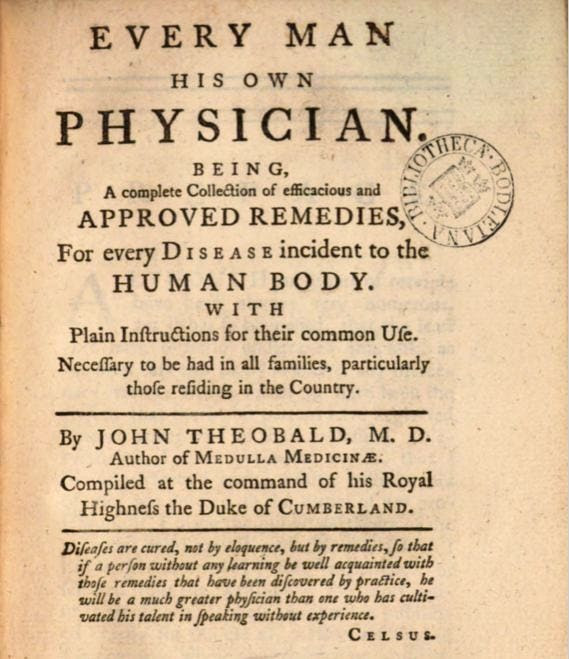
In 1767, as American colonists’ protestations against “taxation without representation” intensified, a Boston publisher reprinted a book by a British doctor seemingly tailor-made for the growing spirit of independence.
Theobald’s fellow physicians no doubt winced at the quotation from the 2nd-century Greek philosopher Celsus featured prominently on the book’s cover page.
“Diseases are cured, not by eloquence,” the quote read, “but by remedies, so that if a person without any learning be well acquainted with those remedies that have been discovered by practice, he will be a much greater physician than one who has cultivated his talent in speaking without experience.”
Translation: You’re better off reading my book than consulting inferior doctors.
To celebrate Americans’ independent spirit, I decided to compare a few of Dr. Theobald’s recommendations to those of his 21st-century equivalent, “Dr. Google.” Like Dr. Google, which receives a mind-boggling 70,000 health care search queries every minute, Dr. Theobald also provides citations for his advice which, he assures readers, is based on “the writings of the most eminent physicians.”
At times, the two advice-givers sync across the centuries. “Colds may be cured by lying much in bed, by drinking plentifully of warm sack whey, with a few drops of spirits of hartshorn in it,” writes Dr. Theobald, citing a “Dr. Cheyne.” Dr. Google’s expert, the Mayo Clinic Staff, proffers much the same prescription: Stay hydrated, perhaps using warm lemon water with honey in it, and try to rest. Personally, I think “sack whey” – sherry plus weak milk and sugar – sounds like more fun.
After a 3 decade career in a solo private practice the healthcare environment shifted
As an employed physician, my institution’s policies hindered my ability to care for my patients
The consequent moral injury left me unwilling to re-engage with the healthcare industry
I retired early from the profession that I loved because the devolution of the healthcare system had made it impossible for me to provide care to my patients in a manner which met my own standards. The resultant “moral injury” left me leary of again becoming involved with our healthcare system in the near future.
My Early Career
Although I had originally planned a career as a physician-scientist, it became apparent toward the end of my training that this was not the best career path for me and I choose to pursue a career in private practice.
My first post-training job was as a physician working in a clinic owned by Blue Cross and Blue Shield (1989-1991.) After two years in this relatively low stress environment it became clear that taking care of young, healthy patients was not much fun nor interesting.
I then joined Dr. LP’s private medical practice where I learned how to run a private practice. It was in this setting that I began to create an electronic medical record program for my practice, ComChart EMR. ComChart evolved into a minor commercial endeavor, it was a hobby that earned me some money, and it connected me to many interesting physicians around the US, some of whom I continue to hear from to this day.
After a couple of years practicing alongside Dr. LP I decided it was time to strike out on my own. I built out a new office and soon thereafter added a nurse practitioner.
A national study from Korea published in the European Heart Journal sheds important new light on complications related to COVID vaccine related myocarditis. While US public health authorities have been convinced from the very beginning about how safe and effective the new vaccines are, researchers in other countries with far smaller budgets have been testing that theory.
It was Israeli researchers that first highlighted the novel mRNA vaccines as potentially causing myocarditis in the Spring of 2021, but it has proven difficult to quantify the risk of severe complications beyond scattered case reports of severe morbidity and mortality. In part, US researchers are hampered by vaccine reporting systems in the US that are passive surveillance systems relying on voluntary reporting of vaccine adverse events. This has the potential of under-reporting adverse events, which was exactly the conclusion of an earlier JAMA analysis on US VAERS vaccine myocarditis cases.
Diving deep into the methods and results of the study
The South Korean approach was to organize a national reporting system under the auspices of the Korean Disease Control and Prevention Agency (KDCA). The KDCA also established a reporting system with a legal obligation for special adverse events including myocarditis and pericarditis after COVID-19 vaccination. To evaluate all reported cases of suspected myocarditis or pericarditis after COVID-19 vaccination, the KDCA organized an “Expert Adjudication Committee on COVID-19 Vaccination Pericarditis/Myocarditis”. The committee comprised 7 experts in cardiology, 1 in infectious disease, 2 in epidemiology, epidemiologic investigators in 16 regional centers, and officials from the KDCA.
Among 44,276,704 subjects vaccinated from 26 February to 31 December 2021, 1533 cases of suspected myocarditis were reported to the KDCA. The committee adopted the myocarditis case definition and classification of the Brighton Collaboration (BC) (see figure below) for the diagnosis and degree of certainty of a Vaccine Related Myocarditis (VRM) diagnosis.
It is hard to open a medical journal in any specialty without seeing an article on burnout. There are statistics, trends, and of course a myriad of causes detailed in these articles. A few even offer some sensible solutions – flexible scheduling, peer support, delegation of clerical work and an increased focus on personal well-being activities are steps in the right direction.
I have previously written that “the absence of burnout does not equal wellness” just as the absence of disease does not imply health. We deserve more than simply the ability to function, we deserve to flourish. This is where a field such as positive psychology, or what many call the science of happiness, can offer some evidence-based guidance.
What has become clear over the past few years is that many people are giving new buzzwords like burnout or moral injury too much credit for their unhappiness. Many of us are not well, either personally or professionally. It’s not as if we are joyful, peaceful and fulfilled at home and then suddenly begin to suffer only when we go to work.
Our jobs, colleagues or even the draconian healthcare system are not to blame for our discontent. Many of us may feel burned out but it has little to do with our career choice. Not many of us are fulfilled. Not many of us are content. Not many of us are free of stress and anxiety. Most of us seem to be restless and want to feel better all the time. So we blame our jobs, our bank account, people around us, even the world, and call it burnout. Burnout, while a significant problem for some people is now conveniently being used by many to shift the blame away from ourselves. We are the problem. But the good new is that we are also the solution. It is our lack of understanding that causes us to feel perpetually discontent and frantically chase happiness in various forms. It can only be understanding that will set us free.
What is it that we have not understood? What are the questions deep within us that we never have the courage to ask?
Why are we not fulfilled? Why are we restless and anxious much of the time? Why do we crave distractions in phones, TV and alcohol?
As you may know I am on the board of the Society for Participatory Medicine (SPM) which is trying to promote a new partnership between patients and the health care system.
On June 16 at 8am-1pm PST SPM is hosting a Creative Learning Exchange in Portland, OR at OHSU. The topic is Advancing Health Equity Through Participatory Medicine and there’ll be patients, clinicians and other leading crucial discussions about how to move health equity forward.
If you are in Portland please come join the meeting and if you can’t get there, it will be broadcast online. (There’s a nominal cost for tickets but no one will be turned away if they can’t afford it) Click here to find out more.–Matthew Holt