Categories

Category: Medical Practice

Why diagnostic errors don’t get any respect and what can be done about it

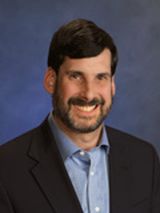
BOB WACHTER

By BOB WACHTER

I gave a keynote yesterday to the first-ever meeting on "Diagnostic Error in Medicine." I hope the confab helps put diagnostic errors on the safety map. But, as Ricky Ricardo said, the experts and advocates in the audience have some ‘splainin’ to do.

I date the origin of the patient safety field to the publication of the IOM report on medical errors (To Err is Human). It is the field’s equivalent of the Birth of Christ (as in, there was before, and there is after). But from the get-go, diagnostic errors were the ugly stepchild of the safety family. I searched the text of To Err… and found that the term “medication errors” is mentioned 70 times, while “diagnostic errors” appears twice. This is interesting because diagnostic errors comprised 17 percent of the adverse events in the Harvard Medical Practice Study (from which the IOM’s 44,000 to 98,000 deaths numbers were drawn), and account for twice as many malpractice suits as medication errors.

What I call “Diagnostic Errors Exceptionalism” has persisted ever since. Think about the patient safety issues that are on today’s public radar screen (i.e., they are subject to public reporting, included in “no pay for errors,” examined during Joint Commission visits, etc.). It’s a pretty diverse group, including medication mistakes, falls, decubitus ulcers, wrong-site surgery, and hospital-acquired infections. But not diagnostic errors. Funny, huh?

There are lots of reasons for this. Here are just a few:
Continue reading…

E-patients can and will revolutionize health care

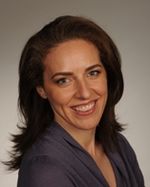
Susannah Fox

By SUSANNAH FOX

By taking advantage of new online health tools, e-patients and health professionals now have the ability to create equal partnerships that enable individuals to be equipped, enabled, empowered and engaged in their health and health care decisions.

That was the vision of Dr. Tom Ferguson, who coined the term e-patients and launched e-patients.net in 2006. Ferguson intended to upload his book-length overview of the online health revolution, “E-patients: How They Can Help Us Heal Health Care.” But unfortunately, he died a month later 2006, after losing a fifteen-year battle with multiple myeloma.

Following Ferguson’s death, a group of his friends and colleagues completed the paper and adopted the blog to carry on his work, as well as our own. Each blogger brings a different perspective when commenting on Health 2.0 developments.

We think the “E-patients” paper remains relevant in 2008 (PDF, wiki) and we hope to extend the findings into the future. To that end, we are also working on the creation of the peer-reviewed Journal of Participatory Medicine with the help of Sarah Greene of the New York Times; Bruce Shriver, PhD, of the Liddy Shriver Sarcoma Initiative; and George Lundberg, MD, of Medscape. We welcome your comments and suggestions.

Continue reading…

Analyzing the benefits of PatientsLikeMe social network site

By JOHN GROHOL

Two research papers were published this month on the Health 2.0 Web site, PatientsLikeMe. PatientsLikeMe is arguably the only "real" health social network online today, because it allows patients to share actual data that matters with one another — their personal health data.

(Other supposed health social networks seem more focused on the "social" than the "health," allowing for little integrated data sharing.)

The two research papers provide some interesting data points and insights into the disease process itself and how e-patients are using Web-enabled tools, such as PatientsLikeMe, to improve their own care.

Continue reading…

Real transparency in a socialist nirvana? UK releases hospital death rates

MICHAEL MILLENSON

By MICHAEL MILLENSON

In yet more evidence that the transparency revolution is worldwide and not merely a product of American capitalism, comes news that in the UK death rates for specific types of surgery at NHS hospitals are to be revealed. Can this be happening in the single-payer government morass that we’ve been warned off for years? Michael Millenson, one of America’s leading experts in patient safety and quality, gives us his reaction.

This is mind-boggling, if, alas, short on some crucial detail: Is this based on claims data (high-school-graduate-coded administrative information) or clinical claims? If the former, it is impressive, if the latter, extraordinary. For those who believe in the superiority of American medicine, here are a few observations.

First, he who pays the piper calls the tune. If NHS decides to collect this data, it’s done. One also presumes they don’t need an act of Parliament to do so, thereby avoiding at least some degree of political interference.Second, a leading physician, who actually pioneered releasing clinical data to the public, went on to serve in the Cabinet and continue leading this effort on behalf of the broader public interest. By comparison, our equivalent of a cardiac database, the Society of Thoracic Surgeons database, has strict confidentiality requirements that don’t even allow city-city or state-state comparisons. The exception: a physician can release his own information for marketing purposes.Third, and most interesting, are these seemingly innocuous sentences. “There were initially fears raised that releasing the information would lead to surgeons avoiding difficult cases which could impact their rates. But agreement was reached on a method to take into account the difficulty of cases and mortality rates are released against the number of deaths expected. Sir Bruce has been working with hospital specialists on a way of rolling out a similar scheme across all areas of surgery and medicine to help patients choose where to be treated.”

Continue reading…

Self diagnosis in military health care

MATTHEW HOLT

By MATTHEW HOLT

Given how much cool stuff comes out of the military and eventually has an impact in real life (not to mention the $800 billion a year we’re spending on it), the MC4 (Medical Communications for Combat Casualty Care) is worth a look. Unfortunately the sound on the video dies after a minute, but you’ll get the idea.

It appears that for those of you elitists with an iPhone ADAM is doing something similar (but of course I can’t tell, not having got one, n’all).

Why no e-Prescribing in the ED?

PAUL LEVY

By PAUL LEVY

As previously reported, we have a wonderful system that permits doctors to order prescriptions online, allowing patients to pick them up directly from their preferred pharmacy. Recently a friend of mine went to our BID~Needham Emergency Department, and came home with a script to get her prescription from our pharmacy. So I inquired. Our ever helpful CIO, John Halamka, explained:At present, e-Prescribing in the US is generally limited to primary care practices and specialists who act as primary care givers, i.e. cardiologists, ob/gyns, pulmonary docs, etc. Massachusetts is the number one e-Prescriber in the country, yet only 13% of the routable prescriptions in the state go electronically. BIDMC ambulatory clinics use it, and they are routing 35% electronically, increasing every month.At BIDMC and BID~Needham Emergency Departments, prescriptions are written electronically and printed to tamperproof paper on laser printers in the department. To my knowledge, there are no Emergency Departments in the state using e-Prescribing. Here’s the challenge1. It is currently illegal to e-Prescribe any controlled substance — pain killer, sedative, anti-anxiety drug etc. Approximately 1/3 of all Emergency Department prescriptions are of this type. Recently, the Massachusetts Department of Public Health was able to get a DEA exemption to test one site (Berkshire Medical Center using Meditech software) to e-prescribe controlled substances. The DEA wants this to be a three year pilot , which illustrates how resistant to change the DEA can be. I’ve just signed a letter along with many health care standards and pharmacy leaders urging Congress to get involved and accelerate the ability to e-Prescribe controlled substances as a modification to Medicare Part D standards.

Continue reading…

American Cancer gets hip on uninsurance

MATTHEW HOLT

By MATTHEW HOLT

The American Cancer Society is focusing all its marketing budget this year on the issue of uninsurance and is trying to get the message out in new ways to new audiences. Here’s one using rap/poet MIKE-E.


Going off the Grid – The Rise of ‘Direct Practice’ Medicine

By SCOTT SHREEVE

Grid (grĭd) n.

1. Something resembling a framework of crisscrossed parallel bars, as in rigidity or organization

2. An interconnected system for the distribution of electricity or electromagnetic signals over a wide area, especially a network of high-tension cables and power stations.

3. The interconnected system employed by the Medico-Industrial complex to create a third party payment systems which artificially creates complexity, increases costs, reduces quality, eliminates accountability, and destroys the patient-physican relationship.

As has been documented in this blog, I have been on a health care finance reform journey for the last six months. I was fortunate to be given the opportunity to work with Lemhi Ventures (outstanding group of health care innovators) on looking at new models of health care delivery, financing, and insurance. During the course of that project, I learned a ton about the nature of health insurance, current status of health plans (there has been plenty of interesting news the last six months on them here, here, here, and here), followed closely the presidential debates on health care reform and become familiar with many of the innovators within this space (Prometheus, Alan Goroll, etc)

A new article just published by MDNG Live (the same magazine that featured my cover story “Meet Your New Patients” last month) showcases Jay Parkinson with the catchy title, “Jay Parkinson Sells Out!” Catchy because one thing I don’t think you will be able to call Jay is a sellout. In fact, his “stick to my guns; this is how I believe medicine should be practiced” approach has enamored him to the public media and vicariously documented the groundswell of interest in this “new” health care delivery model. “New” in quotes, of course, because there is nothing new about this model of care delivery – a patient and a physician entering into a trusted relationship wherein the physician provides services that are valued by the consumer who pays cash for them. The millennial update is that physicians can now do this in new ways, with new devices that have become commonplace in every day life except for in the inane and archaic world of health care.

Continue reading…

Malpractice premiums fall in Massachusetts

By THCB STAFF

Bay State doctors paid lower malpractice insurance premiums on average in 2005 than 1990, according to a new Health Affairs study. The study clashes with popular beliefs frequently touted by sponsors of legislative efforts to cap damage awards.

“If you don’t find a crisis here, you’re probably not going to find one nationally,” lead author and Suffolk University Law School scholar Marc Rodwin told The Boston Globe. “Clearly there are some increases in premiums and high premiums for a small percentage of doctors in three specialty groups, but that’s entirely different for the rest of doctors.”

Malpractice settlements in Massachusetts are the fourth highest in the nation, and the American Medical Association lists it as one of 21 states being in a crisis due to high medical malpractice payments and lack of laws to cap settlements, the Globe reports.

The Suffolk study found that most Massachusetts physicians paid an average of $17,810 in premiums in 2005, slightly less than the $17,907 paid in 1990, after adjusting for inflation.

The researchers analyzed data from 1975 to 2005 provided by ProMutual Group, the insurer for about half of the state’s doctors.

Rates for specialists in obstetrics/gynecology, neurological surgery, and orthopedics involving spinal surgery increased on average from $66,220 in 1990 to $95,045 in 2005.

So is malpractice reform a distraction from real health reform debate? Probably, but it is one that must be dealt with to get docs on the side of real health care reform.

Wishing for a smart health search

By DAN KOGAN

Health care consumers today want to use the Web to find information online about doctors, specialists and care in general. And they want it to be useful.

Unfortunately, in the vast health search space based mostly on ad revenue and keyword densities, consumers often spend hours clicking links into dead ends and wind up with no more knowledge for their trouble.

A semantic Web promises more accurate and meaningful results, yet this technology is in its infancy. And most “trusted” health sites do not yet support semantic searches. Moreover, semantic search requires some knowledge of how to construct a search query as opposed to a simple Google-style search.

Continue reading…