Categories

Category: Health Policy

The Czar of Ebola

By JOHN IRVINE

Screen Shot 2014-10-18 at 7.54.38 AM

As every American now knows, Ebola is a horrible African hemorrhagic fever with a high mortality rate and relatively low risk of transmission, except in cases where the disease is transmitted, where the risk of transmission is very high.

The disease has infected 8,000 people in West Africa. WHO officials predict that up to 1.5 million people could be infected by the end of January 2015.

In the United States Two people are known to have been infected with the disease.  Both are nurses.  Their names are Nina Pham an Amber Joy Vinson.

We now have an Ebola Czar to educate us about these facts and others as they become available.

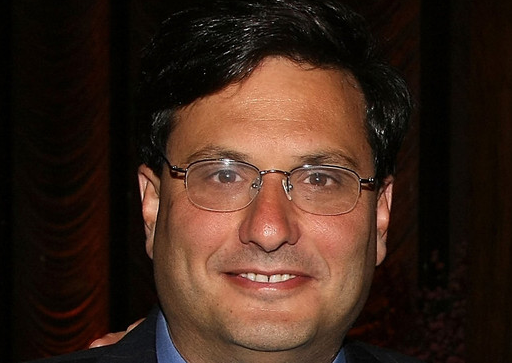
Facing criticism from Congress this week over the handling of the crisis, President Obama named Ron Klain, a former chief of staff for vice president Joe Biden and Washington loyalist.  Critics wanted either somebody with a medical backround or experience handling infectious diseases. Until yesterday, Klain worked for Steve Case.

Technically, of course Klain is not a czar, although almost everybody will call him by that title. His technical title is Federal Ebola Response Coordinator.

“He is smart, aggressive, and levelheaded; exactly the qualities we need in a czar to steer our response to Ebola,” said Sen. Charles Schumer (D., N.Y.).

“By appointing a Democrat political operative as the Ebola czar, it is clear that the president sees Ebola as a political crisis and not a health crisis,” said one critic, Rep. Bill Cassidy (R., La.).

Continue reading…

Income Taxes and Healthcare: The Disconnect

PAUL KECKLEY

By PAUL KECKLEY

After leaving Navigant in February, my pondering of ‘what’s next’ was interrupted by the reality of income taxes due weeks later. By midnight tonight, 240 million Americans will have filed, 53% will have paid something to Uncle Sam and all of us will be puzzled by where it goes and how it’s used.

Our federal individual taxes provide 47% of the federal government’s revenues, or $1.48 trillion for FY15.  Payroll taxes paid jointly by workers and employers make up another 34%, or $1.07 trillion and corporate taxes 11%, or $342 billion.

The federal government will spend more than it receives: for FY2015 just ended, federal receipts from all sources were $3.25 trillion and expenditures were $3.68 trillion billion. And 25% of that went to Medicare and the federal its portion of the CHIP and Medicaid programs.

Healthcare makes up the biggest chunk of Treasury spending followed by Social Security (24%), Defense (16%), and a bucket of expenditures called Discretionary Spending (16%) over which Congress exercises its influence most directly. And when Defense spending for healthcare is added ($51 billion annually), the state portions of Medicaid and CHIP payments are added, and health coverage for federal employees are added, more than 30% of the federal spending goes to healthcare. So one might reason that if individual income taxes are 47% of total federal receipts, income taxes paid for more than $500 billion of the healthcare tab. But that’s not widely known or understood by taxpayers nor is it a complete picture.

Continue reading…

Health in 2 Point 00, Episode 46

Jessica DaMassa asks me about single payer polling high, big VC for women’s pelvic floor digital therapeutic Renovia, 23andme cutting off API access to its data, plus guest mentions for Shafi Ahmed and Glen Tullman. All in 2 minutes (more or less!)–Matthew Holt

The UN’s Extreme Poverty Report: Further Evidence US Healthcare Is Divorced From Reality

DAVID INTROCASO

By DAVID INTROCASO

Skid Row in Los Angeles

In May Philip Alston, the United Nation’s Special Rapporteur on Extreme Poverty, and John Norton Pomeroy Professor of Law at New York University Law School released his, “Report of the Special Rapporteur On Extreme Poverty and Human Rights on His Mission to the United States.”  The 20-page report was based, in part, on Alston’s visits this past December to California, Georgia, Puerto Rico, West Virginia and Washington, D.C.  After reading the report and the response to it, one is again forced to question how legitimate is our concern for the health and well being of the poor, or those disproportionately burdened with disease.

The UN report found over 40 million Americans live in poverty, or upwards of 14% of the population.  Those living in extreme poverty number 18.5 million and 5.3 million live in 3rd World absolute poverty.  Among other related statistics, Alston cites the fact the US has the highest comparable infant mortality rate, 50% higher than the OECD mean, due in part to an African American mortality rate that is 2.3 times higher than that of whites.  The US has the highest youth poverty rate in the OECD.  In 2016, 18% of children were living in poverty comprising 33% of all people in living poverty and 21% of those were homeless.  These facts are explained in part by the report noting between 1995 and 2012 there was a 750% increase in the number of children of single mothers experiencing annual $2-a-day poverty.  US poverty, the report explains is due in part to the continuing growth in income and wealth inequality.  The report found in 2016 the top 1% possessed 39% of the nation’s wealth while the bottom 90% lost 25% of its share of wealth and income.  Since 1980 annual income for the top 1% has risen 205% and for the top .1% by 636% while annual wages for the bottom 50% have stagnated.  The report reminds us the US has approximately 5% of the world’s population but 25% of its billionaires.  The US in sum ranks 18th out of 21 wealthy countries in labor markets, poverty rates, safety nets, wealth inequality and economic mobility.

Continue reading…

Seema Verma Hyperventilates About Tiny Differences Between ACOs Exposed to One-and Two-Sided Risk

By KIP SULLIVAN

There is no meaningful difference between the performance of Medicare ACOs that accept only upside risk (the chance to make money) and ACOs that accept both up- and downside risk (the risk of losing money). But CMS’s administrator, Seema Verma, thinks otherwise. According to her, one-sided ACOs are raising Medicare’s costs while two-sided ACOs are saving “significant” amounts of money. She is so sure of this that she is altering the rules of the Medicare Shared Savings Program (MSSP). Currently only 18 percent of MSSP ACOs accept two-sided risk. That will change next year. According to a proposed rule CMS published on August 9, ACOs will have at most two years to participate in the MSSP exposed to upside risk only, and after that they must accept two-sided risk.

That same day, Verma published an essay on the Health Affairs blog in which she revealed, presumably unwittingly, how little evidence she has to support her decision. The data Verma published in that essay revealed that one-sided ACOs are raising Medicare’s costs by six-one-hundredths of a percent while two-sided ACOs are cutting Medicare’s costs by seven-tenths of a percent. [1] Because these figures do not consider the expenses ACOs incur, and because the algorithms CMS uses to assign patients to ACOs and to calculate ACO expenditure targets and actual performance are so complex, this microscopic difference is meaningless.

“Two beellion dawlers”

Even if the difference is not meaningless – even if two-sided ACOs actually save a few tenths of a percent for Medicare – the impact on Medicare spending will be barely noticeable. Verma assures us, without a hint of embarrassment, that her new rule will cut Medicare spending by $2.2 billion over ten years. “The projected impact of the proposal would be savings to Medicare of $2.2 billion over ten years,” she declares in her blog comment.

Dr. Evil from Austin Powers

I feel like we’re in a scene from the Austin Powers movie where Dr. Evil announces he will hold the world ransom for “one meellion dawlers.” Dr. Evil’s sidekick, Number Two, has to advise him that a million dollars is peanuts. Verma’s estimate of 2.2 “beellion dawlers” is essentially zero percent of the trillions of dollars CMS will spend on Medicare in the next decade.

Continue reading…

Health in 2 Point 00, Episode 45

In this episode a not-too-happy Jessica DaMassa asks me about who’s on the Inc5000 list (Modernizing Medicine, Health Recovery Solutions, Definitive Healthcare, EngagedIN & uBiome), about Klara’s $11m round, and what I’ll be doing in NYC at the DHMP Matchmaking session on Thursday. Why so grumpy Jessica? Maybe it’s because this episode has the same number as our very grumpy President?–Matthew Holt

Health in 2 Point 00, Episode 44

Lotta $$ flowing around health tech services this week. Jessica DaMassa asks me about Alphabet/Google putting $375m into Oscar, Best Buy $800m for GreatCall, no money for med school at NYU & pain for patients in a Netflix movie. All in Health in 2 point 00 minutes!–Matthew Holt

THCB Editorial on Trump’s Assault on the Press

THCB isn’t a traditional newspaper or a traditional press outlet. But we do report on news and policy and we do host opinions from across the political and policy spectrum. Trump’s attacks on the press as “enemies of the people” and purveyors of “fake news” are the exact equivalent of the attacks on the press from totalitarian regimes down the ages. It pains me that we have to use any space or take any of our readers’ time to say this, but a free press is perhaps the most important bastion of democracy and freedom. It’s beyond belief that an American President is saying what Trump says. But his words have real consequences–journalists are regularly killed in Russia, Turkey and many other countries. The threats and language that are the precursors to that violence are starting to happen here too. So today, inspired by the Boston Globe,  THCB is one of thousands of traditional and new format media outlets standing together to say that enough is enough. Trump must stop his rhetoric and decent people must oppose what he says as loudly as they can.

As I’ve always suspected, Health Care = Communism + Frappuccinos

By MATTHEW HOLT

Happy 15th birthday THCB! Yes, 15 years ago today this little blog opened for business and changed my life (and at least impacted a few others). Later this week we are going to celebrate and tell you a bit more about what the next 15 years (really?) of THCB might look like. But for now, I’m rerunning a few of my favorite pieces from the mid-2000s, the golden age of blogging. Today I present “Health Care = Communism + Frappuccinos”, one of my favorites about the relationship between government and private sector originally published here on Jan7, 2005. And like the Medicare one from last week, it sure holds true today. Matthew Holt

Those of you who think I’m an unreconstructed commie will correctly suspect that I’ve always discussed Marxism in my health care talks. You’d be amazed at how many audiences of hospital administrators in the mid-west know nothing about the integral essentials of Marx’s theory of history. And I really enjoy bring the light to them, especially when I manage to reference Mongolia 1919, managed care and Communism in the same bullet point.

While I’ve always been very proud of that one (err.. maybe you have to be there, but you could always hire me to come tell it!), even if I am jesting, there’s a really loose use of the concept of Marxism in this 2005 piece (reprinted in 2009) called A Prescription for Marxism in Foreign Policy from (apparently) libertarian-leaning Harvard professor Kenneth Rogoff. He opens with this little nugget:

“Karl Marx may have suffered a second death at the end of the last century, but look for a spirited comeback in this one. The next great battle between socialism and capitalism will be waged over human health and life expectancy. As rich countries grow richer, and as healthcare technology continues to improve, people will spend ever growing shares of their income on living longer and healthier lives.”

Actually he’s right that there will be a backlash against the (allegedly) market-based capitalism — which has actually been closer to all-out mercantilist booty capitalism — that we’re seen over the last couple of decades. History tends to be reactive and societies go through long periods of reaction to what’s been seen before. In fact the 1980-20?? (10-15?) period of “conservatism” is a reaction to the 1930-1980 period of social corporatism seen in most of the western world. And any period in which the inequality of wealth and income in one society continues to grow at the current rate will eventually invite a reaction–you can ask Louis XVI of France about that.

But when Rogoff is talking about Marxism in health care what he really means is that, because health care by definition will consume more and more of our societal resources, the arguments about the creation and distribution of health care products and services will look more like the arguments seen in the debates about how the government used to allocate resources for “guns versus butter” in the 1950s. These days we are supposed to believe that government blindly accepts letting “the market” rule, even if for vast sways of the economy the government clearly rules the market, which in turn means that those corporations with political influence set the rules and the budgets (quick now, it begins with an H…). Continue reading…

The First Post: What’s Wrong with Medicare?

By MATTHEW HOLT

So The Health Care Blog  (which I like to think of as the first proper health care blog whatever Jacob Reider says about his Docnotes which started in 1999!) is 15 yrs old this month.  This is the start of our little anniversary celebration. We are going to be running some of the earlier classic posts. The very first post on “What’s wrong with Medicare” still rings true- Matthew Holt

For the first post, don’t expect a big essay despite that subject line. It came up because while I was away from the US for the first part of this year, yet another incarnation of NME or HCA — the two original for profit hospital chains of the 1970s that amalgamated into Columbia (now calling itself HCA again!) and Tenet — got caught with its hand in the cookie jar.  You’ll remember NME getting bad press and worse in the 1980s for imposing unwanted inpatient stays on “psychiatric patients”. After that NME morphed into Tenet. Columbia of course said that “health care had never worked like this before” and they were right — to the extent of the upcoding and fraudulent billing going on in its hospitals in the mid 1990s.  I remember one cover of Modern Healthcare in which Tenet’s strategy was encapsulated as “We’re not Columbia”.  Apparently only slogan deep. Last week they settled with the state and feds in California due to massive amounts of upcoding and worse at Redding Medical Center. Several other settlements are pending.

The New York Times’ description (registration req’d) of the level of unnecessary surgery at the Redding Medical Center is quite shocking. But I do recall Alain Enthoven at Stanford telling me in 1991 that one third of carotid andarterectomies in California were found to be counter-indicated after chart review.  Why were they done?  Well everyone — surgeons, hospitals, supplier– made money by doing them. Given the imbalance in knowledge between a patient and a doctor, it’s not too surprising that a very aggressive surgeon can do way more than he or she should.  Medicare is still basically a fee-for-service program with very little oversight, and so this type of thing is going to go on and on. And it has been going on for a while, as this partial list of whistlebower suits shows. Enthoven’s view was that everyone should be put into competing managed care plans which would act as patient (and payer) sponsors, and look after the money better than the government could.  It didn’t happen that way, and the backlash against managed care’s ham-fisted attempts to do so ensured that most health plans gave up on trying to control what providers did.  Medicare never really ever tried, as all its internal review cases were co-opted by providers.  Its only weapons were inquisitions and indictments from the FBI and others well after the fact. Eventually Medicare will have to have more controls, but that will need reform as well as more money. I’ll talk more about this when I get to drug coverage later this week.  Suffice it to say, don’t hold your breath.

Meanwhile, Uwe Reinhardt says in the NY Times article that (despite Wall Street’s desires) hospitals “can’t be a growth industry like some Internet company”. Well maybe not a “growth” sector, Uwe, but look at Yahoo’s stock price in 2000, Tenet’s this year, and tell me that you’re not getting some of that Internet fever coming back!

Matthew Holt is the Founder of THCB.