
Health 2.0’s WinterTech conference on January 13, 2016 at the Julia Morgan Ballroom in San Francisco, CA showcases the latest in digital health investing featuring leaders from Venrock, Canvas Venture Fund, Helix, Doximity, Grand Rounds, Livongo, Omada Health, and more. Learn about the latest financing and market trends of digital health and hear directly from the start-ups creating the biggest waves in the industry.
Cost, Value & Tools
 Like a pro golfer swears by a certain brand of clubs or a marathon runner has a chosen make of shoes, surgeons can form strong loyalties to the tools of their craft. Preferences for these items — such as artificial hips and knees, surgical screws, stents, pacemakers and other implants — develop over time, perhaps out of habit or acquired during their training.
Of course, surgeons should have what they need to be at the top of their trade. But the downside of too much variation is that it can drive up the costs of procedures for hospitals, insurers and even patients. When a hospital carries seven brands of the same type of product instead of one or two, it’s not as likely to get volume discounts. Moreover, if hospitals within a health system negotiate independently of one another, they may pay drastically different prices for the exact same item.
Carrying many brands of a given item may also increase risks for error and patient harm. Staff members need to be trained and competent in a variety of tools; the greater the number of tools, the greater the risk for error.
These physician preference items are no small contributor to health care costs. Around the year 2020, medical supplies are expected to eclipse labor as the biggest expense for hospitals, according to the Association for Healthcare Resource and Materials Management. Higher costs for physician preference items are major drivers of this increase.Continue reading…
Closing the Loop on The Need for Better Telemedicine
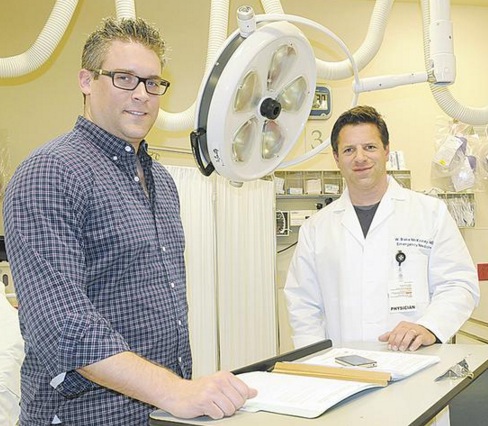
I’ve had the great privilege of presenting our virtual care company, CirrusMD, to potential customers and investors at some of the premier health technology conferences this fall, making the cut for both the Health 2.0 Traction event and this week in the finals of the mHealth Summit and HIMSS Venture+ event. (Breaking: we won the mHealth Summit and HIMSS Venture+ mature startup company award!)
Still, we often get an initial response, “Who needs another telemedicine company with the likes of Teladoc and American Well raising big rounds this year?” One writer even went so far as to share the thought in Forbes on the fragmentation of the digital health landscape after Health 2.0.
I want to take the opportunity to use an analogy to explain why were are different from other telemedicine offerings on the market, and why we are getting such great traction and recognition. In fact, we’re working to “unfragment” the healthcare landscape by closing up some very loose ends that occur in a typical telemedicine experience.
How to Safeguard your Career in Treacherous Healthcare Times
 Dear medical student,
I am honored by the opportunity to offer some advice on how to safeguard your professional career in a treacherous healthcare system.
I will not elaborate on why I think the healthcare system is “treacherous.” I will assume—and even hope—that you have at least some inkling that things are not so rosy in the world of medicine.
I am also not going to give any actual advice. I’m a fan of Socrates, so I believe that it is more constructive to challenge you with pointed questions. The real advice will come to you naturally as you proceed to answer these questions for yourself. I will, however, direct you to some resources to aid you in your reflections.
I have grouped the questions into three categories of knowledge which I am sure are not covered or barely covered in your curriculum: economics, ethics, and philosophy of medicine.
I have found that reflecting on these questions has been essential to give me a sense of control over my career. I hope that you, in turn, will find them intriguing and worth investigating.
One more thing before we proceed. Don’t be overwhelmed by the depth of the questions posed and don’t attempt to answer them today, in a week, or in a year. In many ways, these are questions for a lifetime of professional growth. On the other hand, I believe that the mere task of entertaining these questions in your mind will be helpful to you.
So here we go:
Obamacare is failing? Not so fast.

“See? Obamacare is failing!” according to industry expert C. Little, citing Wolf Report 712A just filed by Boy W. Cried.
What is the hue and cry about this time? United Healthcare is saying it has lost large bales and wads of money on Obamacare exchange plans, and just may give up on them entirely. Anthem and Aetna allow that they are not making very much either. Some new not-for-profit market entrants have gone belly up, and the others are having a hard time.
Before we perform the Last Rites over Obamacare, perhsp we should think for a moment about the hit ratio of the first 711 Wolf Reports from Boy W. Cried and ask a few questions.
First: Do we trust implicitly the numbers that the health plans are giving out in press releases, citing unacceptably high medical loss ratios? Medical loss ratios (MLRs) are self-reported. Yes, there is a certain amount of accountability. The numbers have to square with expenses given on their corporate tax forms and so on, but there is wiggle room in just what is reported and how. If is a reasonable supposition that if you wanted to look for the professionals with the greatest skill in juggling numbers, you would find them working for insurance companies, especially health plans, because the stakes are so high. These numbers people at the top of their game have huge incentives to report a high MLR, so if there is wiggle room, I am sure they will find it.
Beyond that, MLR is reported by state, by market segment (large group, small group, individual), against what portion of a premium is “earned” within that reporting period, and by calendar year rather than any company’s financial year. To say, “Our MLR is X” is to claim that X the correct aggregate number across their entire multi-state system, from all their subsidiaries, appropriately weighted for the size of each region. We don’t have access to those numbers, just to what they are telling us. There are plenty of reasons for them to want to report the highest MLR they can get away with, plenty of reasons to be skeptical of the numbers they are giving out, and plenty of reasons not to base drastic policy changes on such pronouncements.
A Radical Policy Proposal: Go Easy On Older Docs
 Through Dec. 15, federal regulators will accept public comments on the next set of rules that will shape the future of medicine in the transition to a super information highway for
Electronic Health Records (EHRs). For health providers, this is a time to speak out.
One idea: Why not suggest options to give leniency to older doctors struggling with the shift to technology late in their careers?
By the government’s own estimate,in a report on A 10-Year Vision to Achieve an Interoperable Health IT Infrastructure, a fully functioning EHR system, for the cross-sharing of health records among providers, will take until 2024 to materialize.The technology is simply a long way off.
Meanwhile, doctors are reporting data while the infrastructure for sharing it doesn’t exist. Now, for the first time, physicians will be reporting to the federal government on progress toward uniform objectives for the meaningful use of electronic health records. Those who meet requirements will be eligible for incentive payments from Medicare and Medicaid, while those who don’t may face penalties. In addition, audits are expected to begin in 2016.
25 Reasons It is Time to Kill Meaningful Use
Over the last half decade, the Federal Government has successfully convinced a majority of physicians and hospitals to begin using electronic health records by providing $30+ billion dollars in subsidies to those who use an ONC Certified electronic health record (EHR) according to the “Meaningful Use” guidelines.
Although the physician community usually consists of a multiplicity of dogmatic opinions, on the subject of Meaningful Use (MU), there is now near unanimous agreement that the MU train has not succeeded in achieving its intended purpose, which was to improve quality or reduce the cost of healthcare. Earlier this month, 111 medical organizations, led by the AMA, sent a letter to Congress asking that MU Stage 3 be delayed and MU Stage 2 be redesigned.
Dissatisfaction with MU even extends to the Chief HIT Geek, John Halamka, M.D., who has concluded MU “Stage 2 and Stage 3 will not improve (health) outcomes” and has called to “Replace the meaningful use program with alternative payment models and merit-based incentive payments.”
In an attempt to objectively assess the MU program, I put together a list of reasons to help me determine whether the MU program should be continued or terminated:
A Blue Jumps the Wellness Shark
 I know it’s not always about me (my ex-wife was quite clear on that point), but I was deeply saddened to see one of the Blues – specifically, Blue Cross of Tennessee — descending into the fabricated-wellness-outcomes abyss.
By way of background, regular readers of this irregular column and/or www.theysaidwhat.net have seen multitudinous examples of vendors telling lies that any fifth-grader could see through. Perhaps the best two examples on this site are Staywell and Mercer reporting mathematically impossible savings for British Petroleum and Health Fitness Corporation admitting they lied about saving the lives of cancer victims in Nebraska.Continue reading…
The Limitations of Healthcare Science
 Every once in awhile on the wards, one of the attending physicians will approach me and ask me to perform a literature review on a particular clinical question. It might be a question like “What does the evidence say about how long should Bactrim should be given for a UTI?” or “Which is more effective in the management of atrial fibrillation, rate control or rhythm control?” A chill usually runs down my spine, like that feeling one gets when a cop siren wails from behind while one is driving. But thankfully, summarizing what we know about a subject is actually a pretty formulaic exercise, involving a PubMed search followed by an evaluation of the various studies with consideration for generalizability, bias, and confounding.
A more interesting question, in my opinion, is to ask why we do not know what we do not know. To delve into is a question requires some understanding of how research is conducted, and it has implications for how clinicians make decisions with their patients. Below, I hope to provide some insights into the ways in which clinical research is limited. In doing so, I hope to illustrate why some topics we know less about, and why some questions are perhaps even unknowable.Continue reading…
Academic Tossers

When John Milton (Al Pacino) chuckled in the Devil’s Advocate “vanity, definitely my favorite sin,” he may have been referring to academics, not attorneys.
In academia skins are thin, hairs are split, emails are long, humor is self-congratulatory, and everyone cites themselves thinking that they’re Shakespeare. In the land of geniuses pettiness lies next to godliness. Wallace Sayre, a political scientist, once said that academic politics is vicious because the stakes are so low.
The iconoclast, Nassim Taleb, reserves special derision for academics. He took Steven Pinker to task for claiming that violence has progressively declined because of a decline in religion. According to Taleb, Pinker was ignoring fat tails – or the long lull before the storm. Pinker responded by saying that Taleb was being fooled by belligerence.






