Categories

Author Archives

John Irvine

Dear Bernie


Screen Shot 2016-08-08 at 5.49.44 AM

Dear Bernie,

I was one of the gullible liberals who thought and vehemently argued for months on end that you could win the Democratic Primaries fair and square. After all if a rookie billionaire with zero political credibility and a spotted past could win the Republican nomination, why wouldn’t an unimpeachable United States Senator be able to do the same in my party? We both know the answer(s) to that, don’t we, Senator? You chose the high road when all was said and done, but was that the right road? I have no doubt that your entire career and this ill-fated campaign in particular were driven by a desire to lift the exploited, the downtrodden, the poor and the excluded to their rightful place in a government of the people, by the people, for the people. In which case, Senator, you are now squandering the opportunity of a lifetime to change history in a way no one else can, or ever could, or will ever be able to even try.

Continue reading…

Seymour Papert & the Power of (Patient) Engagement

Image source: Alchetron.com

The best healing takes place when the patient or consumer is engaged…

Last Sunday Dr. Seymour Papert passed away at the age of 88. The world lost a great thinker, teacher, and mathematician, but his spirit lives on in many former colleagues and students, including (with gratitude), me. Seymour cut an eccentric figure, with a bushy grey beard, a rumpled tweed jacket, and a thick South African accent. However charmingly quirky, he was the real deal: a visionary, a trailblazer in the world of technology and its application. He spoke softly, but his words quickly cut to the heart of the matter. His ideas about technology and engagement are as critical today as ever.

Seymour was an inventor of the LOGO programming language, a founding faculty member of the MIT Media Lab, and a pioneer in Artificial Intelligence (AI). His ideas continue to shape mainstream culture, from the movie Inside Out (based on a theory  developed by Seymour and his close collaborator, Marvin Minsky) to LEGO bricks. Seymour advised the LEGO company for decades, particularly on their technology-based toys such as Mindstorms.

Continue reading…

Fighting Zika With Network Medicine

Screen Shot 2016-08-05 at 11.47.44 AM

On Monday, the medical establishment and the general public were put on alert by an emergency notification from the Centers for Disease Control and Prevention: Florida’s Miami-Dade County had 14 confirmed cases of the Zika virus, the infectious disease which causes birth defects, and was at risk of continued active transmission.  In the following days, the CDC has advised pregnant women and their partners to avoid Wynwood, a small community north of downtown Miami–the first time it has ever issued a travel alert in the United States for an infectious disease. It has also issued specific Zika guidelines for the Wynwood region for patients who have traveled to the area on or after June 15th.

Moments like these test our healthcare system and reveal its weaknesses.  We’ve spoken often on this blog about healthcare’s connectivity problem: islands of information and data siloes that don’t talk to one another, sometimes to lethal effect. Public health crises demand that health information flow freely and that healthcare providers have the latest clinical guidelines at their fingertips.
Continue reading…

Are CMS’s “Medical Homes” Underfunded or Unfocused?

flying cadeucii“[We are supposed to gather information from patients] prior to the physician going into the room. It doesn’t happen. I’m going to be honest – the reality … is … we also are responsible for telephone triage, walk-in emergencies, diabetic meter teaching, I mean, the list goes on and on.”

That is a quote from an interview with a “care coordinator” for a “medical home” in Minnesota. Minnesota is one of the eight states that participated in the Multi-Payer Advanced Primary Care Practice (MAPCP) Demonstration, which is one of three experiments CMS has conducted testing the “patient-centered medical home” (PCMH) concept. The quote appears in a report  published by the University of Minnesota in February 2016. (p. 75)

In this three-part series, I am addressing the question, What can we learn from the latest report from CMS about the MAPCP demo? The report in question is the second-year evaluation  of the demo which CMS released with zero publicity on May 11, 2016. That evaluation reported that PCMHs have had virtually no effect on the cost or quality of medical care given to Medicare beneficiaries (with the possible exception of Vermont, where PCMHs lowered costs not counting CMS subsidies to PCMHs, but had little effect on quality. [1] Evaluations of the other two CMS “medical home” experiments have reached the same conclusion (see Table 2 of this Kaiser Family Foundation report  and my comment here.

Continue reading…

CMS Launches CPC + Multipayer Regions: Applications Process Opens to Practices

Amid growing consensus that MACRA may delay from its 2017 performance year start, CMS is moving ahead with next year’s launch of the Comprehensive Primary Care Plus (CPC+) program.

Fourteen multi-payer regions and all participating payers were announced August 1, (listed below) and practices can now begin applying through September 15. CMS has launched an application portal for practices.

CPC+ is part of MACRA, as one of six Advanced Alternative Payment Models, but certainly can be undertaken on its own. CMS has a deadline of November 1 to produce a MACRA final rule, but can announce MACRA’s fate anytime prior.

Also newsworthy within CPC+ is CMS’ recent announcement that primary care practices can participate in a CMS MSSP ACO and the CPC+ program at the same time.

Continue reading…

When the American Medical Association Cheered Hillary

Screen Shot 2016-08-03 at 5.09.46 AMAs Hillary Clinton’s motorcade sped toward the Chicago hotel hosting the American Medical Association’s annual meeting in June 1993, the clergyman giving the invocation made a jarring request of God: that the audience not boo the speaker.

Those weren’t his exact words, of course, but the prayer pointedly included reminders about the obligation to be polite to guests, particularly when a national TV audience was watching. An AMA official made a similar plea without involving the Deity.

Continue reading…

How EHRs Can Help Win the War on Prescription Drug Abuse

The United States is facing an alarming rate of opioid and heroin overdoses. The recent death of Prince highlighted yet again a tragic event that is occurring 78 times everyday in the United States according to the Center for Disease Control (CDC). With more deaths from overdoses occurring annually than motor vehicle collisions, President Obama’s administration recently asked Congress for more than $1 billion to fight the opioid epidemic. Fortunately for Obama the issue has garnered strong bipartisan support and what remains is how to responsibly allocate this funding toward a variety of strategies aimed at prevention, treatment and harm reduction.

Continue reading…

Podcast: Why Should Doctors Think Like Engineers?

Screen Shot 2016-08-02 at 7.03.56 AMIn this Carelogistics podcast, THCB editor Sanchayeeta Mitra talks about how thinking like an engineer can eliminate breakdowns in care delivery, the eternal quest to make a trip to the doctor’s office more like the experience of using Amazon.com and why doctors and engineers (and nurses and the IT department) should all love each other. Really.

If you have a story to tell about something innovative you’re doing or a hack you’re using to change medicine or improve care delivery at your hospital or practice – drop us an email to considered for an interview.

Absolution

Screen Shot 2016-08-01 at 6.35.24 PM

Like many cities, Philadelphia is a city defined by its neighborhoods.  I practice in two neighborhoods separated by a few miles but leagues apart in every other way.  One of the hospitals is a tertiary care facility in the heart of Center City – a well to do upcoming part of town – and the other is a small community hospital a few miles South.  The patients at the two locations are quite different, and the mechanism of health care delivery is also starkly different.  Medical care at the Center City campus is provided mostly by employed physicians, and care at the community hospital is provided mostly by private practice physicians.

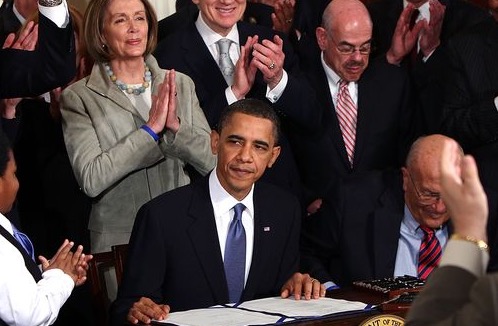
The debate about employed physicians vs. private physicians was one that until very recently was thought to have been settled.  To the nascent Obama administration in 2008 charged with ‘fixing’ health care, it was obvious that health care delivery in the United States was of low quality and needed change.  Enamored by models like the Mayo Clinic, the Cleveland Clinic, and Geisinger the answer clearly was large clinically integrated networks.  And just like that, with little discussion, and no evidence, the Obama administration set into motion legislation in the form of the Affordable Care Act that brought private practice to its knees. Declining reimbursement and increased overhead costs from regulations meant that percentage of private practice physicians went from 57% in 2000 to 37% in 2013.
Continue reading…

Cyberwar, What Is It Good For?

flying cadeuciiSome wars are supposed to last forever. Lyndon B. Johnson started a war on poverty. Richard Nixon kicked off a war on drugs. Ronald Reagan initiated a war on terror. Poverty, drug use and terror are booming. It’s time to launch another good ol’ war. Let’s make it relevant, cool, hip and infinite. So how about a 21st century war on Cybertheft?  This may sound trifle by comparison to those other wars, but wars are rarely about the actual title we bestow upon them. The war on terror evolved into a war on people living under secular dictators, the war on poverty ended up being a war on poor people, and the war on drugs became a war on black people. The war on Cybertheft will be the war on all people everywhere.

The war on Cybertheft has been simmering since the banks decided to do business online. The threat of “identity theft” should have been a monumentally mobilizing battle cry. But it wasn’t. Oh sure, it spawned a bunch of fear inducing exposés and some mildly successful businesses, but all in all, it failed to generate the zombie apocalypse panic it was supposed to trigger. Luckily, our wise leaders decided to put all our medical information on the Internet. It’s one thing for a Romanian hacker to gain access to your checking account balance, and quite another if Marcel is suddenly able to peruse your history of vaginal yeast infections. It makes no sense really, but the latter seems like an unbearable and humiliating violation of who you are. Wars have been launched for much less than that.

Let me give you an example that is splashed all over the news lately. A nondescript bunch of hackers broke into Democratic Party servers, stole all sorts of documents and emails and provided them to WikiLeaks for publication. This incident proved to be an embarrassment for the global money cartel behind our democratic curtain, and at the same time a great opportunity to score some cheap points in this weird election while stoking the fires of war. Within 24 hours, and with ample assist from corporate media tools, the conversation moved from corrupt, political machinations to an alternate universe where the Kremlin is colluding with insurgents to overthrow the rightful rulers of America. Terrifying stuff.

Continue reading…

assetto corsa mods