
You may have thought the days of huge digital health rounds were over. Not quite yet! CEO Kuldeep Singh Rajput talks with Matthew Holt about Biofourmis’ $300m Series D raise. They’re in the business of sensors, digital therapeutics and chronic specialty care (cardiology/oncology) and hospital at home. And as if that wasn’t enough, they have a solid plan for both organic & “inorganic” growth!
Above the Fold
Dara’s “Hero Quest”: How About Embracing Universal Health Care in America?
By MIKE MAGEE
Joseph Campbell, who died in 1987 at the age 83, was a professor of literature and comparative mythology at Sarah Lawrence College. His famous 1949 book, “The Hero With a Thousand Faces” made the case that, despite varying cultures and religions, the hero’s story of departure, initiation, and return, is remarkably consistent and defines “the hero’s quest.” Bottom line: Refusing the call is a bad idea.
George Lucas was a close friend and has said that Star Wars was largely influenced by Campbell’s scholarship. On June 21, 1988, Bill Moyers interviewed Campbell and began with a clip from Star Wars where Darth Vader says to Luke, “Join me, and I will complete your training.” And Luke replies, “I’ll never join you!” Darth Vader then laments, “If you only knew the power of the dark side.”
Asked to comment, Campbell said, “He (Darth Vader) isn’t thinking, or living in terms of humanity, he’s living in terms of a system. And this is the threat to our lives; we all face it, we all operate in our society in relation to a system. Now, is the system going to eat you up and relieve you of your humanity, or are you going to be able to use the system to human purposes.”
Systems gone awry? Think Putinesque Russia, or Psycho-pernicious Trumpism, or Ultra-predatory Capitalism.
Dara Kharowshaki, the CEO at Uber, who took over the company from uber-bro, Travis Kalanick, is a fan of Campbell’s and understands the journey of a hero – departure, initiation, return. Perhaps that is why he defines “movement” as fundamental to life…adding deliberately the qualifier “movement in the right direction.” In an interview in December, 2021, with Brian Nowak, Equity Analyst, U.S. Internet Industry, for Morgan Stanley, he pushed for corporate engagement in a range of issues including “sustainability, safety, equity, and anti-racism – these are all issues that go to the core of who we are, and our identity.”
How did health care escape that list, especially considering the companies investment in “Uber Health” – a health care delivery service promoting speed, care coordination, privacy, and cost-effective and reliable transport to and from care-giving brick and mortar?
It may have something to do with the fact that Uber has fought tooth and nail to avoid providing health care as a benefit to its drivers. In 2020, the company joined Lyft, DoorDash and other gig companies in throwing $205 million into a lobbying effort in California titled “Yes on 22”.
Continue reading…THCB Gang Episode 88, Thursday April 21st, 1pm PT 4pm ET

Joining Matthew Holt (@boltyboy) on #THCBGang on April 21 for an hour of topical and sometime combative conversation on what’s happening in health care are: patient safety expert and all around wit Michael Millenson (@MLMillenson); digital health guru Fard Johnmar (@fardj); delivery & platform expert Vince Kuraitis (@VinceKuraitis); and a special guest – Alexandra Drane (@adrane) the queen of caregivers everywhere.
You can see the video below live (and later archived) & if you’d rather listen than watch, the audio is preserved as a weekly podcast available on our iTunes & Spotify channels.
#HealthTechDeals Episode 24: Carbon Health, Clipboard Health, Source Health, and Diligent Robotics
Happy 4/20 everybody! Smoking weed live on Health Tech Deals is not to be encouraged, but Jess and I embrace the natural high of discussing the multitude of million-dollar deals in health technology: Carbon Health enters diabetes care; Clipboard Health raises $50 and $30 million; Source Health raises $3 million; and Diligent Robots raises $30 million.
-Matthew Holt
Has Virgin Pulse’s Acquisition of Welltok Created a New Kind of Care Navigator?
By JESS DaMASSA, WTF HEALTH
Virgin Pulse has been a big name in workplace wellness for a long time – working with health plans and employers (including 25% of the Fortune 500) to provide care navigation, well-being services, health coaching and access to digital health point solutions for years. Yet, it raised some eyebrows at the end of last year when it announced its acquisition of data-driven wellness company, Welltok. So, what happens when one of the biggest names in worker wellbeing suddenly has access to a dataset of 250M healthcare consumers? Virgin Pulse’s CEO Chris Michalak stops by to talk about the value of that data, which he believes will not only turbo-charge Virgin Pulse’s engagement rates, but also provide new ways for the business to serve as a “full-on navigation capability” for employers, plans, and health systems.
As Chris puts it, Virgin Pulse has always been an “engagement company” but the addition of Welltok’s data turns it into an “activation company.” As Virgin Pulse continues to partner up with digital health point solutions, bring digital therapeutics into the fold, and build-out primary care relationships as a lead stream, the platform Chris describes starts to sound more and more like a navigation business that competes with the likes of Accolade or Included Health. Will Virgin Pulse one-day dip into primary care themselves and add their own virtual care providers? Will they build their own digital therapeutics with data derived from that rich Welltok database? We get into the ‘what’s next’ for the business as it integrates its latest acquisition and seeks to win more C-suite attention from employers seeking to better manage their employees’ access to healthcare benefits.
We Love Innovation. Don’t We?

BY KIM BELLARD
America loves innovation. We prize creativity. We honor inventors. We are the nation of Thomas Edison, Henry Ford, Jonas Salk, Steve Jobs, and Stephen Spielberg, to name a few luminaries. Silicon Valley is the center of the tech world, Hollywood sets the cultural tone for the world, and Wall Street is preeminent in the financial world. Our intellectual property protection for all that innovation is the envy of the world.
But, as it turns out, maybe not so much. If there’s any doubt, just look at our healthcare system.
———
Matt Richtel writes in The New York Times “We Have a Creativity Problem.” He reports on research from Katz, et. alia that analyzes not just what we say about creative people, but our implicit impressions and biases about them. Long story short, we may say people are creative but that doesn’t mean we like them or would want to hire them, and how creative we think they depend on what they are creative about.
“People actually have strong associations between the concept of creativity and other negative associations like vomit and poison,” Jack Goncalo, a business professor at the University of Illinois at Urbana-Champaign and the lead author on the new study, told Mr. Richtel.
Vomit and poison?
A previous (2012) study by the same team focused on why we say we value creativity but often reject creative ideas. “We have an implicit belief the status quo is safe,” Jennifer Mueller, a professor at the University of San Diego and a lead author on the 2012 paper, told Mr. Richtel. “Novel ideas have almost no upside for a middle manager — almost none, The goal of a middle manager is meeting metrics of an existing paradigm.”
You’ve been there. You’ve seen that. You’ve probably blocked a few creative ideas yourself.
The 2012 research pointed out: “Our findings imply a deep irony. Prior research shows that uncertainty spurs the search for and generation of creative ideas, yet our findings reveal that uncertainty also makes us less able to recognize creativity, perhaps when we need it most. Moreover, “people may be reluctant to admit that they do not want creativity; hence, the bias against creativity may be particularly slippery to diagnose.”
In the new study, participants were given two identical descriptions of a potential job candidate, except that one of the candidates had demonstrated creativity in designing running shoes, but the other in designing sex toys (the researchers note: “the pornography industry plays a significant role in the refinement, commercialization, and broad dissemination of innovative new technologies”). The participants explicitly rated the latter candidate as less creative, although their implicit ratings showed equal ratings.
The researchers concluded:
Collectively, the findings strongly support our contention that implicit impressions of creativity can readily form, be differentiated from a traditional explicit measure, and uniquely predict downstream judgment, such as hiring decisions, that might be relevant in an organizational context.
This matters, they say, because: “the findings of study 4 seem to square with real world examples of highly creative people who were ignored until well after their death because their work was too controversial in its time to be recognized as a creative contribution…”
Umm, anyone remember Ignaz Semmelweis?
Continue reading…THCB Gang Episode 87, Thursday April 14th
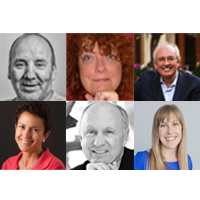
Joining Matthew Holt (@boltyboy) on #THCBGang on April 14 for an hour of topical conversation on what’s happening in health care and beyond were fierce patient activist Casey Quinlan (@MightyCasey); futurists Ian Morrison (@seccurve) & Jeff Goldsmith; Jennifer Benz (@Jenbenz); and policy consultant/author Rosemarie Day (@Rosemarie_Day1).
Lots of chat about McKinsey and conflicts of interest, what’s next with COVID, where employers are now, and Casey has a unique idea about how to profit from data brokers.
You can see the video below live (and later archived) & if you’d rather listen than watch, the audio is preserved as a weekly podcast available on our iTunes & Spotify channels.
#HealthTechDeals Episode 23; Real, Iris Telehealth, 9am Health, Eko & Duos
In this episode of Health Tech Deals, Jess thinks the music has stopped as Rock Health reports Q1’s funding total being below Q4 2022! No $100m rounds today! But still $37m for Real; $40m for Iris Telehealth; only $16m for 9am Health but lots of Livongo connections; $30m for Eko and $15m for Papa-lookalike Duos
-Matthew Holt
#HealthTechDeals Episode 22: Viz.ai, PocketHealth, Eleanor Health, Recora, and Vytalize Health
3 big deals for this episode of Health Tech Deals! Tiger, General Catalyst, and e-Patient Dave are back! Check out this episode to hear my thoughts on them and on new deals in health tech: Viz.ai raises $100 million, PocketHealth raises $16 million, Eleanor Health raises $50 million, Recora raises $20 million, and Vytalize Health raises $50 million.
-Matthew Holt
DALL-E, Draw an AI Doctor
BY KIM BELLARD
I can’t believe I somehow missed when OpenAI introduced DALL-E in January 2021 – a neural network that could “generate images from text descriptions” — so I’m sure not going to miss now that OpenAI has unveiled DALL-E 2. As they describe it, “DALL-E 2 is a new AI system that can create realistic images and art from a description in natural language.” The name, by the way, is a playful combination of the animated robot WALL-E and the idiosyncratic artist Salvator Dali.
This is not your father’s AI. If you think it’s just about art, think again. If you think it doesn’t matter for healthcare, well, you’ve been warned.
Here are further descriptions of what OpenAI is claiming:
“DALL·E 2 can create original, realistic images and art from a text description. It can combine concepts, attributes, and styles.
DALL·E 2 can make realistic edits to existing images from a natural language caption. It can add and remove elements while taking shadows, reflections, and textures into account.
DALL·E 2 can take an image and create different variations of it inspired by the original.”
Here’s their video:
I’ll leave it to others to explain exactly how it does all that, aside from saying it uses a process called diffusion, “which starts with a pattern of random dots and gradually alters that pattern towards an image when it recognizes specific aspects of that image.” The end result is that, relative to DALL-E, DALL-E 2 “generates more realistic and accurate images with 4x greater resolution.”
Continue reading…





