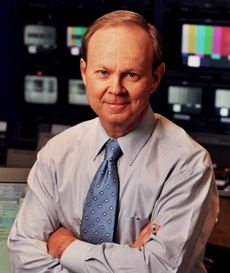
At the HLTH conference I talked with CEO of Infermedica, Piotr Orzechowski, and also had a quick word with VP of Marketing Marcus Gordon. Infermedica has been around over a decade, and has been a slow burner in the symptom checker and patient digital front door market. But now it has a lot of clients and deals and its API is hiding behind several big names including Optum & Microsoft. Piotr graciously let me butcher his name, and still told me about how their model works and how LLMs will change it.–Matthew Holt
There Needs to Be an “AI” in “Med Ed”

By KIM BELLARD
It took some time for the news to percolate to me, but last month the University of Texas San Antonio announced that it was creating the “nation’s first dual program in medicine and AI.” That sure sounds innovative and timely, and there’s no question that medical education, like everything else in our society, is going to have to figure out how to incorporate AI. But, I’m sorry to say, I fear UTSA is going about it in the wrong way.
UTSA has created a five year program that will result in graduates obtaining an M.D. from UT Health San Antonio and a Master of Science in Artificial Intelligence (M.S.A.I.) from UTSA. Students will take a “gap year” between the third and fourth year of medical school to get the M.S.A.I. They will take two semesters in AI coursework, completing a total of 30 credit hours: nine credit hours in core courses including an internship, 15 credit hours in their degree concentration (Data Analytics, Computer Science, or Intelligent & Autonomous Systems) and six credit hours devoted to a capstone project.
“This unique partnership promises to offer groundbreaking innovation that will lead to new therapies and treatments to improve health and quality of life,” said UT System Chancellor James B. Milliken.
“Our goal is to prepare our students for the next generation of health care advances by providing comprehensive training in applied artificial intelligence,” said Ronald Rodriguez, M.D., Ph.D., director of the M.D./M.S. in AI program and professor of medical education at the University of Texas Health Science Center at San Antonio. “Through a combined curriculum of medicine and AI, our graduates will be armed with innovative training as they become future leaders in research, education, academia, industry and health care administration. They will be shaping the future of health care for all.”
Dhireesha Kudithipudi, a professor in electrical and computer engineering who was tasked with helping develop the university’s AI curriculum, told Preston Fore of Fortune:
In lots of scenarios, you might see AI capabilities are being very exaggerated—that it might replace physicians and so forth. But I think our line of inquiry was guided in a different way, in a sense how we can promote this AI physician interaction-AI patient interaction, bringing humans to the center of the loop, and how AI can enhance care or emphasize more patient centric attention.
OK, fabulous. But, you know, computers have been integral to healthcare for decades, especially the past 15 years (due to EMRs), and we don’t expect doctors to get Masters in Computer Science. We’re just happy when they can figure out how to navigate the interfaces.
To be honest, I was expecting more from UT.
Continue reading…Nabla CoPilot– the new ambient EMR note taker that snagged Permanente
I got up super early on a Sunday (in Vegas no less!) to meet Delphine Groll, COO and Alexandre Lebrun, CEO of Nabla. I have heard directly from doctors a lot about their CoPilot product being adopted as a less expensive version than Nuance or Abridge, and wanted to see what the fuss was about. They gave me a demo of their ambient AI medical note taker and it is very impressive–you’ll see a little bit of my demo and the resulting note in the interview. They were a little shy on Sunday to tell me about their relationship with the Permanente group but between Jay Parkinson and Fierce Healthcare, the beans are well and truly spilled now, and they are apparently soon to be available in every Permanente region. I suspect because of that the integration with Epic that Alexandre mentioned will be full speed ahead!–Matthew Holt
Interview with Sonia Milsom, CEO Oxeon
Sonia Milsom is the relatively new CEO at Oxeon, which became the dominant executive search (headhunter) firm in digital health over the past decade or so. The company was built by Trevor Price and team. Sonia discussed the transition, the other things Oxeon does (venture studio, relationship to TownHall Ventures), and the state of the employment market in digital health. TL:DR on that, it’s slowed but they are doing a lot of work and still growing. Matthew Holt
The “Green Pope” Loves Science and Is Cautious of AI

By MIKE MAGEE
By all accounts, they were mutually supportive. He was three years older and the chief scientific adviser to the world’s most powerful religious leader. The Scientific American called him “the greatest scientist of all time,” and not because he won the Nobel Prize in Chemistry a decade earlier for explaining the nuts and bolts of ozone formation. It was his blunt truthfulness and ecological advocacy that earned the organization’s respect.
Paul Crutzan is no longer alive. He died on February 4, 2021 in Mainz, Germany at the age of 87. What attracted the 86 year old “Green Pope” to Paul were three factors that were lauded at his death in the Proceedings of the National Academy of Sciences (PNAS) – “the disruptive advancement of science, the inspiring communication of science, and the responsible operationalization of science.”
It didn’t hurt that Crutzan was pleasant – or as the The Royal Society in its obituary simply described him: “a warm hearted person and a brilliant scientist.”
In 2015, he was Pope Francis’s right arm when the Catholic leader, who had purposefully chosen the name of the Patron Saint of Ecology as his own, was briefed on the Anthropocene Epoch. Crutzen had christened the label five years earlier to brand a post-human planet that was not faring well.
Crutzen was one of 74 scientists from 27 nations and Taiwan who formed the elite Pontifical Academy of Sciences in 2015. Those selected were a Who’s Who of the world’s scientific All-Stars including 14 Nobel recipients, and notables like Microbiologist Werner Arber, physicist Michael Heller, geneticist Beatrice Mintz, biochemist Maxine Singer, and astronomer Martin Rees.
On May 24, 2015, they delivered their climate conclusions to the Pope, face to face. The Pope heard these words, “We have a collection of experts from around the world who are concerned about climate change. The changes are already happening and getting worse, and the worst consequences will be felt by the world’s 3 billion poor people.”
The next month, with his release of the encyclical on the environment, Laudato Si’, Pope Francis began by embracing science, with these words, “I am well aware that in the areas of politics and philosophy there are those who firmly reject the idea of a Creator, or consider it irrelevant, and consequently dismiss as irrational the rich contribution which religions can make towards an integral ecology and the full development of humanity. Others view religions simply as a subculture to be tolerated. Nonetheless, science and religion, with their distinctive approaches to understanding reality, can enter into an intense dialogue fruitful for both.”
Further along, he celebrates scientific progress with these remarks, “We are the beneficiaries of two centuries of enormous waves of change: steam engines, railways, the telegraph, electricity, automobiles, aeroplanes, chemical industries, modern medicine, information technology and, more recently, the digital revolution, robotics, biotechnologies and nanotechnologies. It is right to rejoice in these advances and to be excited by the immense possibilities which they continue to open up before us”
But then comes the hammer: “Any technical solution which science claims to offer will be powerless to solve the serious problems of our world if humanity loses its compass, if we lose sight of the great motivations which make it possible for us to live in harmony, to make sacrifices and to treat others well.”
Continue reading…Out of Control Health Costs or a Broken Society

Flawed Accounting for the US Health Spending Problem
By Jeff Goldsmith

Source: OECD, Our World in Data
Late last year, I saw this chart which made my heart sink. It compared US life expectancy to its health spending since 1970 vs. other countries. As you can see, the US began peeling off from the rest of the civilized world in the mid-1980’s. Then US life expectancy began falling around 2015, even as health spending continued to rise. We lost two more full years of life expectancy to COVID. By the end of 2022, the US had given up 26 years-worth of progress in life expectancy gains. Adding four more years to the chart below will make us look even worse.
Of course, this chart had a political/policy agenda: look what a terrible social investment US health spending has been! Look how much more we are spending than other countries vs. how long we live and you can almost taste the ashes of diminishing returns. This chart posits a model where you input health spending into the large black box that is the US economy and you get health out the other side.
The problem is that is not how things work. Consider another possible interpretation of this chart: look how much it costs to clean up the wreckage from a society that is killing off its citizens earlier and more aggressively than any other developed society. It is true that we lead the world in health spending. However, we also lead the world in a lot of other things health-related.
Exceptional Levels of Gun Violence
Americans are ten times more likely than citizens of most other comparable countries to die of gun violence. This is hardly surprising, since the US has the highest rate of gun ownership per capita in the world, far exceeding the ownership rates in failed states such as Yemen, Iraq and Afghanistan. The US has over 400 million guns in circulation, including 20 million military style semi-automatic weapons. Firearms are the leading cause of deaths of American young people under the age of 24. According to the Economist, in 2021, 38,307 Americans aged between 15 and 24 died vs. just 2185 in Britain and Wales. Of course, lots of young lives lost tilt societal life expectancies sharply downward.
A Worsening Mental Health Crisis
Of the 48 thousand deaths from firearms every year in the US, over 60% are suicides (overwhelmingly by handguns), a second area of dubious US leadership. The US has the highest suicide rate among major western nations. There is no question that the easy access to handguns has facilitated this high suicide rate.
About a quarter of US citizens self-report signs of mental distress, a rate second only to Sweden. We shut down most of our public mental hospitals a generation ago in a spasm of “de-institutionalization” driven by the arrival of new psychoactive drugs which have grossly disappointed patients and their families. As a result, the US has defaulted to its prison system and its acute care hospitals as “treatment sites”; costs to US society of managing mental health problems are, not surprisingly, much higher than other countries. Mental health status dramatically worsened during the COVID pandemic and has only partially recovered.
Drug Overdoses: The Parallel Pandemic
On top of these problems, the US has also experienced an explosive increase in drug overdoses, 110 thousand dead in 2022, attributable to a flood of deadly synthetic opiates like fentanyl. This casualty count is double that of the next highest group of countries, the Nordic countries, and is again the highest among the wealthy nations. If you add the number of suicides, drug overdoses and homicides together, we lost 178 thousand fellow Americans in 2021, in addition to the 500 thousand person COVID death toll. The hospital emergency department is the departure portal for most of these deaths.
Maternal Mortality Risks
The US also has the highest maternal mortality rate of any comparable nation, almost 33 maternal deaths per hundred thousand live births in 2021. This death rate is more than triple that of Britain, eight times that of Germany and almost ten times that of Japan. Black American women have a maternal mortality rate almost triple that of white American women, and 15X the rate of German women. Sketchy health insurance coverage certainly plays a role here, as does inconsistent prenatal care, systemic racial inequities, and a baseline level of poor health for many soon-to-be moms.
Obesity Accelerates
Then you have the obesity epidemic. Obesity rates began rising in the US in the late 1980’s right around when the US peeled away from the rest of the countries on the chart above. Some 42% of US adults are obese, a number that seemed to be levelling off in the late 2010’s, but then took another upward lurch in the past couple of years. Only the Pacific Island nations have higher obesity rates than the US does. And with obesity, conditions like diabetes flourish. Nearly 11% of US citizens suffer from diabetes, a sizable fraction of whom are undiagnosed (and therefore untreated). US diabetes prevalence is nearly double that of France, with its famously rich diets.
Continue reading…THCB Gang Episode 136, Thursday October 5

Joining Matthew Holt (@boltyboy) on #THCBGang on Thursday October 5 at 1pm PST 4pm EST were delivery & platform expert Vince Kuraitis (@VinceKuraitis); author & ponderer of odd juxtapositions Kim Bellard (@kimbbellard) and policy expert consultant/author Rosemarie Day (@Rosemarie_Day1).
You can see the video below & if you’d rather listen than watch, the audio is preserved as a weekly podcast available on our iTunes & Spotify channels.
We’re All In The Hot Seat Now.

BY MIKE MAGEE
It’s not that easy living in the “Big Easy” these days and co-existing with a world dominated by water concerns. When Times-Picayune gossip columnist Betty Guillaud (as the folklore goes) “coined New Orleans’ undisputed nickname” in the 1960’s, it was a lifestyle eponym meant to favorably contrast life in “The Big Easy” with hard living in “The Big Apple.”
That was well before August 23, 2004, when the levies failed to hold back the Gulf waters, and 1,392 souls perished leaving two names to last in infamy – Katrina and Brownie, of “Brownie, you’re doing a heck of a job” fame.
Now it’s not as if it’s been all smooth sailing for New York City and water. I mean, look at the history. When the British overran the Dutch in 1667, one of the first priorities was to dig the first public well and include a marvelous technologic attachment – a hand pump. That was in front of an old fort at Bowling Green, near Battery Park.
But by the early 1700s, the absence of a sewage system and saltwater intrusion from the Hudson and East Rivers, plus a crushing population explosion, had foiled the clean water supply. The solution – temporary at best – haul in fresh groundwater, in limited quantities, from Brooklyn.
Continue reading…Altman, Ive, and AI

BY KIM BELLARD
Earlier this year I urged that we Throw Away That Phone, arguing that the era of the smartphone should be over and that we should get on to the next big thing. Now, I don’t have any reason to think that either Sam Altman, CEO of OpenAI, and Jony Ive, formerly and famously of Apple and now head of design firm LoveFrom, read my article but apparently they have the same idea.
Last week The Information and then Financial Times reported that OpenAi and LoveFrom are “in advanced talks” to form a venture in order to build the “iPhone of artificial intelligence.” Softbank may fund the venture with as much as $1b. There have been brainstorming sessions, and discussions are said to be “serious,” but a final deal may still be months away. The new venture would draw on talent from all three firms.
Details are scare, as are comments from any of the three firms, but FT cites sources who suggest Mr. Altman sees “an opportunity to create a way of interacting with computers that is less reliant on screens.” which is a sentiment I heartily agree with. The Verge similarly had three sources who agreed that the goal is a “more natural and intuitive user experience.”
Continue reading…THCB Gang Episode 135, Thursday September 28

Joining Matthew Holt (@boltyboy) on #THCBGang on Thursday September 28 at 1pm PST 4pm EST are futurist Jeff Goldsmith: author & ponderer of odd juxtapositions Kim Bellard (@kimbbellard); and patient safety expert and all around wit Michael Millenson (@mlmillenson).
You can see the video below & if you’d rather listen than watch, the audio is preserved as a weekly podcast available on our iTunes & Spotify channels.