Categories

Tag: TAVR

Pre-Surgical Complications (Part 6) — The Decision

By MATTHEW HOLT

Strap in for the tale of why your hero is spending most of his life down YouTube rabbit holes of cardiology videos while blundering his way around many many medical centers and exposing many problems with American health care even before he gets close to the operating table. Yes it’s Matthew Holt’s pre-surgical complications – the complications that have arisen before he even gets his failing aortic valve fixed. And yes this is the last for now of a multi-parter! Part 1Part 2, Part 3Part 4 Part 5

By now I have met with expert physicians and their teams at 5 major medical centers (UCSF, Stanford, Cleveland Clinic, Cedars Sinai & West Virginia University). I have spent hours talking to the AI gods at Claude, ChatGPT and Inciteful Med, annoyed the hell out of all the cardiologists and other doctors I know, and basically got enough contradictory advice that it’s all up to me.

The main decision comes down to whether I should get a TAVR or the RAVR. And because I approached Cedars about the BELIEVERS clinical trial rather than going direct to Dr Makkar, they put me into that process. The trial randomizes patients into either TAVR or RAVR, likely performed by Dr. Dominic Emerson who is the Director of Robotic Cardiac Surgery, Smidt Heart Institute, and one of the surgeons mentioned by Dr Badhwar. (I had a quick chat with him after he called me while I was on a ski boat in Lake Tahoe, although due to the shoulder pain I had not gone wakeboarding!)

The study documentation stressed – and this was backed up unprompted by one of the study coordinators – that I could back out at any time. So if I were randomized into the RAVR cohort, I still had the choice to pull out and ask Dr Makkar to do a TAVR on me anyway, or of course go to West Virginia and get surgery there.

And of course there is still the question of how risky a TAVR on my valve will be. I did take Dr Yeung’s advice seriously, and a study that Dr Makkar oversaw back in 2020 did show that (for patients considerably older than me) the risk of all cause mortality at 2 years in bicuspid valve TAVR patients was higher with bad calcification (like me). On the other hand, Dr Makkar told me that his unpublished data between TAVR and SAVR at 5 years showed no difference. He also directly told me that I was a good candidate for a TAVR and he has done more bicuspid TAVRs than anyone else. He’s also working on techniques that break up the calcification on the “join” before the TAVR, although it’s unclear if he’ll do that in the BELIEVERS trial and to me

I originally wanted a TAVR because it was a much easier recovery than surgery. I also have two more major surgeries to go through within the next few months, and it would be a big stress on me and my family to make that three. Plus, I both would be happy to contribute to a medical study and am pretty confident that in a decade or so, cardiology will have advanced a lot more and I probably wouldn’t need open heart surgery even if the TAVR valve fails sooner than the 10-15 years I am hoping to get out of it.

So I crossed my fingers and hoped that the computer would randomize me into the TAVR group at Cedars and obviate the need for any uncomfortable decisions about pulling out of the trial. And it did. I’ll be getting it done in early September.

This isn’t exactly Lebron James making The Decision, although that show lasted only 75 minutes and also went on way too long!

Some concluding thoughts

I would obviously rather have not had to write this little memoir. But given I went through it, there are several conclusions smacking me in the face.

Continue reading…
Pre-Surgical Complications (Part 4)

By MATTHEW HOLT

Strap in for the tale of why your hero is spending most of his life down YouTube rabbit holes of cardiology videos while blundering his way around many many medical centers and exposing many problems with American health care even before he gets close to the operating table. Yes it’s Matthew Holt’s pre-surgical complications – the complications that have arisen before he even gets his failing aortic valve fixed. And yes this is a multi-parter! Part 1Part 2, Part 3

Getting in touch 

But while knowing this stuff may be simple, actually getting to speak to the people at these medical centers is way more complicated. First you have to set up the data.

I knew they would want to see my images. The good news was that although I couldn’t see any of the images in my UCSF MyChart account, there’s a number to call on the bottom of the reports if you want to “download the image” and a very nice tech was able to upload all my images to a website that I could see called AmbraHealth (now part of Intelrad) within a couple of hours. Now I can share them with other people similar to sharing a Google doc.

But that was the easiest part.

I will spare you the blow by blow account but for example it took a long time for the people in the office of the main investigator at Cedars to figure out who the person managing the trial was so they could put me in touch with her. After I finally got to leave her a message she rang me back. I played phone tag with her for about a week. I did end up getting her email and sending out a bunch of my image reports and then she went on vacation and I didn’t hear from her for two weeks. First contact to appointment took 6 weeks.

At the same time I was trying Stanford Cardiology in order to try to get an appointment with Dr Yeung. First time I called after about 10 mins on hold I was told that I needed to have a referral. (Even though I’m on PPO style plan that doesn’t need one). 

I pinged my long suffering PCP team at One Medical and asked them for a referral to talk to Dr Yeung which they sent out. A few days later I called the cardiology team at Stanford and eventually – I mean eventually, it was literally a 10 minute hold – they told me the referral wasn’t through yet. I asked if I could get them some images in advance, they said no. They were able to set me up on MyHealth which is their equivalent of the Epic’s MyChart. Funnily enough they had information on me from an emergency room visit I made there in the 1990s. But because I did not have an appointment set up yet I was not able to communicate using the messaging function on MyHealth. 

So I called back a few days later and after another seven or eight minute hold I was told that I had an appointment set up for me and it was on MyHealth. But bizarrely the referrals and visits are buried in the “billing” section of MyHealth and then the appointment was on a sub-menu! And of course even though I could see it there was no way to communicate about the appointment. 

This was even stranger as Stanford booked me both an echocardiogram and what’s called a CT angiogram which is a non-invasive angiogram using a CT machine. I had had both of these done at UCSF within the previous month.

Continue reading…

Pre-Surgical Complications (Part 3)

By MATTHEW HOLT

Strap in for the tale of why your hero is spending most of his life down YouTube rabbit holes of cardiology videos while blundering his way around many many medical centers and exposing many problems with American health care even before he gets close to the operating table. Yes it’s Matthew Holt’s pre-surgical complications – the complications that have arisen before he even gets his failing aortic valve fixed. And yes this is a multi-parter! Part 1, Part 2

The first thing was to message the cardiac scheduling team to postpone the surgery set up for July, not least reason being because England was going to be in the World Cup final two days after that and I didn’t want to be in intensive care in case they weren’t showing the game. Yes, yes, I know Messi and the cheating FIFA refs made sure that sadly didn’t happen! 

I agreed with them to put a date on the calendar for September. But that didn’t stop a prep nurse calling me on Monday 29th June asking me about surgery on July 17th. She was most surprised to find that it wasn’t happening. Yet another time when the message didn’t quite get through.

Time to really figure out what this heart surgery involves. 

Essentially if I wasn’t watching soccer from late June onwards I was trying to figure out what was known about valve replacement surgery. It was actually hard to find out both what the data is regarding TAVRs and the varying ways that surgical valve replacement can be done. 

It turns out that going in through the chest bone, known as sternotomy, is the most usual way to do the surgical replacement of the heart valve but it’s not the only way. 

This discovery took me a lot of effort not only asking chatGPT and Claude about the process but also trying to figure out who does what. I also spent a lot of time asking for advice and honestly not getting much useful on the ValveReplacement SubReddit and looking on heartvalvesurgery.com, a website that seems to be sponsored by some surgeons and medical centers but is run by a patient called Adam Pick. I have been down the rabbit hole there and on YouTube and have more or less had to figure this out myself.

I was also reminded of the classic 1996 Fortune piece by then Intel CEO Andy Grove who was trying to figure out which approach to use to treat his prostate cancer. Basically he realized that the radiologists and the surgeons didn’t talk to each other and didn’t compare results, and he – the patient – had to figure it out from the rather poor data available, and talking to other patients on Compuserve! Well, it was 1996.

It turns out that there are several different options possibly available to me. But in terms of coordination and the patient journey, I’m not sure that we’ve come a long way since Andy Grove’s piece 30 years ago.

Continue reading…

Pre-Surgical Complications (Part 1)

By MATTHEW HOLT

Strap in for the tale of why your hero is spending most of his life down YouTube rabbit holes of cardiology videos while blundering his way around many many medical centers and exposing many problems with American health care even before he gets close to the operating table. Yes it’s Matthew Holt’s pre-surgical complications – the complications that have arisen before he even gets his failing aortic valve fixed. And yes this will be a multi-parter!

Introduction and a decent bit of context

Last summer after a lot of back and forth I discovered that I had aortic stenosis. (I won’t replay the whole story of how the referral to the echocardiogram didn’t happen three times and therefore I nearly didn’t have the test and therefore never found out because I already have elsewhere

Amazingly this has nothing to do with my bad lifestyle. It’s an inherited heart disease in which the valve that governs the flow of blood between the two main chambers of your heart is starting to fail. Often that means people get very short of breath, start to faint or have severe chest pains but in my case I had none of that. What I did have was the measurement on an echocardiogram showing that my aortic stenosis was “severe” because I have what’s called a bicuspid aortic valve. This is a genetic defect that my father landed me with–well I’m blaming my father but who exactly knows as he’s dead!  

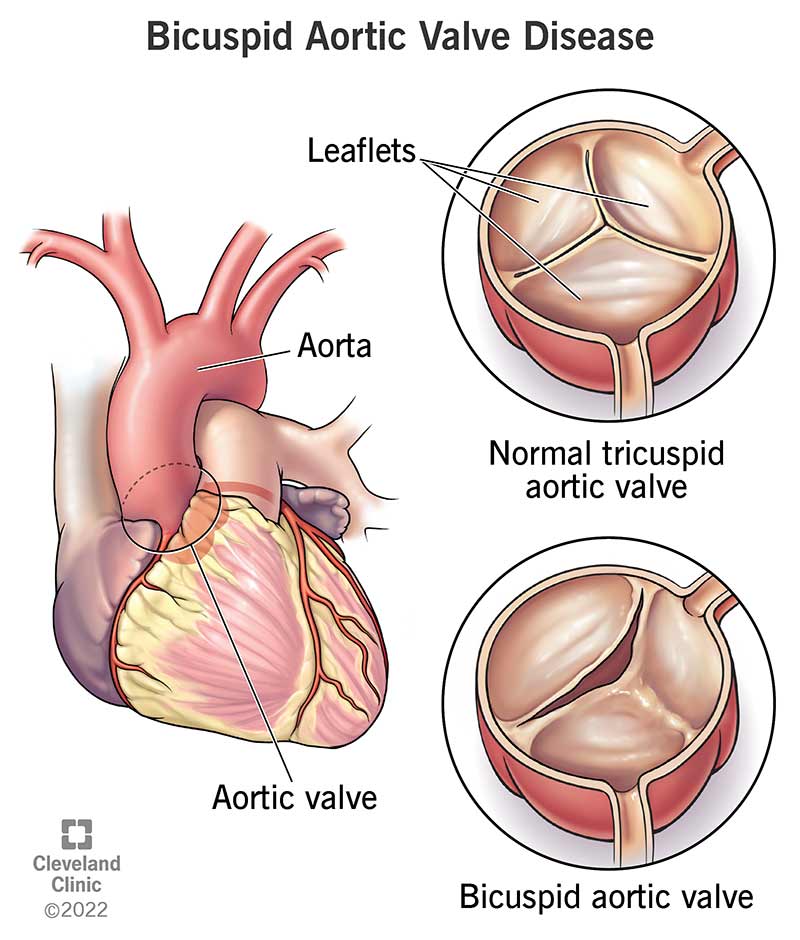
Essentially instead of having three leaves on the valve (like a Mercedes symbol) I have two and over time they’ve been steadily picking up more calcification and opening less. That means that more and more pressure is required from the heart to squeeze blood between the two chambers which is bad for the heart and by extension bad for me. That’s pretty strong agreement amongst cardiologists that if you can get this condition fixed before you become symptomatic it’s better than waiting. If you get symptomatic, it’s urgent and your chance of a heart attack and death becomes pretty high (like 25-50% a year!)

But of course it’s not that simple – either from the standpoint of getting it fixed or from the standpoint of how to get it fixed within the American health care system in all of its beauty. And you can expect it, as it’s me, to hear a lot about customer service, insurance, online access to information and of course interoperability. There might also be some AI thrown in for good measure!

Continue reading…

Philippe Pouletty, Carvolix

Philippe Pouletty is a physician who’s an inventor, French venture capitalist, and the founder of Carvolix. Carvolix is a medical technology company that is introducing AI into cardiology. Before Carvolix, Philippe was the founder of Abivax, which makes drugs for chronic inflammatory diseases like ulcerative colitis. He’s been working on helping French medical products develop before having to sell to bigger US companies, and Carvolix is the latest. It’s an AI system that guides cardiologists and a robot that places heart valves. It’s of particular interest to me, as I need a new heart valve. I had a long and interesting discussion with Philippe about the future of cardiology, particularly heart valve replacement, and also about their upcoming product, a robot to bust brain clots–Matthew Holt

