Categories

Category: Uncategorized

Health in 2 Point 00, Episode 134 | Health Tech’s “PPP Blacklist”, Walgreens and VillageMD, & more

Today on Episode 134 of Health in 2 Point 00, Jess and I cover Livongo’s stock price swinging, Brian Dolan’s PPP “Black List” for Health Tech Startups, and Oak Street Health & GoHealth filing their S-1’s. We also get Matthew’s take on Walgreen’s deal with Village MD to become a primary care center, and Doctor on Demand closing a $75M round, bringing its total to $235M in fundingMatthew Holt

Virtually Better

By KIM BELLARD

The COVID-19 pandemic couldn’t have come at a better time for virtual reality.  It has caused many workers to work remotely, introducing many workers to collaborative tools like Slack or Microsoft Teams and even more to video platforms like Zoom or Skype.  But we’re just beginning to understand what collaboration could look like — such as virtual reality (VR).

As CNBC noted: “Virtual reality is booming in the workplace amid the pandemic.”  Even a pre-pandemic Perkins Coie survey, done for the XR Association, predicted an explosion of immersive technologies like VR, augmented reality (AR), and mixed reality (MR).   Elizabeth Hyman, President of XRA, said: “We are at the precipice of an integration of XR technology that will transform businesses and society for the better.”  

The report expected healthcare to be the industry most impacted by immersive technologies (outside of gaming/entertainment).

Take VR-start-up Spatial, which thinks it has a better mousetrap.  Chief Product Officer described their solution to MIT News:

Spatial is a collaborative, holographic, augmented reality solution.  You can teleport to someone’s space, work as an avatar sharing that 3D space, and use it instead of a screen to manage a project, present an idea, and more.

Don’t you love the “and more,” as though the teleportation wasn’t enough?  

Continue reading…

Doctors and Democracy: Why Vote-By-Mail is Good Public Health

Rob Palmer
Josh Hyman
Isaac Freedman

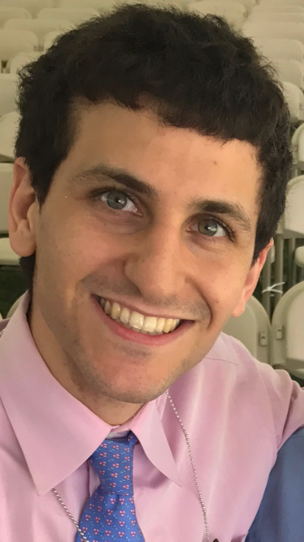
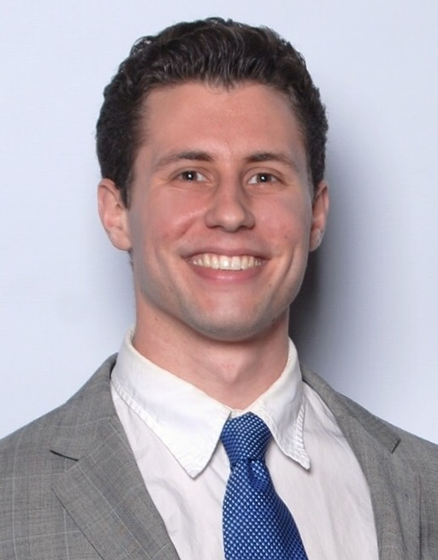
By ROB PALMER, ISAAC FREEDMAN, and JOSH HYMAN

Suppose tomorrow you were informed that patients could no longer have medications delivered to their homes. Thus, in the midst of the worst pandemic in recent history, your patients would have to go to pharmacies to get essential medications. Undoubtedly, you’d be puzzled, wondering why your patients must needlessly put themselves and others in harms’ way to care for their own health. In light of the change, you might even debate if it’s worth the risk of getting your own medications. 

Thankfully, the common-sense practice of delivering medication to people’s homes seems here to stay. Yet many people will face a similar issue on election day this November: Fifteen states severely restrict who can vote by mail. In these states, millions of citizens will be forced to choose between exercising their right to vote and safeguarding their own health. 

So long as SARS-CoV-2 remains a threat, in-person voting is a public health crisis. Unless we want to risk a spike in new COVID-19 cases, with the concomitant deaths and strain on the healthcare system, it is critical to ensure that anyone who wants to vote in the upcoming general election can use mail-in voting. Indeed, a peer-reviewed study published in May found a statistically significant increase in COVID-19 cases in the weeks after the Wisconsin primary, specifically in counties with higher in-person votes per voting location. The study also found a decrease in COVID-19 cases in counties with the highest rates of absentee ballots. Unsurprisingly, the study’s authors exhort policy makers to “expand the number of polling locations or encourage absentee voting for future elections.”

Continue reading…

We Are in Store for the Greatest Change to Our Health Care System Since the Affordable Care Act. Here’s Why.

By LOGAN CHO

The COVID-19 pandemic has been harsher and lasted longer than many of us would have predicted. While our media has been inundated with updates on death tolls and economic depression, there has been little conversation of healthcare beyond the era of COVID-19. The first question that we ask when we hear of deaths: was it COVID? We have grown to expect the primary cause of death to be of coronavirus. But the impact of COVID-19 will extend beyond the individual, effecting fundamental and long-lasting change to our healthcare system.

By this point, it is clear that the public health ramifications are reaching well beyond the physical impacts of the virus. Social isolation, economic depression, soaring unemployment, and mandated closures all contribute to the adversity that we have had to face – notwithstanding the explosive, ever-present sociopolitical climate of a pandemic that is killing Black Americans at a rate almost three times that of whites. This hardship will likely last for months more.

A recent Kaiser Family Foundation publication found that half of the public have skipped or postponed medical care due to the pandemic, with one-fourth reporting worse health as a result. Many of these people do not plan to receive the care they need within the next three months. The public is simultaneously reporting declines in mental health. Furthermore, over 30% say they have had difficulty paying for household expenses, like food, rent, and medications. The figures are disproportionately damning among Black and Hispanic populations.

Taken together, the inaccessibility of medical care, deteriorating mental health, increasing poverty, worsening access to nutrition, and host of other challenges present a dark, impending storm. Cancer, diabetes, and other chronic diseases will all be rearing their untreated heads post-pandemic. Communities and policymakers must therefore act quickly and decisively to heal not only a sick population, but a fraying social fabric.

Continue reading…

A Conversation with John Ioannidis

By SAURABH JHA, MD

The COVID-19 pandemic has been a testing time for the already testy academic discourse. Decisions have had to be made with partial information. Information has come in drizzles, showers and downpours. The velocity with which new information has arrived has outstripped our ability to make sense of it. On top of that, the science has been politicized in a polarized country with a polarizing president at its helm.

As the country awoke to an unprecedented economic lockdown in the middle of March, John Ioannidis, professor of epidemiology at Stanford University and one of the most cited physician scientists who practically invented “metaresearch”, questioned the lockdown and wondered if we might cause more harm than good in trying to control coronavirus. What would normally pass for skepticism in the midst of uncertainty of a novel virus became tinder in the social media outrage fire.

Ioannidis was likened to the discredited anti-vax doctor, Andrew Wakefield. His colleagues in epidemiology could barely contain their disgust, which ranged from visceral disappointment – the sort one feels when their gifted child has lost their way in college, to deep anger. He was accused of misunderstanding risk, misunderstanding statistics, and cherry picking data to prove his point.

The pushback was partly a testament to the stature of Ioannidis, whose skepticism could have weakened the resoluteness with which people complied with the lockdown. Some academics defended him, or rather defended the need for a contrarian voice like his. The conservative media lauded him.

In this pandemic, where we have learnt as much about ourselves as we have about the virus, understanding the pushback to Ioannidis is critical to understanding how academic discourse shapes public’s perception of public policy.

Continue reading…

Health in 2 Point 00, Episode 133 | PBMs galore, Genome Medical, & the FCC’s Rural Health Program

Episode 133 of Health in 2 Point 00 is brought to you by the letter P — that’s P for PBMs, of course. In this episode, Jess and I talk about Genome Medical extending their series B and getting another $14 million on top of the $23 million they already raised for their remote genetic counseling services, the FCC adding another $198 million to their rural health program, bringing the funding to a whopping total of $802 million, Anthem’s PBM IngenioRx acquiring pharmacy startup Zipdrug, and Capital Rx, a startup PBM, announced a deal with Walmart. —Matthew Holt

Goodbye Glasses, Hello Smartglasses

By KIM BELLARD

It’s been a few months since I last wrote about augmented reality (AR), and, if anything, AR activity has only picked up since then — particularly in regard to smartglasses.  I pointed out then how Apple’s Tim Cook and Facebook’s Mark Zuckerberg were extremely bullish on the field. and Alphabet (Google Glasses) and Snap (Spectacles) have never, despite a few apparent setbacks, lost their faith.   

I can’t do justice to all that is going on in the field, but I want to try to hit some of the highlights, including not just what we see but how we see.  

Let’s start with Google acquiring smartglass innovator North, for some $180m, saying: 

We’re building towards a future where helpfulness is all around you, where all your devices just work together and technology fades into the background. We call this ambient computing. 

North’s founders explained that, from the start, their vision had been: “Technology seamlessly blended into your world: immediately accessible when you want it, but hidden away when you don’t,” which is a pretty good vision.

Continue reading…

Health in 2 Point 00, Episode 132 | Accolade IPO, Somatus, NexHealth, Tatch & more

Today on Health in 2 Point 00, Jess and I cover some big news! Accolade has filed its IPO, so on Episode 132 I give my take on this health care navigation service. We also cover Somatus getting $64 million for chronic kidney disease care, NexHealth raising $15 million, Tatch raising $4.25 million for sleep apnea diagnosis, Simply Speak raising a $1.1 million seed round, and optimize.health raising $3.5 million for its remote monitoring platform. —Matthew Holt

Telehealth’s Missing Link: In the Rush to Implement Virtual Care, What Did CMS Leave Out?

By RAY COSTANTINI, MD

Imagine three months from now when the predicted ‘second wave’ of COVID-19 is expected to resurge and we’re still without a vaccine. Telehealth has become the entry-point to care, widely adopted by patients both young and old. Now, when an elderly diabetic patient wakes up in the middle of the night with a dull ache on her left side and back, she doesn’t ignore the symptom, like she may have during the first COVID outbreak. Instead, she logs online to her local hospital’s website from a cell phone and accesses a simple questionnaire to report her health history and presenting symptoms. The whole process takes just a couple of minutes and she immediately hears back from her health provider with the suggestion to schedule an in-person appointment for further testing to rule out any kidney issues. 

This patient doesn’t become one of the nearly 50% of Americans who delayed care during the initial COVID pandemic. She was able to access care without having to download an application or wait to schedule a virtual appointment during normal business hours. She receives virtual asynchronous care on-demand, coordinated to sync with her electronic health record. The next day, she receives a follow-up call from her primary care doctor to ensure her symptoms were alleviated with the over-the-counter pain medication she was prescribed. 

I applaud the article written by Paul Grundy, MD, and Ken Terry, “Primary Care Practices Need Help to Survive the COVID-19 Pandemic,” in which they called on Congress to make health policy decisions that will provide immediate financial relief for primary care practices. We must mitigate the real risk we face: the highly possible shutdown of our healthcare system. Amid the coronavirus pandemic, the U.S. healthcare system has taken an enormous financial hit and primary care practices have been especially affected and are struggling to survive. As the authors point out, telehealth has taken the spotlight to fill the acute need for an influx of patients needing to access care under social distancing practices. Telehealth can increase access to care, relieve provider burden, reduce costs to systems, and improve patient outcomes. However, this is only possible with on-demand telehealth, or asynchronous care. 

Continue reading…

“When Blood Breaks Down”: It Can Break Your Heart

By CHADI NABHAN, MD, MBA, FACP

The goal for me and for my clinical and research colleagues is to put ourselves out of a job as quickly as possible”. This is how Mikkael Sekeres ends his book “When Blood Breaks Down” based on true stories of patients with leukemia. I share Mikkael’s sentiments and have always stated that I’d be happy if I am out of a job caring for patients with cancer. To his and my disappointment, this wish is unlikely to ever come true, especially when dealing with leukemia.

With almost 15 years of experience, Sekeres possesses a wealth of knowledge and patient stories making him the ultimate storyteller taking us along an emotional journey that spanned hospital rooms, outpatient clinics, and even his car. We get to know Mikkael the person and the doctor and immediately recognize how difficult it is to separate these two from each other. With hundreds of patients he has cared for, Mikkael could choose which stories to share. He decides on 3 patients, each with a unique type of leukemia and a set of circumstances that makes their story distinct. While I don’t know for certain, his selection likely reflected his ultimate goal of writing this book. It was about sharing life lessons he had learned from his patients–lessons that we could similarly learn—but it was also about giving us a glimpse of history in medicine and the progress that has been made in treating leukemia.

We get to know the three main characters of the book very well. David is an older man with acute myeloid leukemia (AML), Joan is surgical nurse who suddenly finds herself diagnosed with acute promyelocytic leukemia (APL), and Mrs Badway is a pregnant woman who was in her 2nd trimester when she was diagnosed with chronic myeloid leukemia (CML). While learning about their illnesses and family dynamics, Sekeres educates us about the various types of leukemia and enlightens his readers about so much history that I found fascinating. I did not know that the Jamshidi needle that I have used on so many patients to aspirate their bone marrows was invented by an Iranian scientist. Maybe I should have known, but I didn’t, that FISH was developed at Yale in 1980 and the first description of leukemia has been attributed to a French surgical anatomist, Dr. Alfred Velpeau in 1827. Somehow, I always thought that Janet Rowley discovered the Philadelphia chromosome, but Sekeres corrects me when he pictured Peter Nowell and David Hungerford who discovered that chromosome in 1961. As a reader, you might be more drawn to the actual patient stories, but the geek in me enjoyed the history lessons, especially the ones I was unaware of. Sekeres inserts these pearls effortlessly and with perfect timing. He does that so seamlessly and naturally that you learn without realizing you are being taught.

Continue reading…
assetto corsa mods