Categories

Category: Uncategorized

Health in 2 point 00, Episode 15

Jessica DaMassa asks me every question about health & technology she can fit into 2 minutes. Topics include Facebook looking for hospital data, the EU starting a VC fund, JP Morgan CEO Jamie Dimon blowing up the hype about ABC & the ACA under more assault. Jessica called this a “painful episode” but I thought it was rather good! BTW THCB will be featuring Jessica’s new video series WTF Health very soon so get prepped!–Matthew Holt

Aetion raises $36m, Carolyn Magill interview

It’s not every day that an analytics firm focusing on improving the efficacy and value of drugs has a big raise in the health tech world–especially one I don’t know much about. This morning Aetion raised $36m to add onto $11m they raised last year. Their new round is led by famed venture firm NEA and includes Amgen Ventures. I spoke to CEO and part-time extreme skier Carolyn Magill to find out what Aetion does and why big pharma and major payers need their help in the brave new world of value-based care.

From EHR to Paper to EHR .. to Paper??

I can’t help myself from telling patients how things really work in health care. But I feel they have a right to know.

When I see new patients their jaw usually drops when I sit down with them next to the computer with a stack of papers held together with a rubber band or a gigantic clamp and with yellow sticky notes protruding here and there with words like LAB, ER and X-RAY.

Patients always assume that medical records transfer seamlessly between practices. They don’t, even between clinics that use the same EMR vendor. The stack of papers gets scanned in, as images or PDFs, but they don’t appear in searchable, tabular or report-compatible form. Often, they don’t each get labeled, but are clumped together under headings like “Radiology 2010-2017”.

In one of the clinics I work in, a Registered Nurse enters patients’ medical history in the EMR before each new patient’s first appointment. In the other, it is my job. In both cases, only a fraction of he information is usually carried over from one EMR to the other, and the patient’s life story risks getting diluted, even distorted.Continue reading…

Fix the EHR!

After a blizzard of hype surrounding the electronic health record (EHR), health professionals are now in full backlash mode against this complex new tool. They are rightly seen as a major cause of professional burnout among physicians and nurses: Clinicians are spending almost half their professional time typing, clicking, and checking boxes on electronic records. They can and must be made into useful, easy-to-use tools that liberate, rather than oppress, clinicians.

Performing several tasks, badly. The EHR is a lot more than merely an electronic version of the patient’s chart. It has also become the control panel for managing the clinical encounter through clinician order entry. Moreover, through billing and regulatory compliance, it has also become a focal point of quality-improvement efforts. While some of these efforts actually have improved quality and patient safety, many others served merely to “buff up the note” to make the clinician look good on “process” measures, and simply maximize billing.

Mashing up all these functions — charting, clinical ordering, billing/compliance and quality improvement — inside the EHR has been a disaster for the clinical user, in large part because the billing/compliance function has dominated. The pressure from angry physician users has produced a medieval solution: Hospital and clinics have hired tens of thousands of scribes literally to follow clinicians around and record their notes and orders into the EHR. Only in health care, it seems, could we find a way to “automate” that ended up adding staff and costs!

Continue reading…

We Should Use Both Medicare Advantage for All and Medicaid As A Package to Cover Everyone And We Should Do It Now

A growing number of people want to set aside all of our current health care financing approaches as a country and set up Medicare For All as a Canadian like single payer system to cover every American and pay for our care.

When we spend three trillion dollars a year on health care and still have thirty million people without insurance, the possibility of covering everyone using the most direct and simple approach has some obvious appeal.

That Medicare for All approach being proposed to Congress today would be funded with a half dozen taxes that would include making income tax more progressive and inheritance tax levels significantly higher than they are now.

If we do have enough political momentum and enough alignment as a nation to actually replace everything in our health coverage world with a national Medicare for All system that is financed by those new taxes, then we should seriously consider going even further and spend the same amount of money buying better coverage and better care for everyone by setting up a Medicare Advantage program for Everyone and using that approach and program to cover all Americans.

Medicare Advantage has better benefits, better care coordination, better quality reporting, and a higher level of focus on better care outcomes and better care connectivity than standard Medicare.

Standard Medicare buys care entirely by the piece.   Buying care entirely by the piece rewards bad care, bad care outcomes, bad health, and inefficient care connectivity.

Continue reading…

Médecins sans Hôpitaux (Doctors without Hospitals)

The rise of consumerism is affecting healthcare particularly the retail/primary care area where consumers are spending with their own money in a world of high-deductible healthcare.

The growth of digital health offers the opportunity to disrupt traditional care interactions in both the management of chronic conditions and in routine primary care. And there is a whole new set of patient decision-makers such as millennials who bringing with them different sensibilities in terms of access to services.Continue reading…

Health in 2 point 00, Episode 15

Jessica DaMassa asks me about digital health funding, Walmart and PillPack, Blockchain and my sweater — not in that order, but all in less than 2 minutes. Bonus–Farzad Mostashari’s bow tie makes a twitter appearance! — Matthew Holt

Splitting hairs with Hypertension

Intrigued by many things in my first few days in the U.S., what perplexed me the most was that there seemed to be a DaVita Dialysis wherever I went; in malls, in the mainstreet of West Philadelphia, near high rises and near lower rises. I felt that I was being ominously followed by nephrologists. How on earth could providers of renal replacement therapy have a similar spatial distribution as McDonalds?

After reading Friedrich Hayek’s essay, Use of Knowledge in Society, I realized why. In stead of building a multiplex for dialysis, which has shops selling pulmonary edema-inducing fried chicken, DaVita set shop where people lived or hung out. It wasn’t a terribly clever business plan but its genius was its simplicity, its humility. If the mountain will not come to Muhammed, Muhammed must go to the mountain. DaVita went to the masses.

The link between Hayek’s wisdom and DaVita’s business plan may seem tenuous. But Hayek has been misunderstood, particularly in healthcare. Many a times and oft in the policy world Hayek has been rated about money and usances. This is because of a misperception that Hayek was all about profit and loss, which are anathema to healthcare. Hayek’s message was simple: local knowledge can’t be aggregated. From this premise sprouts others – dispersed agents in certain times and places possess fragments of knowledge which don’t come easily to central planners.

For Hayek, socialism and capitalism weren’t moral but epistemic issues. Socialism would fail because of a coordination problem – markets would succeed because they could use price signals to coordinate. Healthcare doesn’t use price signals to coordinate, not explicitly, at least. Nor does it capitalize on dispersed agents – on local knowledge. Hayek, a supporter of universal healthcare, didn’t specifically discuss healthcare in his essays. Nonetheless, it would be a useful intellectual exercise to speculate how Hayek might have applied his wisdom to modern healthcare.

What does local knowledge in healthcare even mean? Stated in a rather unlettered way, it is the provision of healthcare locally. AEDs are no good if they aren’t located where people congregate. The value of local presence of medical facilities, particularly in poor neighborhoods, is hardly rocket science. Just as great cities grew near rivers, great hospitals germinated in poor neighborhoods. But, with growing centralization of healthcare, with hospitals becoming multiplexes, futuristic cities with a distinct architectural phenotype, different from the neighborhoods they serve, the value of decentralization can be missed.

Continue reading…

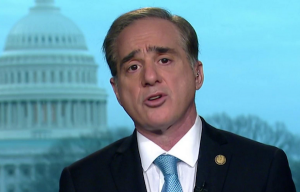
The Greatest Decision Trump Has Ever Made

Dr. David Shulkin once gave me this advice, “stop whining and complaining and lead with solutions.” To the many frustrated physicians in this country, this critique is a fair one. I took his words to heart.

Let me start by saying my husband served 20 years in the United States Army and is a proud Veteran. I think our veterans deserve better than Dr. David Shulkin. His ousting as VA Secretary by President Trump this past week is akin to “leading with solutions” from my perspective.

Dr. Shulkin appears to have engaged in considerable double-speak throughout his 13-month tenure in Trump’s Cabinet. In his New York Times op-ed, he wrote, “I will continue to speak out against those who seek to harm the V.A. by putting their personal agendas in front of the well-being of our veterans.”

When it comes to personal agendas, there are few who are as laser focused as this man. Initially endorsing campaign pledges by Trump committing to increased accountability at the VA, his European trip—for which taxpayers paid $122,334—involved more sightseeing and shopping with his wife than “official” government activities. When the Washington Post first reported this story, Shulkin assured the public “nothing inappropriate” took place.

Continue reading…

Can Amazon, Chase, and Berkshire Help Medical Malpractice Victims?

A New Era of Amazon Healthcare Should Take a Cue From Germany to Provide Support for Medical Malpractice Victims

Amazon, JP Morgan Chase, and Berkshire Hathaway recently announced plans to form a joint non-profit enterprise aimed at providing affordable, high-quality, transparent healthcare to hundreds of thousands of their U.S. employees. Although a healthcare venture departs from their prior expertise, the companies’ combined wealth, resources, and history of market innovation provide hope that this new alliance can reshape the delivery and cost of healthcare in the U.S. As Amazon and company attempt to tackle America’s healthcare problems with a new delivery model, there is also potential for them to support patients who encounter another critical problem in America’s healthcare system – the problem of medical errors.

Johns Hopkins estimates that 250,000 deaths in the United States are caused each year by preventable medical errors. Eliminating medical errors is admittedly difficult. It requires interdisciplinary collaboration, unlikely political alliances, and changing the longstanding “culture of silence” in healthcare. In contrast, supporting patients who are damaged by medical errors, which can have a larger positive effect on the healthcare system, can be easily achieved. And it doesn’t even require innovation. Germany has implemented a model for patient support that can be adopted in the United States.

In Germany, patients who suspect medical errors have a legal right to assistance from their healthcare insurers. This support can include assistance obtaining medical records, the examination and evaluation of documents submitted by patients, helping patients find an attorney or support groups, and providing patients with a free expert medical assessment. In addition, German public healthcare insurers, which insure 90% of the country’s population, are required to fund the Unabhängige Patientenberatung Deutschland (Independent Patient Counseling Germany – UPD). UPD is established pursuant to German federal law and provides patients with free expert medical and legal consultations. At UPD, patients who suspect that they were injured by a treatment error can receive a free online, telephone, or personal consultation from experts to help them understand their legal rights.

Continue reading…

assetto corsa mods