Categories

Author Archives

michelle

Ridicule Mehmet Oz, Don’t Have Him Fired

If I could invite four people for dinner, alive or dead, they would be Mark Twain, William Shackleton, Christopher Hitchens and Homer Simpson (Bart’s dad). If Mehmet Oz turned up with a bag of Garcinia Cambogia I would excuse myself.

Few things drive me to the abyss more reliably than the banality of status updates on Facebook and the monotony of health freaks. I would rather face the aftermath of Vindaloo followed by industrial strength Picolax than watch an episode of the Dr. Oz Show.

Did you catch that? Show. Like Dog and Pony show. Punch and Judy show. The Dr. Oz Show is a show. Not to put too fine a point, but physicians asking Columbia University to fire Dr. Oz are giving his show more profundity than it self-evidently deserves.

The obvious retort is that Oz is using his position as faculty of a prestigious university to promote dodgy metaphysical claims. Ah, the narcissism of academics! Priceless! As the saying goes, for everything else there is master card…Continue reading…

Independent Practice Equals Higher Satisfaction

Tom Guillani

Thinking of starting a new practice?  Is the lure of independence calling to you?  There are more reasons than every why independent practice is a great option. Being your own boss is not only easier than it once was, it can actually make you happier.

Independent physicians have many more options available to help them today than they used to. Affordable technology has revolutionized private practice from EHRs to easy-to-use practice management and billing software, adding flexibility to staffing and simplifying paperwork needs. And, the increased availability and ease of outsourcing has further reduced the burden of running your own practice. Physicians can now choose to outsource inbound calls, reminder calls, pre-authorizations, marketing, and of course, billing. In addition, independent providers can transition to new agile practice models such as concierge and hybrid that can offer higher incomes and smaller patient census and reduce some of the headaches associated with traditional practice structures.

Added to the fact that starting and running a private practice is now easier than ever, is the higher level of happiness experienced by independent physicians. In fact, a study done by Medscape in March 2014 reported that 74% of self-employed doctors are satisfied in their practice and that of the physicians who left employment in favor of independent practice, 70% felt happier in their new practice while only 9% were less happy being self-employed. Seventy-four percent of these self-employed doctors also said that their opportunity to practice quality medicine met or exceeded their expectations.

There are many factors contributing to these high satisfaction rates in independent physicians but one of the biggest is the control these doctors have over their practice, their schedule, their treatment of patients, and their destiny. A survey in Hospital Topics on the impact of practice arrangements on physician’s satisfaction backs this up, reporting that physicians who work for HMO’s have much less autonomy and decision-making power than self-employed physicians. And, the report by Health Affairs found that 85% of doctors in private practice felt free to control their schedules compared to only 39% of HMO physicians.

Self-employed doctors also avoided the pitfalls of employment cited by the Medscape study while the doctors working for hospitals and group practices listed administrative headaches, added rules, and a more limited income potential as reasons for dissatisfaction in their careers. It’s easy to see why the 2014 Great American Physician Survey conducted by Physician’s Practice found that over half of independent physicians would do things the same way all over again. This isn’t to say independent providers done have regulatory challenges or administrative responsibilities. However, they have more control over the day-to-day operations and administration, eliminating frustrating bureaucracy.

Better, more affordable, easier-to-use technology, simple outsourcing options, greater autonomy and control, and higher levels of satisfaction…all of these factors make private practice a more attractive option than ever. So, if you are considering starting a new medical practice, now is the time. Just remember, doing it right from the beginning will save you from unnecessary stress, making the process of opening your new practice a much more enjoyable experience.

By joining the ranks of independent physicians, you will be in control of both your practice and your life. You will be free to set your own schedule, manage patient care to your standards, work with a staff of your choosing, and have the final control over your income potential. All new practices will face challenges along the way but you will find a wealth of resources to make your life easier and guide you to success in your new venture.

Tom Giannulli, MD, MS, is the chief medical information officer at Kareo. He is a respected innovator in the medical technology arena with more than 15 years of experience in mobile technology and medical software development. Previously, Giannulli was the founder and chief executive officer of Caretools, which developed the first iPhone-based EHR.

HIMSS15 Wrap up

By MICHELLE RONAN NOTEBOOM

flying cadeuciiIt’s taken me two days to recover from 3-1/2 days of HIMSS15 and I wonder how the other 43,138 attendees are faring. Actually I am pretty confident that few people escaped Chicago without swollen feet and exhausted minds and bodies.

The convention is a mammoth event that offers a little something for everyone, whether you are interested in policy, technology, education, networking, buying, or selling. Some folks, including Greg Rakas of epatientfinder, believes the event is almost too big and overwhelming. In Greg’s words, “We have the most professional people and vendors in all of medicine there resorting to magicians and games of chance to lure people in. I found that to be a little disappointing and pandering.”

Others, like Houston Johnson, CEO of Practice Insight, were quite satisfied with the overall experience.  “We met with many of our partners and that’s really why we come here,” Johnson shared. “It gives us a chance to talk to our existing resellers and meet new resellers.”

The exhibit hall – which supposedly measures 22 football fields – creates a bit of a sensory overload. While walking the floor with a friend of mine, he remarked that it’s a bit like New York City with all the big crowds and flashing lights. Over 1,000 exhibitors pay thousands of dollars for the opportunity to draw the attention to their offerings, hence the magicians, late afternoon cocktail receptions, and iPad, Apple Watch, and GoPro giveaways.

Continue reading…

HIMSS15: Health IT Leaders 3.0 & The Venture + Forum

Venture HIMSS
I made it to Chicago Sunday morning and hit the ground running. After arriving at the mammoth McCormick Center I headed to the CHIME meeting just as several hundred CIOs were returning from lunch. Three of the industry’s most prominent CIOs  were the keynote speakers for a session entitled, “Health IT Leader 3.0 Great Ideas In Action.” Ed Marx of Texas Health Resources shared his insights on employee engagement, while Patricia Skarulis of Memorial Sloan Kettering Cancer Center discussed security. Finally Timothy Stettheimer of Ascension Information Services offered some great wisdom on life and work balance.

I then trekked to The Venture+ Forum, which focuses on new and emerging healthcare solutions. The format  is very face-paced with entrepreneurs pitching their companies in five minutes or less, and then answering a few questions from a panel of four industry veterans. I sat through about 10 of the pitches and was struck by the variety of technologies that were being promoted, as well as the quality (or lack there of) of the presentations. It’s a tough format if you are not a polished speaker as you have just a brief amount of time to present your story. A couple of the pitches were so confusing that I never quite figured out what their product was or the solution it solved. One thing I did learn was that if you are answering questions, it’s best not to begin every single response with, “that’s a great question.”

Continue reading…

HIMSS 2015: Girish Navani

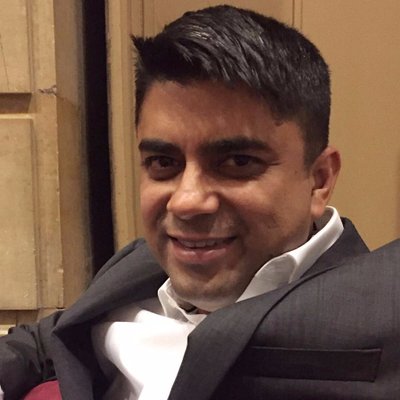
Our intrepid tech columnist Michelle Noteboom caught up with eClinicalWorks CEO Girish Navani last week to talk with him about his company’s future, his patient engagement strategy and his plans for international expansion.

Screen Shot 2015-04-09 at 2.46.19 PM

Michelle Noteboom: What’s the latest news from eClinicalWorks?

Girish Kumar: There’s a lot Michelle. I like to put it into some buckets so that I can define them. The core is our EHR and practice management space and the focus continues to be on usability and always making it’s more provider-friendly; the whole space around using touch and speech. We seem to be doing some innovative work in that arena to make EHR even more usable than just point and click. In that space we’re seeing continuous growth based on good customer satisfaction and retention.

That’s part one. Obviously the government mandates dictate a lot of other things. Meaningful Use 3 comes on the horizon. Interoperability is a big deal and I think we’ve done some good work with Epic and eCW integrations now for our mutual customers, which is making interoperability even better with faster deployment for our clients.

That’s the core. There are three other things. One is revenue cycle management, which averages 2.9%.  We’ve gotten good momentum in that space, with both new customers and convergent customers.

Population health: we’re competing with stand-alone companies in that space reasonably well in both ACO product lines. We did well with other quality programs, so that’s an area that we’ll continue to invest.

Continue reading…

HIMSS 2015 THCB Sponsor Directory. Thank You Sponsors!


athenahealth

Booth: 2023 Map
Hall: South

athenahealth is a leading provider of cloud-based services for EHR, practice management and care coordination, named the Best in KLAS #1 Overall Software Vendor for 2013. With a cloud-based network of more than 50,000 providers, athenahealth helps caregivers thrive through change and stay focused on patient care.

CorepointHealth

Booth: 8115 Map
Hall: North

Corepoint Health solutions help hospitals and care providers create seamless health data interoperability in a scalable, cost-effective manner. The Corepoint Health team offers healthcare’s most flexible integration platform along with industry-leading customer support and services. Discover why Corepoint Integration Engine has been ranked number one for six consecutive years in the Best in KLAS® Awards: Sofware & Services report.

 eCw

Booth: 3413 Map
Hall: South 
Booth: 2084 Map
Show Floor Landmark: Interoperability Showcase

eClinicalWorks offers ambulatory clinical solutions consisting of EMR/PM software, patient portals and a community health records application. With more than 85,000 physicians and 545,000 users across all 50 states using its solutions, customers include physician practices, out-patient departments of hospitals, health centers, departments of health and convenient care clinics.

Continue reading…

HIT Newser: Big Win for Epic in San Diego

 Epic Scores Another Big Win

Scripps Health selects Epic to replace its existing GE Healthcare’s Centricity Enterprise (inpatient) and Allscripts Enterprise (outpatient). The San Diego-based Scripps includes five acute-care campuses, 26 outpatient clinics, and 2,600 affiliated physicians.

No doubt that this is one that Cerner had hoped to win.

Marlin Equity Partners Acquires e-MDs

Marlin Equity Partners acquires ambulatory EMR provider e-MDs. Marlin will merge e-MDs with its existing portfolio company MDeverywhere, a provider of RCM and credentialing services for physicians. e-MD founderContinue reading…

No More Numbers

sherie

Medicine is obsessed with numbers. Or rather, journalists and medical administrators are. Here are two related examples of how large a grain of salt one must put on numbers.

Cardiac surgical procedures, like everything else in medicine, have quality indicators. One of these is what we doctors call “30-day mortality”. What this term means is that surgeons are evaluated in part on how many of the patients they operated on died within a month of having surgery. Presumably a surgeon whose patients rarely die within 30 days is a better surgeon than one whose patients die all the time. The American Academy of Hospice and Palliative Medicine, whose members deal frequently with the elderly, thinks this number, 30, harms old people. http://nyti.ms/1AR3OqB. The problem, according to Paula Span of the New York Times, is that surgeons refuse to operate on people who are more likely to die within 30 days, and that they keep patients alive in ICUs until day 31 to keep their numbers up. Bad doctors! Continue reading…

Patient Self-Scheduling 2.0

thcbAs the digital economy transforms health the most transformative ideas and consumer engagement solutions can sometimes challenge the industry’s ability to adopt and implement them. Reimbursement reforms, risk sharing, migration towards high deductible plans and the expansion of public and private coverage are converging to unleash an increasingly sophisticated consumer into the marketplace. Health systems and physician practices are consolidating and marketing their services direct to consumers in an attempt to underscore the critical differentiators valued by consumers – access, quality and affordability.  In today’s consumer economy, access remains a critical criterion for choosing and patronizing a provider or a practice. To assist the move toward consumerism, employers are introducing tools to facilitate comparison-shopping for services seen as “consumer-driven.”  The cost of elective and non-emergency services are highly variable and employers want employees to become consumers making decisions based not only on access but also cost.Continue reading…

HIT Newser: The Judy Faulkner Foundation or Whatever We’re Calling It

Screen Shot 2015-03-19 at 6.29.02 AM

Epic’s Faulkner Shares Charitable Foundation Plans

In an interview with Modern Healthcare, Epic founder/CEO Judith Faulkner reveals that she will leave much of her wealth to a specially created charitable foundation that will operate and fund not-for-profit organizations in healthcare and other areas. The 71-year-old Faulkner says that almost all her shares of Epic stock will go to the foundation upon her death, or sooner if she chooses.

The plan is also designed to keep Epic private. “My stock will go to the foundation,” Faulkner said. “The foundation will control the stock. This plan is designed to preserve the company as a private company forever.”

Faulkner, who has an estimated worth of $2.8 billion, says she never wanted the money personally or for her family and wonders, “What would you want with all that money? It doesn’t seem right and I can’t tell you why.”

What’s not to like about Faulkner’s values or her plan?

Continue reading…

assetto corsa mods