Categories

Author Archives

cindywilliams

Cloud Only is Dead for Health

A lot of people are intrigued with using “cloud” applications and storage for personal health data. This week we’re seeing what I think is the final nail in the coffin of “cloud only” for anything important. You gotta have offline backups: two huge cloud vendors – Amazon and now Google – have demonstrated that even they can go down, leaving their users absolutely powerless.
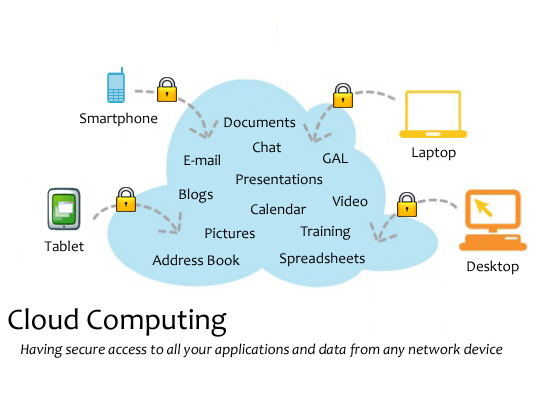
Cloud applications diagram from Wikipedia

Cloud computing (Wikipedia) is hugely attractive to software developers and businesses. As shown in this diagram from Wikipedia, the idea is that you do your computing using storage or tools that are on some computer somewhere out there “in the cloud.” You don’t know or care where, because somebody out there takes care of things. As your business or database grows, “they” take care of it.

And it’s real – it works.

But when “they” screw up, you could be screwed.

Last month Amazon Web Services went down for a couple of days. PC Magazine posted a good summary, and many of us learned that well known companies like Hootsuite and Foursquare don’t actually own the computers that deliver their product: they rent services from Amazon Web Services (AWS).

So when AWS went down, there was nothing they could do to help their customers.Continue reading…

The Lightweight Romney Health Plan

Mitt Romney has outlined his new health plan. He outlined five key steps in an op-ed in USAToday. Here is a summary:

Step 1: Give states the responsibility, flexibility and resources to care for citizens who are poor, uninsured or chronically ill.

Step 2: Reform the tax code to promote the individual ownership of health insurance.

Step 3: Focus federal regulation of health care on making markets work…For example, individuals who are continuously covered for a specified period of time may not be denied access to insurance because of pre-existing conditions. And individuals should be allowed to purchase insurance across state lines, free from costly state benefit requirements. Finally, individuals and small businesses should be allowed to form purchasing pools to lower insurance costs and improve choice.

Step 4: Reform medical liability. We should cap non-economic damages in medical malpractice litigation.

Step 5: Make health care more like a consumer market and less like a government program. This can be done by strengthening health savings accounts that help consumers save for health expenses and choose cost-effective insurance.

It looks to me like his health care outline is more intended to make conservative Republicans happy then to really propose ways to reform America’s health care system.

There isn’t one new idea here and it all comes straight from the 2010 Republican campaign playbook.Continue reading…

The Dual Online Identities of Physicians

Like everybody else, physicians are expanding their online personal identities. At the same time, they are trying to comply with codes of conduct that help consumers trust them and their profession.

There’s no problem so long as the personal online activities of physicians don’t jeopardize their obligations as professionals, which means that there is a problem, unfortunately.

In a recent study for example, 17% of all blogs authored by health professionals were found to include personally identifiable information about patients. Scores of physicians have been reprimanded for posting similar information on Twitter and Facebook, posting lewd pictures of themselves online, tweeting about late night escapades which ended hours before they performed surgery, and other unsavory behaviors.

As I mentioned Monday, medical students and younger physicians who grew up with the Internet have to be particularly careful, since they had established personal online identities before accepting the professional responsibilities that came with their medical degree.

Medical schools, residency programs and teaching hospitals can help young professionals manage their dual lives online. Some have implemented curricula and policies that foster appropriate use of social media, but surprisingly these programs are not widespread. In a recent study of medical schools that had experienced at least one incident in which a student used social media inappropriately, only 38% had adopted formal policies to handle future incidents. An additional 11% reported they were developing such policies. We can do better than this.

Non-teaching hospitals, CME providers and professional organizations like the American Medical Association can also help providers navigate the online world. The AMA’s recent guide to Professionalism in the Use of Social Media provides helpful guidance in this regard.

Continue reading…

The Unbearable Lightness of Being Mitt

One of my regrets in life is losing the chance to debate Mitt Romney and whip his ass.

It was the fall of 2002. Mitt had thundered into Massachusetts with enough money to grab the Republican nomination for governor. Meanwhile, I was doing my best to secure the Democratic nomination. One week before the Democratic primary I was tied in the polls with the state treasurer, according to the Boston Herald, well ahead of four other candidates. But my campaign ran out of cash. Despite pleas from my campaign manager, I didn’t want to put a second mortgage on the family home. The rest is history: The state treasurer got the nomination, I never got to debate Mitt, and Mitt won the election.

With Trump, Gingrich, Bachmann, and possibly Palin now in the race for the Republican presidential nomination, “GOP” is starting to mean Goofy, Outrageous, and Peculiar. Mitt would pose the most serious challenge to a second Obama term.

I say this not because Mitt’s mind is the sharpest of the likely contenders (Gingrich is far more nimble intellectually). Nor because his record of public service is particularly impressive (Tim Pawlenty took his governorship seriously while Mitt as governor seemed more intent on burnishing his Republican credentials outside Massachusetts). Nor because Mitt is the most experienced at running a business (Donald Trump has managed a giant company while Mitt made his money buying and selling companies.) Nor, finally, because he’s especially charismatic or entertaining (Sarah Palin can work up audiences and Mike Huckabee is genuinely funny and folksy, while Mitt delivers a speech so laboriously he seems to be driving a large truck).Continue reading…

Google Health Put in Stasis

About a year ago we posted a piece that basically summed up Google Health as on its death bed. Google, of course was quick to defend itself saying that Google Health was very much alive and well. We even had a long conversation with the senior leadership of Google Health who told us they were taking Google Health in a new direction, had been doing a significant rebuild of the underlying architecture which culminated in a “new” Google Health which had far greater focus on health and wellness. They even went so far, in very uncharacteristic fashion to give adoption numbers. Granted, those adoption numbers were only those from users of the Android App CardioNet, but hey, it was something.

Beginning in late March 2011, we started hearing the rumors of the impending demise of Google Health once again (is this becoming some sort of annual thing with Google Health?). We waited a few weeks to see if the rumors would die down, they did not. We put a call into Google Health to set up a briefing, get an update. Response back was slow (one yellow flag). When they did get back to us, they said it will be at least a couple of weeks (two yellow flags). Next, our Google contact told us by email that they were going to hand Chilmark’s inquiry off to Google’s PR department (screaming dark orange flag). And now today, we received an email from one of Google Health’s most visible spokespersons, Missy Krasner that she is leaving Google.

There is now no doubt in our mind that the Google Health development team has been dis-banded and Google Health has been placed in a cryogenic state until the moribund consumer adoption of such tools comes to life. It would be far to big a PR nightmare for Google to completely pull the plug on Google Health as they have done in the past with other less then stellar launches. No, they’ll put an engineer or two on Google Health to keep it up and running but don’t expect anything new out of Google Health for at least the next 5 years. This baby is frozen.

John Moore is an IT Analyst at Chilmark Research, where this post was first published.

Let’s Just Keep Killing and Maiming Them

Old patterns die hard. Back in March 2010, I posted a chart from the ACHE that Jim Conway had sent me showing a decrease in the ranking of quality and safety among priorities reported by hospital executives.

Now comes an article in Health, Medical, and Science Updates about a study by the Beryl Institute, entitled “The State of Patient Experience in American Hospitals.” Of those places surveyed, 51% were individual hospitals and 49% were hospital groups or systems. There was an even mix of urban, suburban, and rural facilities.

As in the prior ACHE survey, 69% of hospital executives rank things other than quality and patient safety as top priorities.

Any way you look at it, this is quite simply a failure of leadership and governance in American hospitals. There is a strange adherence to the view that “these things happen,” an apparent belief that a certain level of harm that occurs to patients is just the way things should be. It is as though the medical profession, hospital administrators, and hospital trustees have decided that the current amount of harm is the statistically irreducible level.Continue reading…

Why We Should Think Twice About Getting A CT Scan

There’s an eerie video up on YouTube, shot by a Japanese journalist who ventured into the evacuation zone surrounding the Fukushima nuclear power plant, armed with a camera and a radiation meter. The video looks like b-roll footage from a low-budget zombie movie, with roving bands of stray dogs and a soundtrack of the radiation meter’s increasingly frantic beeping.

Shortly after the earthquake that damaged the plant, the Japanese government evacuated residents from a more than 1,000 square mile zone. Last week, they raised the severity level of the crisis at Fukushima to a 7 out of 7, making it the worst nuclear disaster since the complete meltdown of the reactor at Chernobyl, in 1986. In its wake, worldwide fear of nuclear power spiked. The German government shut down seven of its 17 nuclear reactors, and plans to eliminate nuclear power by 2020. In the U.S., a Fox News Poll conducted in early April found that 83 percent of respondents thought a similar disaster could happen to an American nuclear plant.

People fear radiation for good reason. All ionizing radiation passes unimpeded through cells of the body, mutating or destroying DNA along the way. The danger level depends on the dose and the length of exposure. We’re exposed to small amounts of radiation all the time — from cosmic rays to the normal radioactive decay of soil, rocks and building materials. Even the granite in the U.S. Capitol Building emits low levels of radiation. These levels are harmless, but a high dose can kill, and prolonged or repeated moderate exposure can lead to cancer.Continue reading…

What If You Give a Party and No One Comes?

Here is a short update on a post I put up about a month ago about CMS’ proposed regulations for setting up Accountable Care Organizations. The ACO proposal calls for shared savings and other incentives for providers, with a transition after a few years to a real risk contract. But Congress put a “poison pill” into the concept because it was afraid to limit customer choice. At the heart of my argument was this point: “How can you be held accountable, as a provider group, if you cannot control the management of care of your patients?”

The latest news, according to my sources, is that even the most advanced ACO-like organizations like Geisinger and Mayo are not interested in signing on to this proposition. The financial risks can come crashing down quickly and are just too great.

In a recent Boston Globe interview, consultant Marc Bard explains how it would have to work for providers to agree to share risk in an ACO network:

Q. Some consumers fear they won’t be able to go to the doctors or specialists they want in the new system. Is that a legitimate fear?

A. The answer is of course. We can’t be spending 17.5 percent of our gross national product on health care and allow everybody to broker his or her own health care. So ultimately there are going to have to be trade-offs made. The public’s going to have to make them. The delivery systems are going to have to make them. Absolutely there are going to be limitations.

Paul Levy is the former President and CEO of Beth Israel Deconess Medical Center in Boston. For the past five years he blogged about his experiences in an online journal, Running a Hospital. He now writes as an advocate for patient-centered care, eliminating preventable harm, transparency of clinical outcomes, and
front-line driven process improvement at Not Running a Hospital.

The Quest for Price Transparency

A torn meniscus. It did not disable but it impaired, and unpredictably. My stomach learned quickly to tighten at the sound of A’s peculiar whimper in response to a crippling pain that would shoot through her at seemingly innocuous movements of the afflicted leg. We have health insurance of sorts, the type that will help you keep your home if tragedy strikes, but that does not shield you from the brunt of what most of day-to-day health care cost is about. We’re well practiced in deferring and foregoing care. Here however, we reluctantly acknowledged that a hospital would need to be visited and a doctor consulted.

Tests and a physical examination made clear that an operation was unavoidable. The doctor was a thoughtful man who conscientiously went through what the operation would entail. Surgery would take half a day, then back home by afternoon, convalescence over the following few weeks, with complete recovery the usual outcome. While not painless, the procedure seemed reassuringly routine. His tone was caring and his outlook about our case optimistic.

The admirable candor with which medical personnel have learned to speak about difficult topics concerning our bodies and our care did not extend to the costs involved. The question of what the procedure would cost, gently broached, initially baffled the staff, eliciting answer-deflecting counter-questions about the adequacy of our insurance coverage, but resulted in no quotes or estimates. Continue reading…

Hockey Teams and AED’s Save Lives

I’ve played over a thousand ice hockey games in my life, but I had no idea that last month’s adult men’s league game in Cleveland would be the most memorable. I grew up in Canada, three blocks from Wayne Gretzky, the greatest hockey player ever, but I wouldn’t be surprised if my recent game was more important than any game that my former neighbor played. This game was literally a matter of life or death.

I almost didn’t show up to the game. I had just landed in Cleveland from New York City after attending a close friend’s wedding. I’d landed at 8:15pm, jumped in my car and dialed into a conference call for my organization uFLOW, arriving and finishing my call barely in time for the 9:30pm puck drop. I didn’t plan my schedule around the game; the timing just happened to work out.

It was close to the end of the 2nd period when I heard our captain, Brandon Dynes, yell something and race off the ice. I soon realized he skated off to call 911. I looked down at the end of the bench and saw that our teammate Harley was unresponsive. Harley is 69 years old (though could pass for 50) and as the eldest player in our men’s league has been an inspiration to many of us. I quickly went over to assess him and found he had no pulse, was not breathing, and not responding to verbal or physical stimuli. I was fortunate that the opposing team had a physician playing as well, Dr. John Wood, an orthopedic surgeon. John quickly came over and could not find a pulse either. Knowing end organ damage such a anoxic brain injury can occur quickly, I grabbed Harley and layed him on the bench and started compressions, pressing his chest extra hard knowing I was going through a layer of hockey pads. I later quickly ripped off his pads off to assure better compressions.Continue reading…

assetto corsa mods